The Cyprus economy is driven by tourism, shipping, and financial services. Mediterranean beaches and historical sites attract visitors, while the maritime sector benefits from a strategic location. Offshore banking has declined due to EU regulations, but real estate and services remain strong. High public debt and unemployment linger post-financial crisis, with efforts to diversify into technology and renewable energy ongoing. EU membership supports trade, though geopolitical tensions with Turkey pose risks.
Cyprus Economy Size
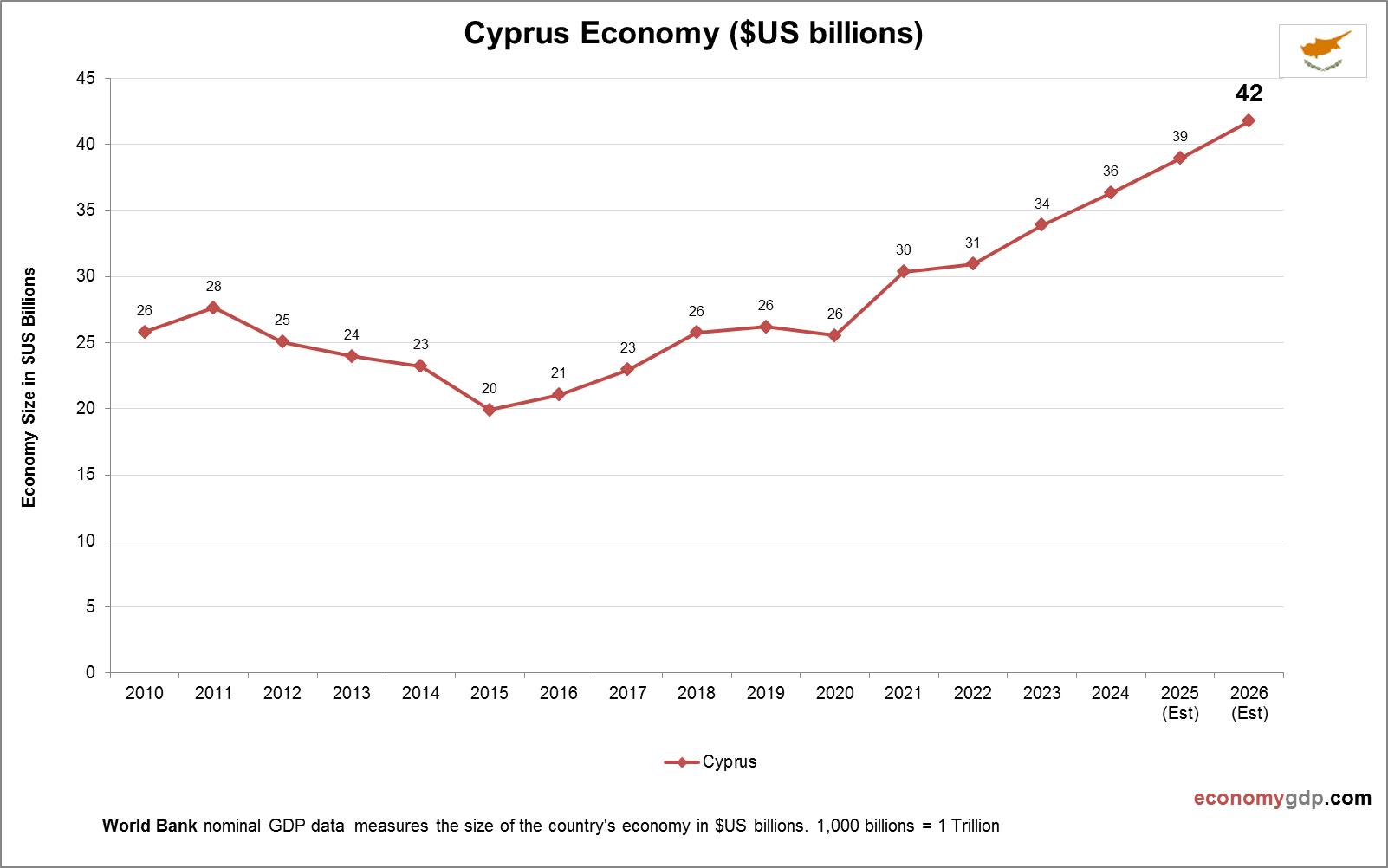
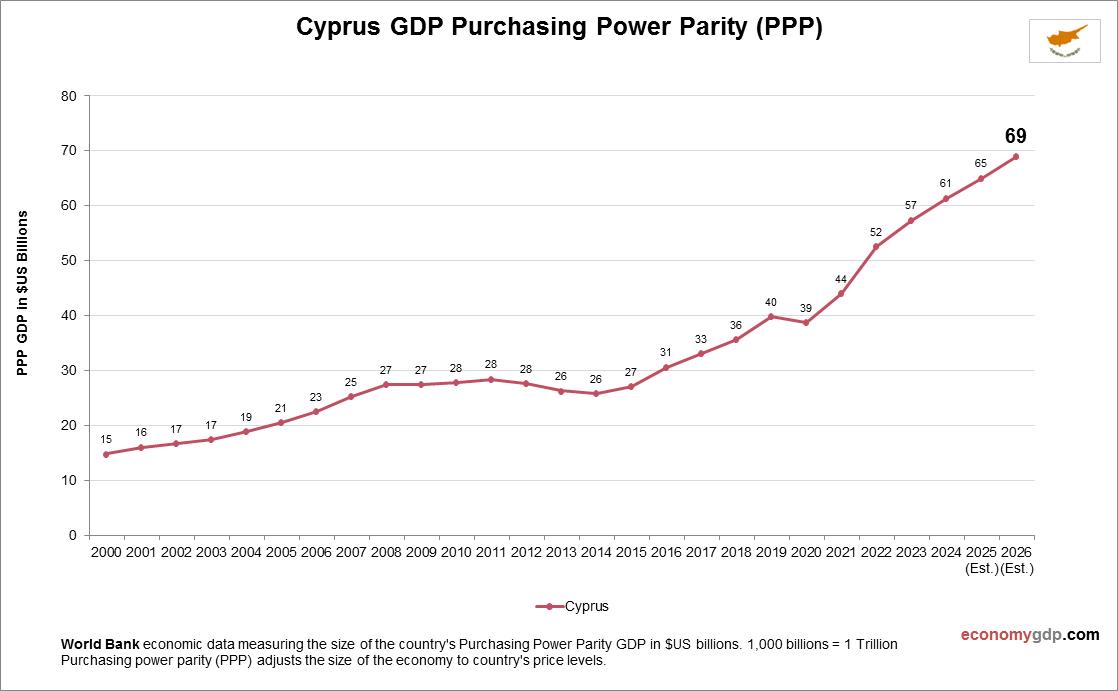
Cyprus economy, valued at $30 billion, is small but resilient, with services, particularly finance and tourism, driving its GDP within the EU framework. See Cyprus GDP.
Cyprus Purchasing Power Parity (PPP)
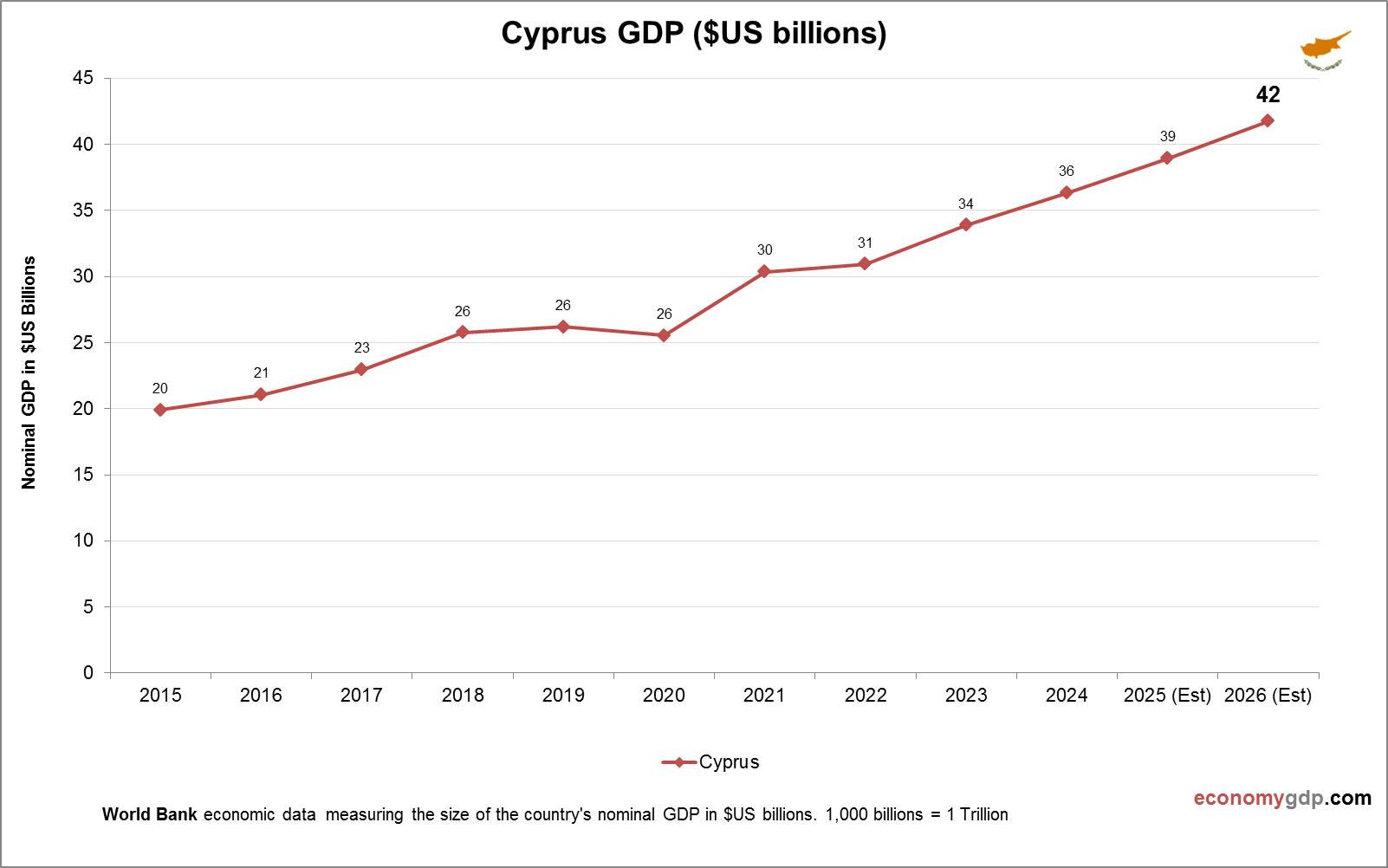
Cyprus economy has a PPP GDP of $55 billion, nearly double its $30 billion nominal GDP, reflecting lower costs for services and tourism. PPP per capita is around $45,000, indicating high living standards. Finance and shipping benefit from cost advantages, with EU membership supporting PPP-driven domestic market growth.
Cyprus Growth Rate
The economic growth rate is 2.5% in 2024, fueled by tourism and financial services. EU membership and recovery from global disruptions drive growth, but reliance on services and high costs pose risks. Shipping and real estate contribute, while digital economy investments support resilience, positioning the economy for steady progress.

Cyprus Inflation
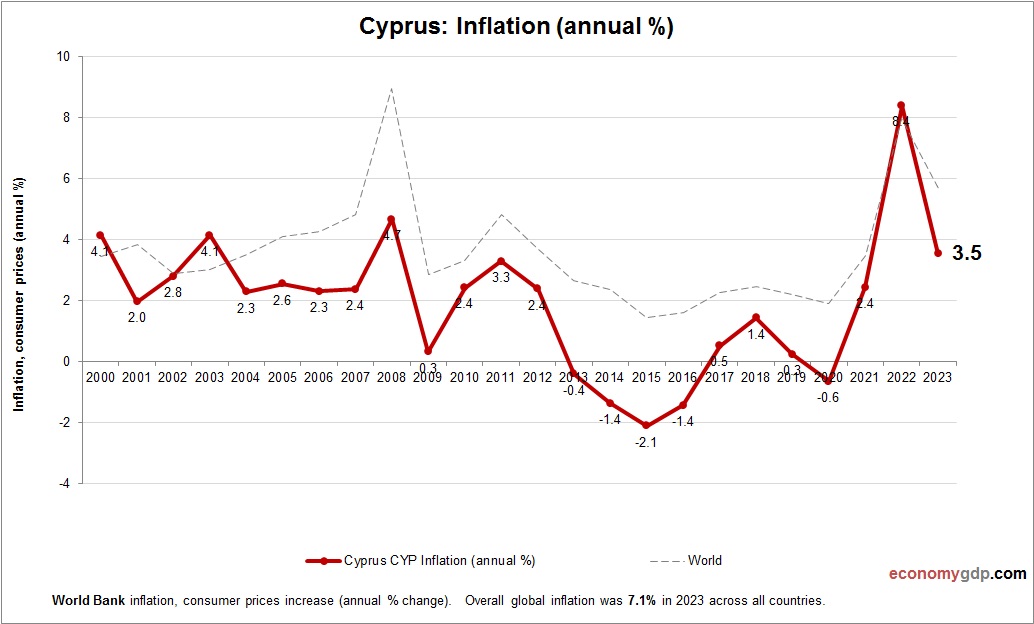
Cyprus inflation rate is approximately 2.5% in 2024, driven by rising energy and food import costs within the EU. Tourism and shipping demand increase service prices, while wage growth adds pressure. Eurozone monetary tightening and stable governance help contain inflation, though reliance on imports sustains moderate price increases.