The Iraq economy is dominated by oil, which accounts for most GDP and exports. Agriculture and services play smaller roles, with dates and grains as traditional outputs. Conflict, corruption, and infrastructure damage limit growth, while unemployment and poverty persist. Reconstruction efforts and foreign investment in oilfields aim to stabilize the economy, but political instability and security risks pose ongoing challenges to diversification and sustainable development.
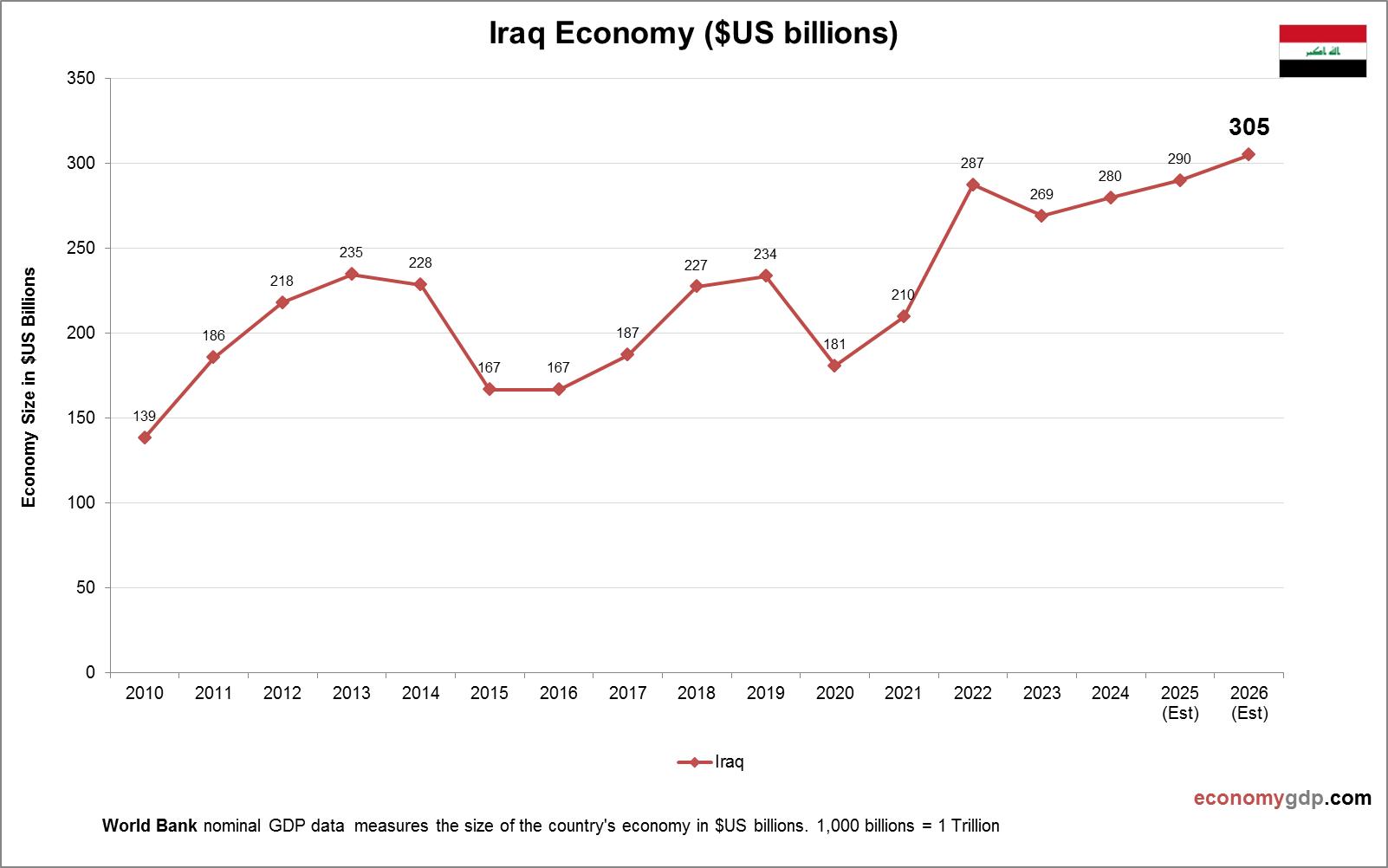
Iraq Economy Size
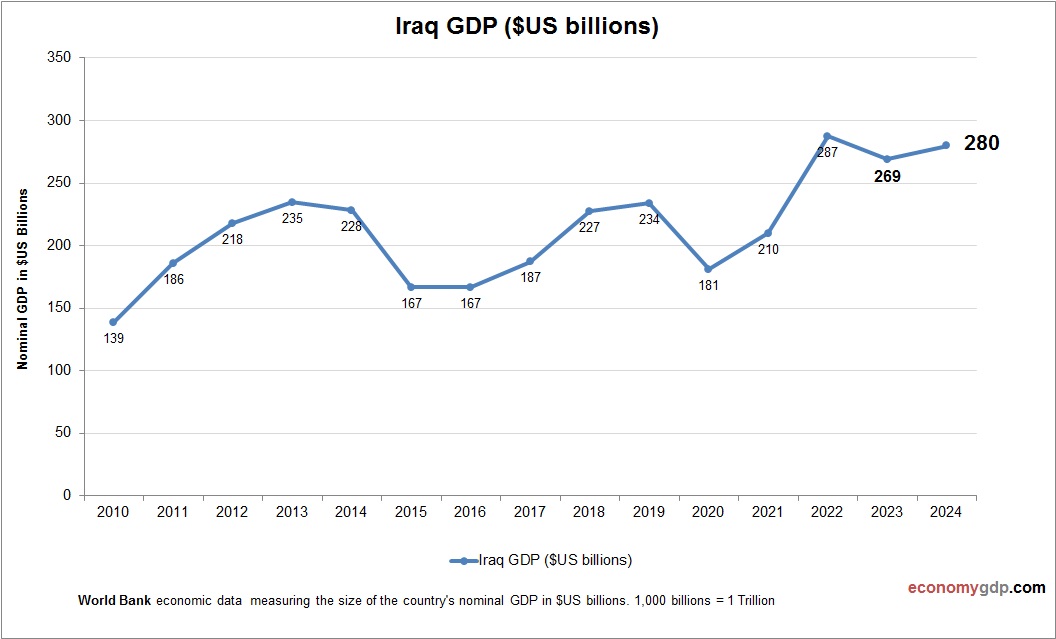
Iraq’s economy, worth $250 billion, is sizable, driven by oil exports. Its GDP faces volatility from conflict and limited non-oil sector growth. See Iraq GDP.
Iraq Purchasing Power Parity (PPP)
Iraq’s economy has a PPP GDP of $510 billion, double its $250 billion nominal GDP, driven by low costs for oil and services. PPP per capita is around $12,000, indicating modest purchasing power. Domestic pricing supports local markets, but conflict and oil reliance limit broader PPP-driven economic benefits.

Iraq Growth Rate
The economic growth rate is 4.0% in 2024, propelled by oil exports. Reconstruction and high global oil prices support growth, but conflict and infrastructure deficits pose risks. Agriculture contributes modestly, while foreign investment in energy drives resilience, positioning the economy for recovery despite ongoing security challenges.

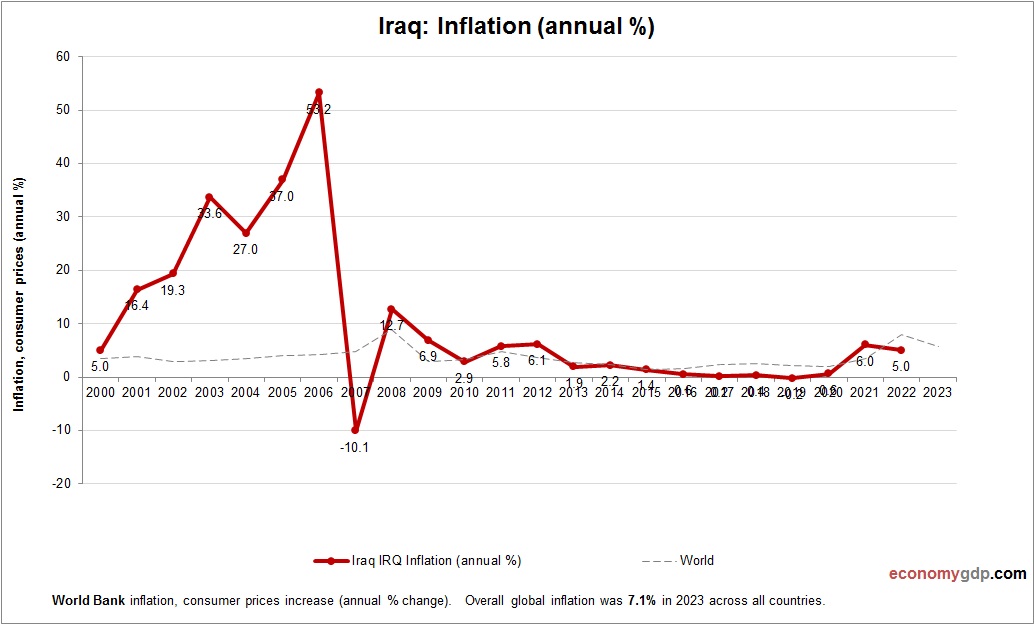
Iraq Inflation
Iraq’s inflation rate is approximately 5% in 2024, driven by rising global food and fuel prices. Strong oil exports increase domestic demand, while conflict-related supply disruptions add pressure. Currency depreciation and weak governance sustain price volatility, but monetary controls and oil revenues help moderate inflation in this resource-dependent economy.