The Jordan economy depends on services, tourism, and remittances. Historical sites like Petra and the Dead Sea attract visitors, while phosphate and potash exports contribute. A large refugee population strains resources, and high unemployment and debt pose challenges. Foreign aid and trade agreements support stability, with efforts to expand renewable energy and technology ongoing. Limited natural resources and regional instability hinder long-term economic growth.
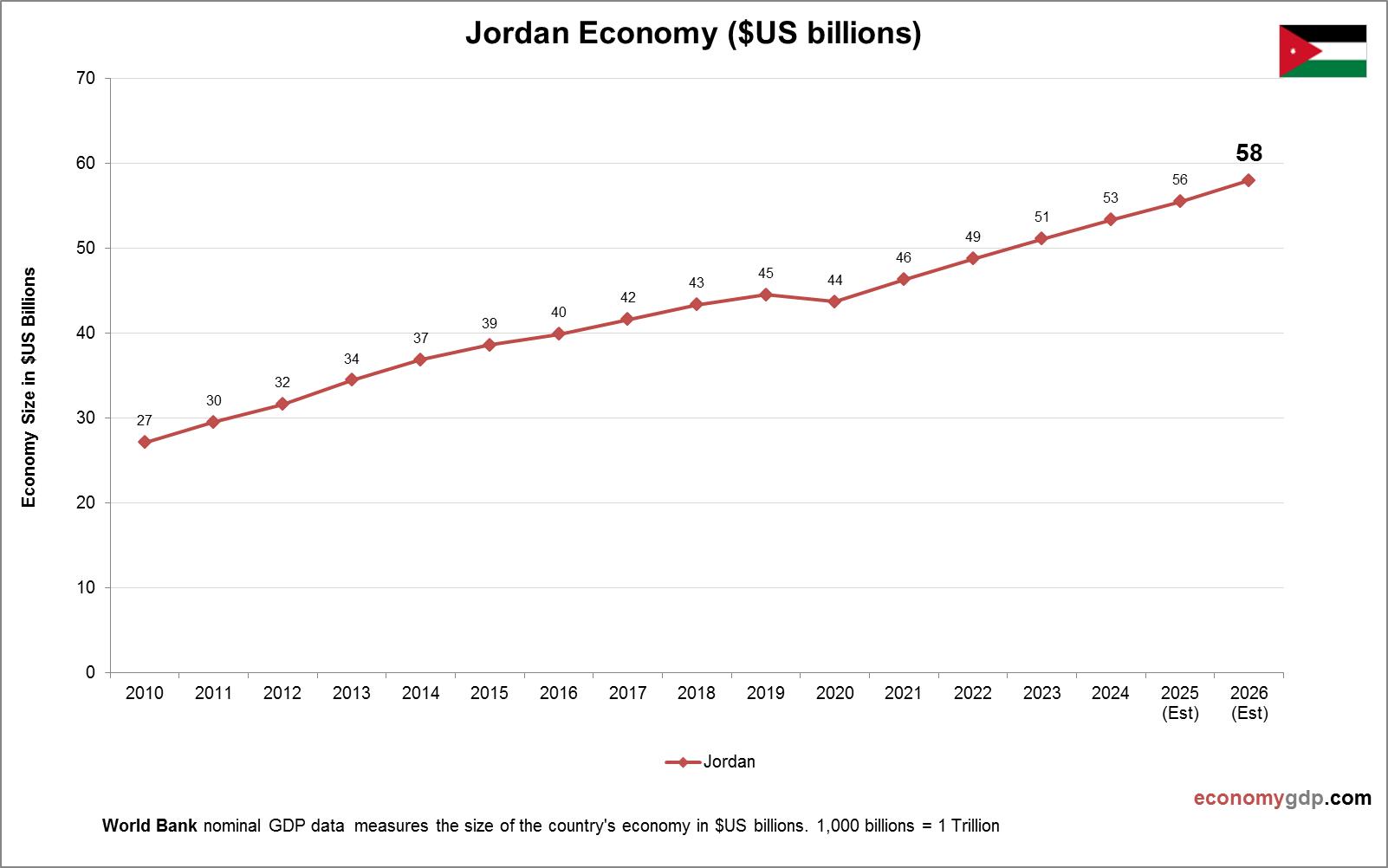
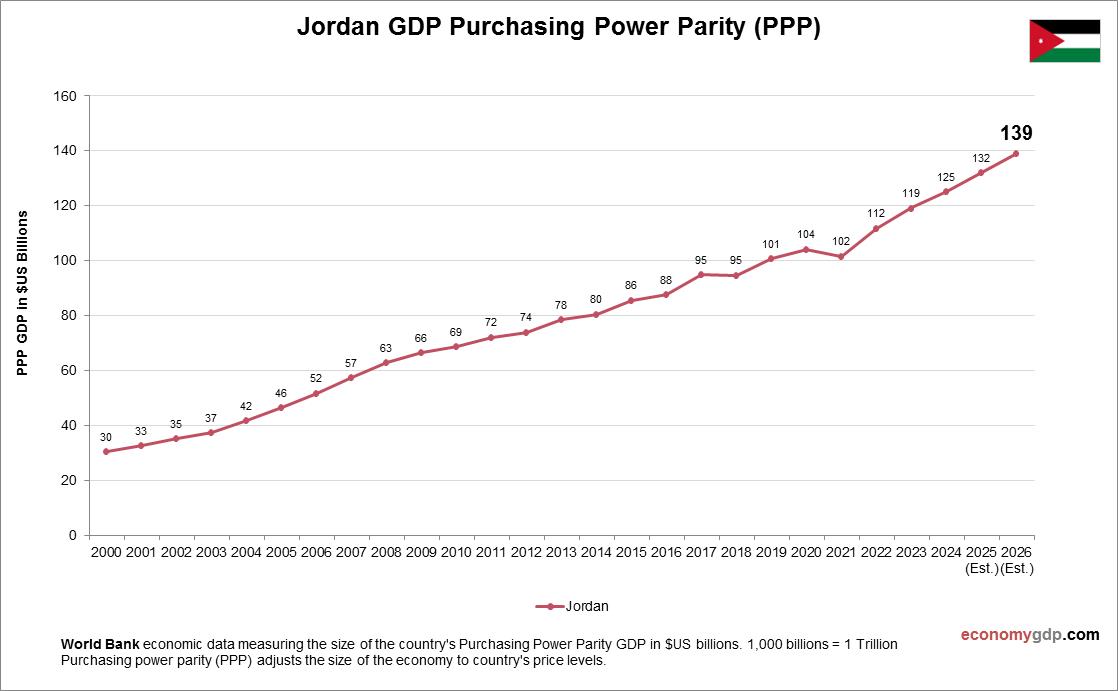
Jordan Economy Size
Jordan’s economy, at $45 billion, is mid-sized, with services and remittances shaping its GDP, limited by resource scarcity and regional instability. See Jordan GDP.
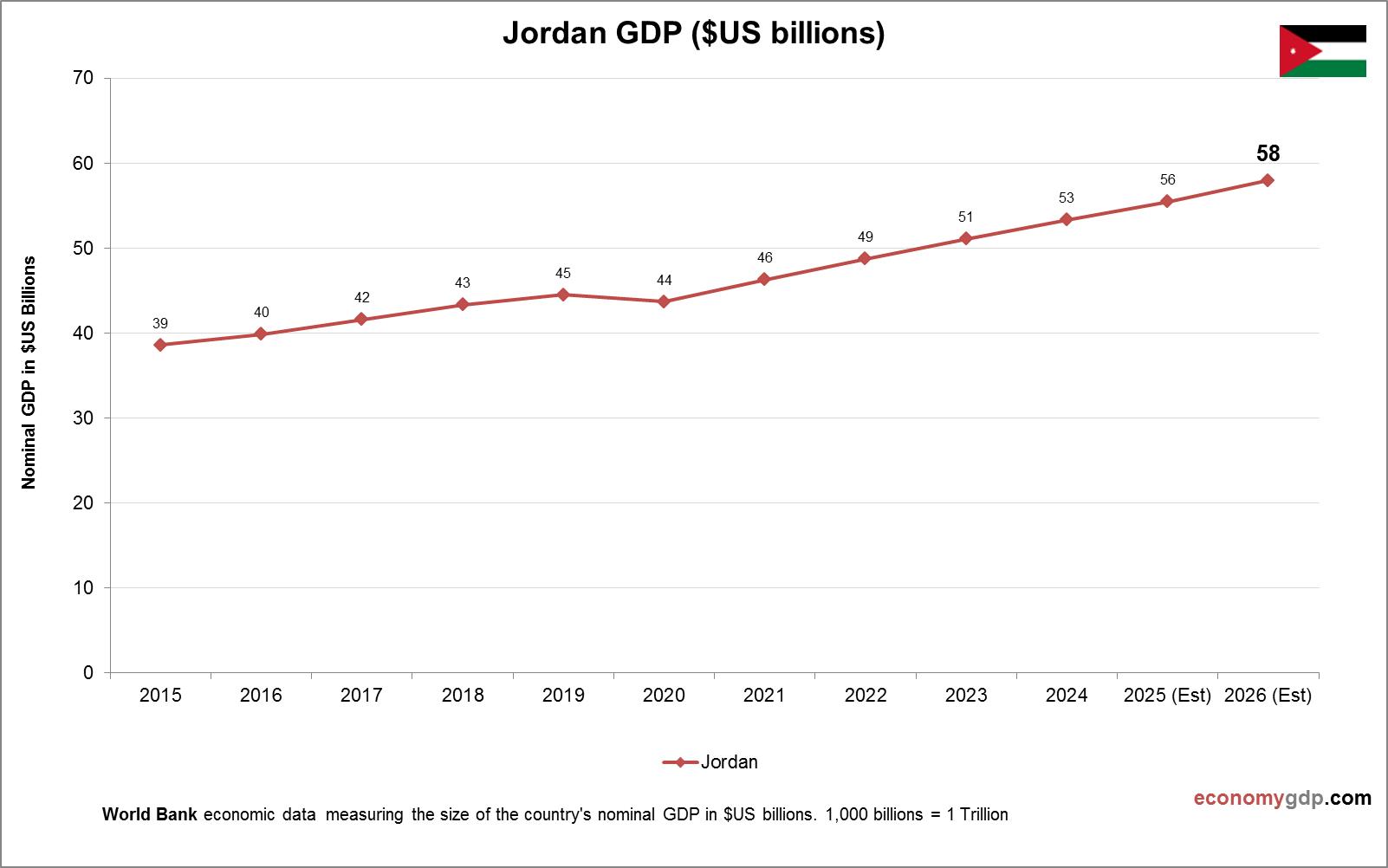
Jordan Purchasing Power Parity (PPP)
Jordan’s economy has a PPP GDP of $130 billion, nearly triple its $45 billion nominal GDP, due to low costs for services and remittances. PPP per capita is around $12,000, indicating modest purchasing power. Domestic pricing supports local markets, but resource scarcity and regional instability limit PPP-driven growth.
Jordan Growth Rate
The economic growth rate is 3.0% in 2024, fueled by services and remittances. Phosphate exports and tourism contribute, but regional instability and resource scarcity pose risks. Infrastructure investments and trade with Europe drive resilience, while digital services enhance momentum, positioning the economy for moderate progress in a challenging region.

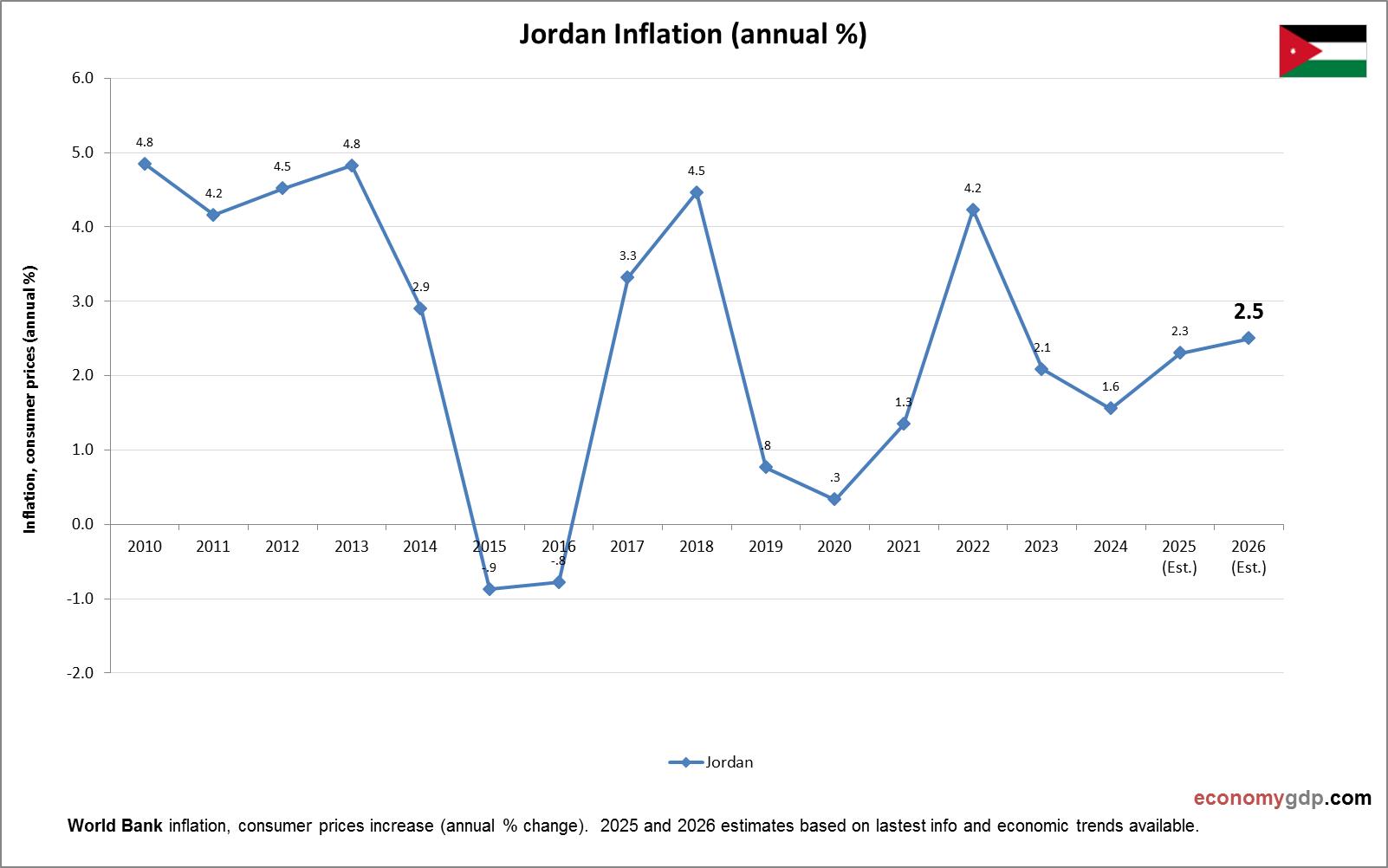
Jordan Inflation
Jordan’s inflation rate is approximately 3% in 2024, driven by rising global food and energy prices. Import reliance and remittances increase domestic costs, while regional instability disrupts supply chains. Currency stability, pegged to the U.S. dollar, and monetary tightening help keep inflation low, though external shocks pose ongoing risks.