The Denmark economy is highly developed, driven by services, manufacturing, and renewable energy. Pharmaceuticals, wind energy, and shipping are key sectors, with companies like Novo Nordisk leading exports. Agriculture, including dairy and pork, supports trade. High wages and a strong welfare system ensure stability, though an aging population and global competition challenge growth. Investments in green technology and digital innovation maintain Denmarks position as a leader in sustainable development.
Denmark Economy Size
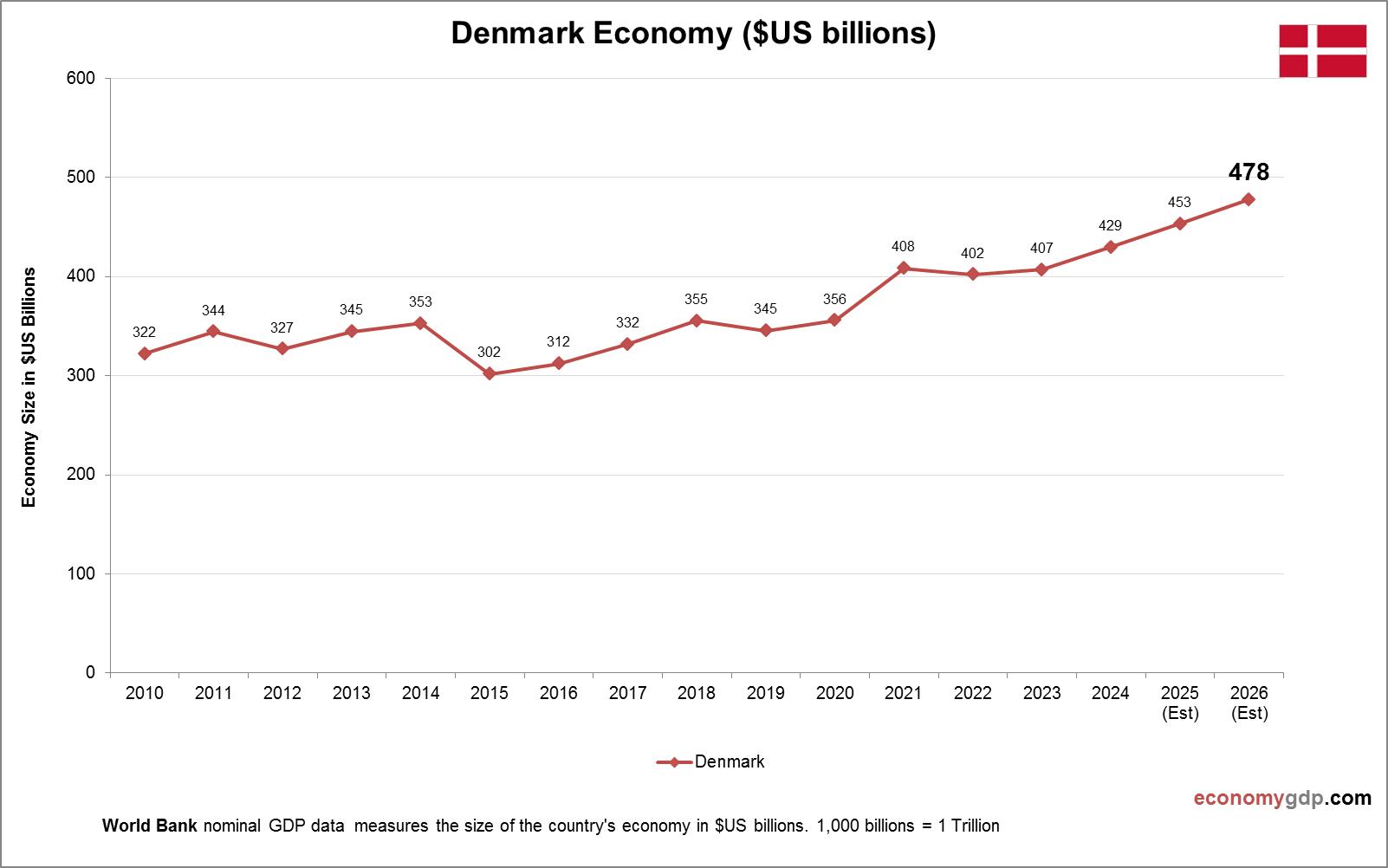
Denmark’s economy, at $400 billion, is sizable for its population, driven by services and high-tech industry. Its GDP reflects strong welfare and trade integration. See Denmark GDP.

Denmark Purchasing Power Parity (PPP)
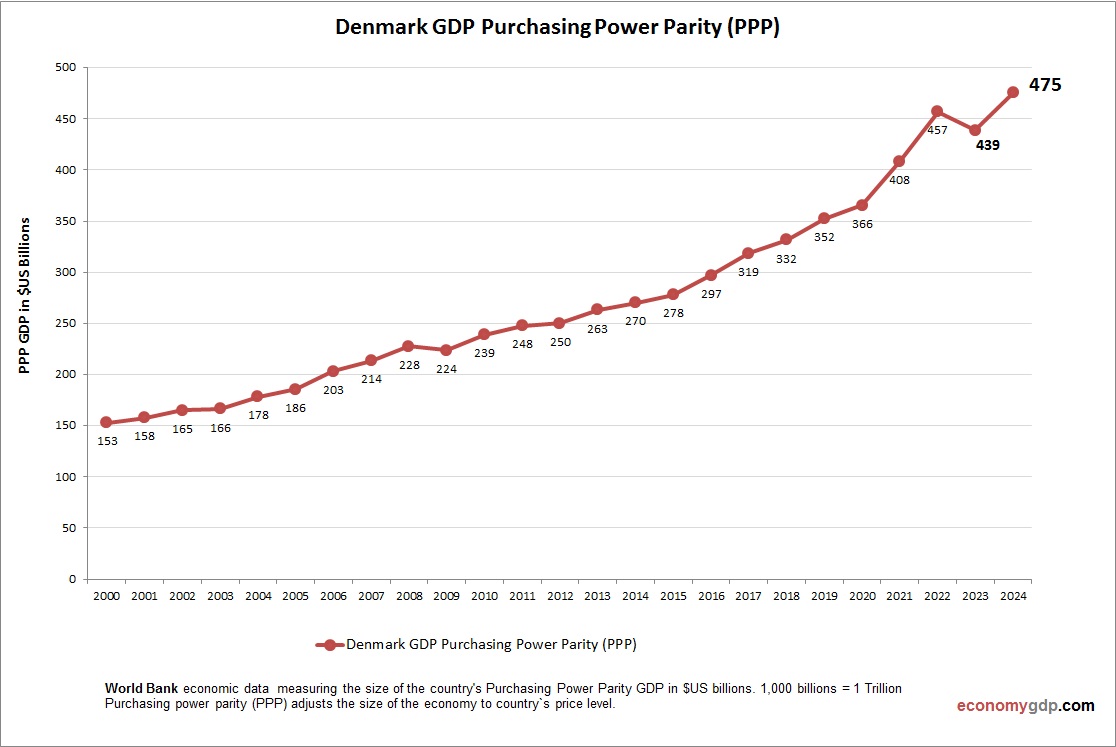
Denmark’s economy has a PPP GDP of $450 billion, slightly above its $400 billion nominal GDP, reflecting high local costs offset by services and industry. PPP per capita is about $75,000, among the highest globally, showcasing exceptional purchasing power. PPP highlights Denmark’s affluent domestic market, with trade amplifying economic strength.
Denmark Growth Rate
The economic growth rate is 2.3% in 2024, driven by high-tech exports and services. Strong welfare systems and green energy investments support growth, but high labor costs and global slowdowns limit gains. Agriculture and shipping contribute modestly, while innovation drives resilience, positioning the economy for stable expansion within the EU.

Denmark Inflation
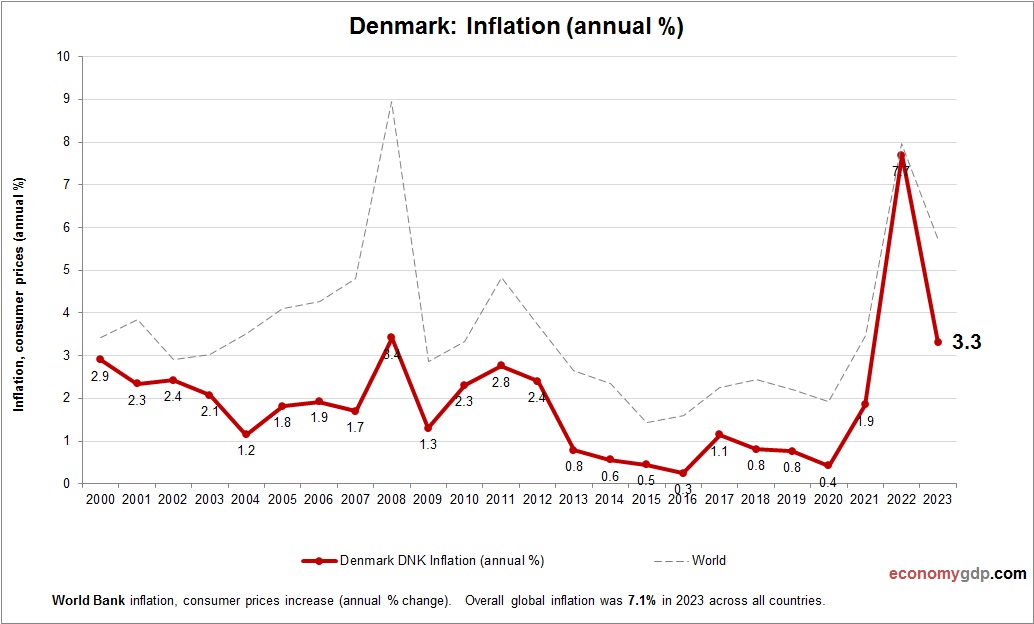
Denmark’s inflation rate is around 2% in 2024, among the lowest in the EU, due to strong fiscal discipline and a stable currency peg. Rising global energy and food prices add modest pressure, while high domestic demand from exports drives service costs. Central bank measures and welfare systems keep inflation low.