
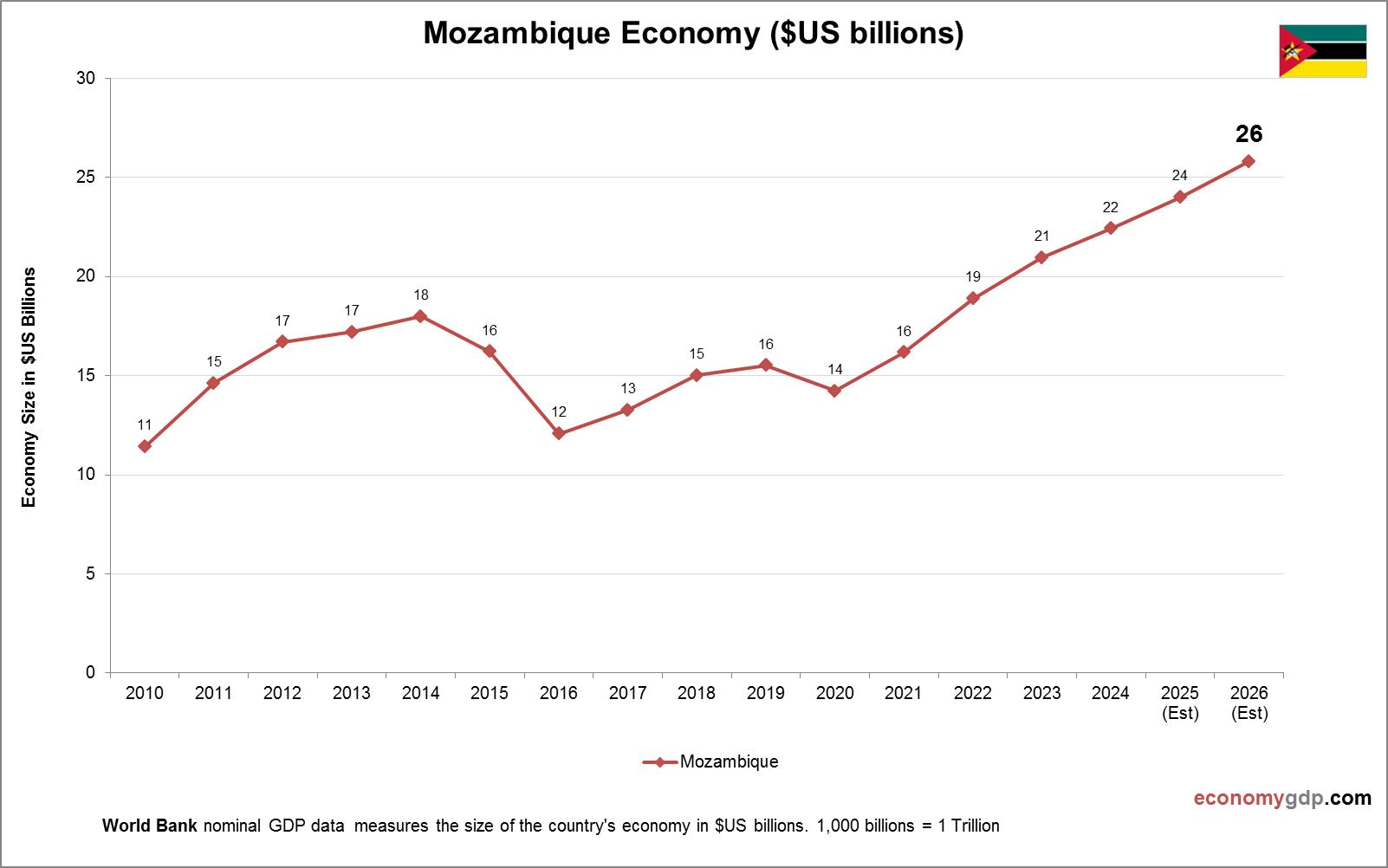
Mozambique’s economy valued at approximately $20 billion, is driven by agriculture, which employs 70% of the workforce and contributes significantly to GDP with crops like cashews, cotton, and sugarcane. Natural gas is an emerging powerhouse, with offshore LNG projects like Rovuma attracting significant substantial foreign investment. Mining, including coal and graphite, is also significant. Tourism, tied to coastal attractions, and infrastructure development are growing sectors. Despite potential, poverty, political instability, and vulnerability to natural disasters like cyclones hinder progress. Investments in energy and transport aim to boost trade, but challenges like debt and corruption remain.
Mozambique Economy Size
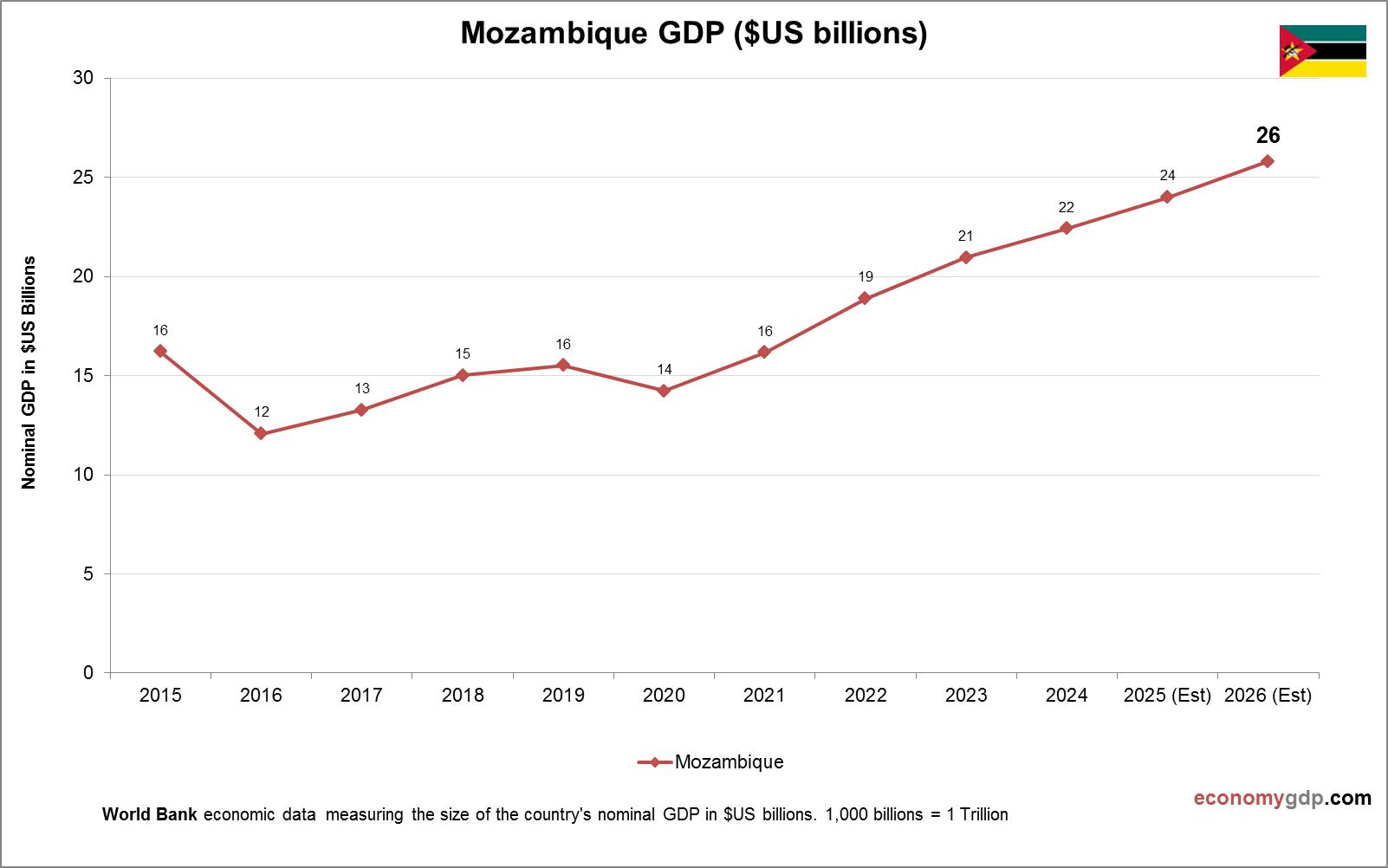
Mozambique’s economy, valued at $20 billion, is small but growing, with gas and agriculture driving its GDP, fueled by foreign investment. See Mozambique GDP.
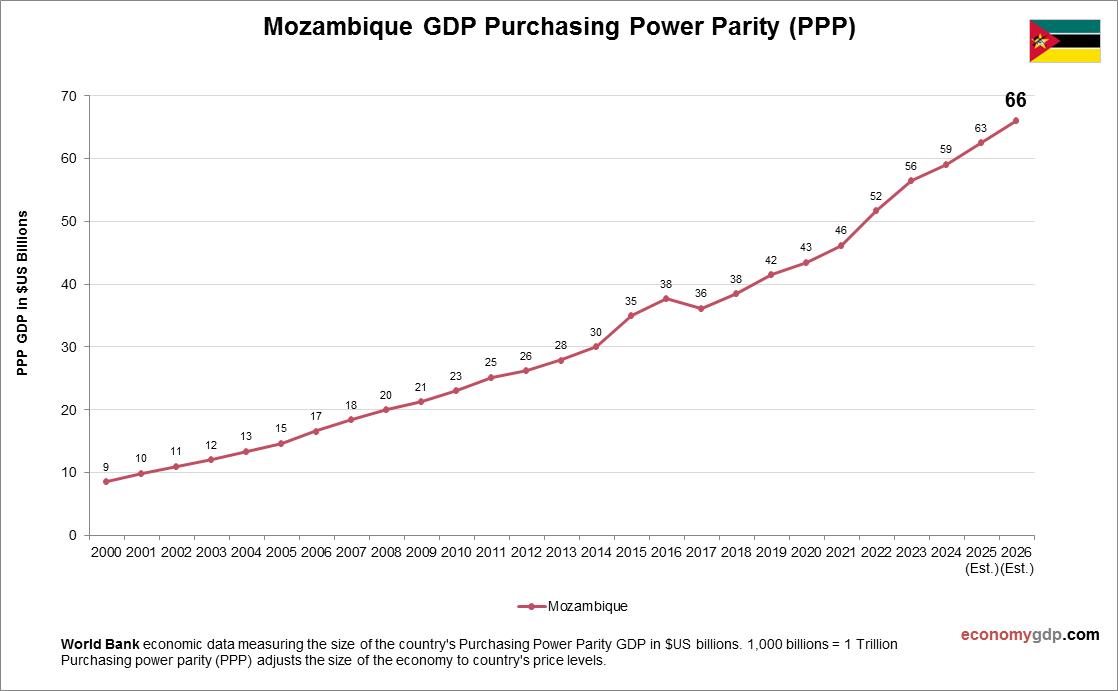
Mozambique Purchasing Power Parity (PPP)
Mozambique’s economy has a PPP GDP of $65 billion, over three times its $20 billion nominal GDP, driven by low costs for agriculture and gas. PPP per capita is around $2,000, reflecting low purchasing power. Domestic pricing boosts markets, but poverty and instability limit broader PPP-driven economic gains.
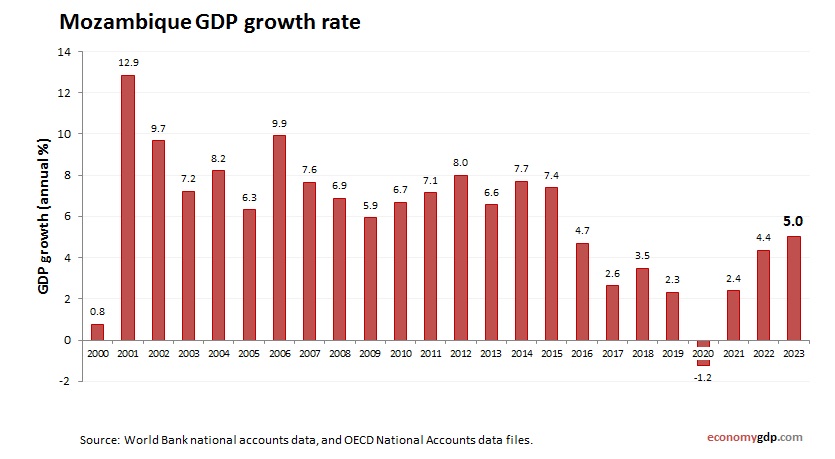
Mozambique Growth Rate
The economic growth rate is 6.0% in 2024, propelled by gas exports and agriculture. LNG projects and foreign investment drive growth, but poverty and climate risks pose challenges. Coal mining contributes, while infrastructure investments drive resilience, positioning the economy for robust expansion despite structural constraints.
Mozambique Inflation
Mozambique’s inflation rate is about 5% in 2024, driven by rising global food and fuel prices. Currency depreciation increases import costs, while strong gas exports fuel demand. Agricultural disruptions from cyclones add pressure. Monetary tightening and foreign investment help moderate inflation, though poverty sustains price volatility in this growing economy.
