The Mali economy relies on agriculture, gold, and cotton. Gold is a major export, while subsistence farming employs most of the population. Political instability, conflict, and drought disrupt growth, with poverty widespread. Foreign aid and mining investment provide support, but weak infrastructure and corruption hinder progress. Efforts to improve food security and diversify into renewable energy face significant challenges in a fragile economic environment.
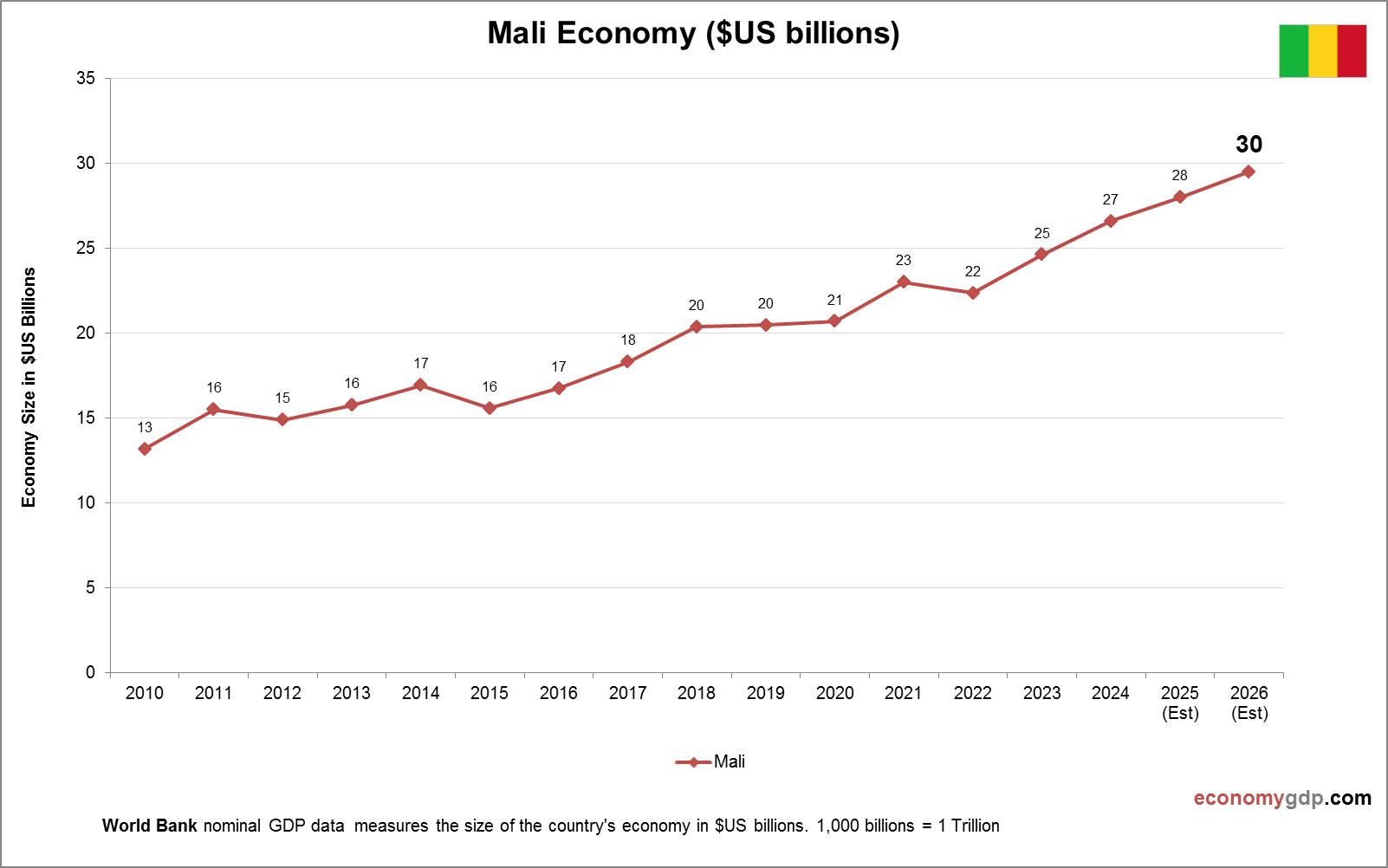
Mali Economy Size
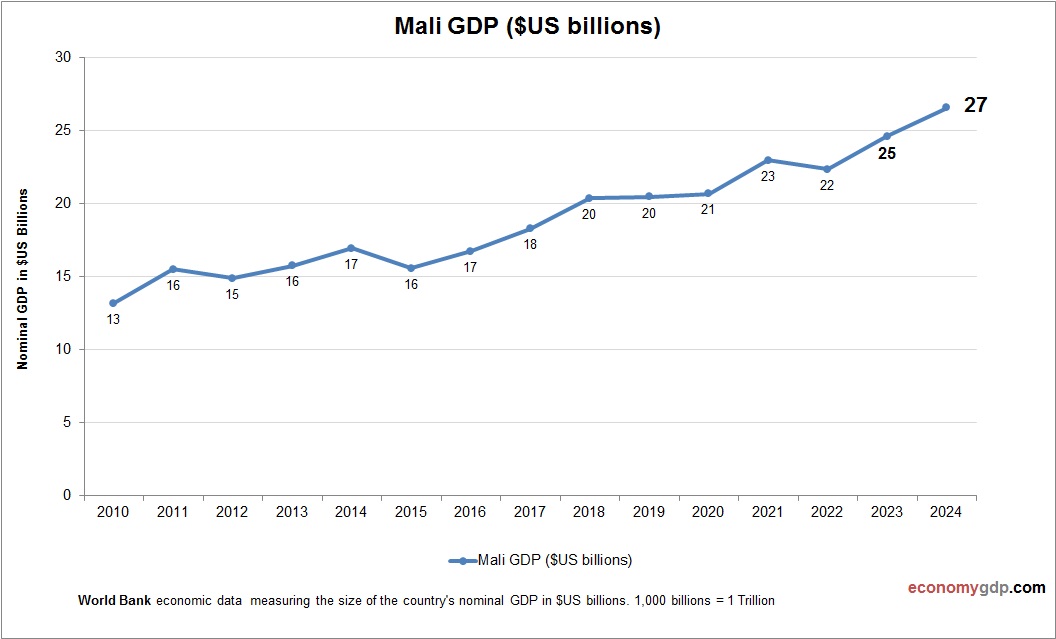
Mali’s economy, valued at $20 billion, is small, with agriculture and gold mining driving its GDP, constrained by conflict and poverty. See Mali GDP.
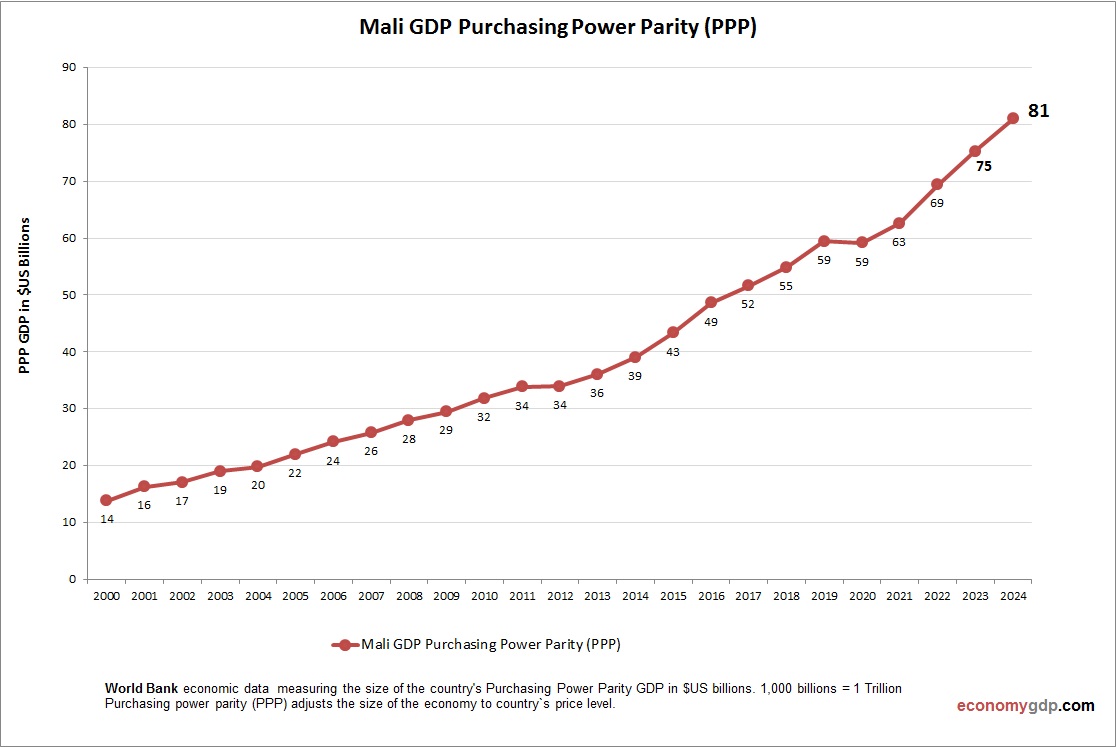
Mali Purchasing Power Parity (PPP)
Mali’s economy has a PPP GDP of $60 billion, three times its $20 billion nominal GDP, driven by low costs for agriculture and gold. PPP per capita is around $2,500, indicating low purchasing power. Domestic pricing supports subsistence activities, but conflict and poverty limit broader PPP-driven economic gains.
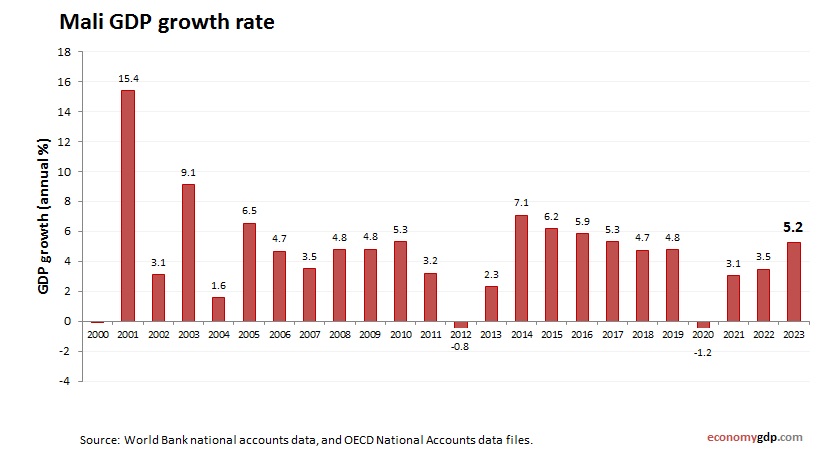
Mali Growth Rate
The economic growth rate is 3.8% in 2024, fueled by gold exports and agriculture. Cotton production and foreign investment support growth, but conflict and infrastructure deficits pose risks. Regional trade and mining projects drive resilience, while stability enhances momentum, positioning the small economy for steady progress.
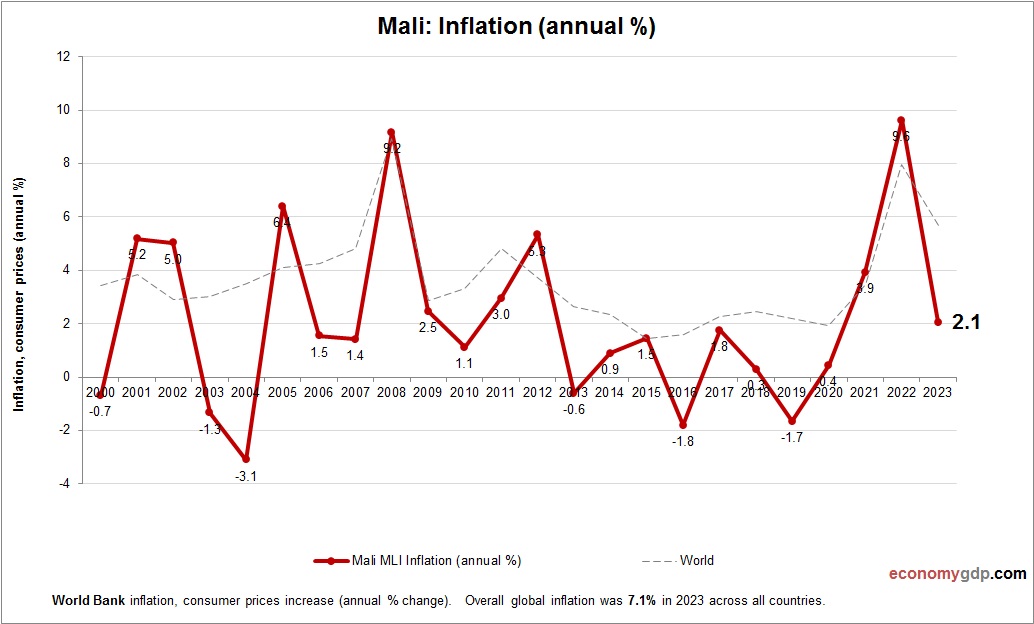
Mali Inflation
Mali’s inflation rate is about 6% in 2024, driven by rising global food and fuel prices. Conflict disrupts agricultural production, increasing prices, while currency depreciation in the CFA franc zone adds pressure. Gold exports fuel demand, but weak infrastructure sustains volatility, with limited policy tools to curb inflation.