The Morocco economy is diverse, driven by agriculture, tourism, and manufacturing. Phosphates, citrus, and textiles are key exports, while tourism, including Marrakech and coastal resorts, thrives. Renewable energy, particularly solar, is a growing sector, with ambitious green projects attracting investment. EU trade ties support growth, but unemployment and inequality persist. Infrastructure development and education reforms aim to enhance competitiveness, though water scarcity and regional disparities pose challenges.
Morocco Economy Size
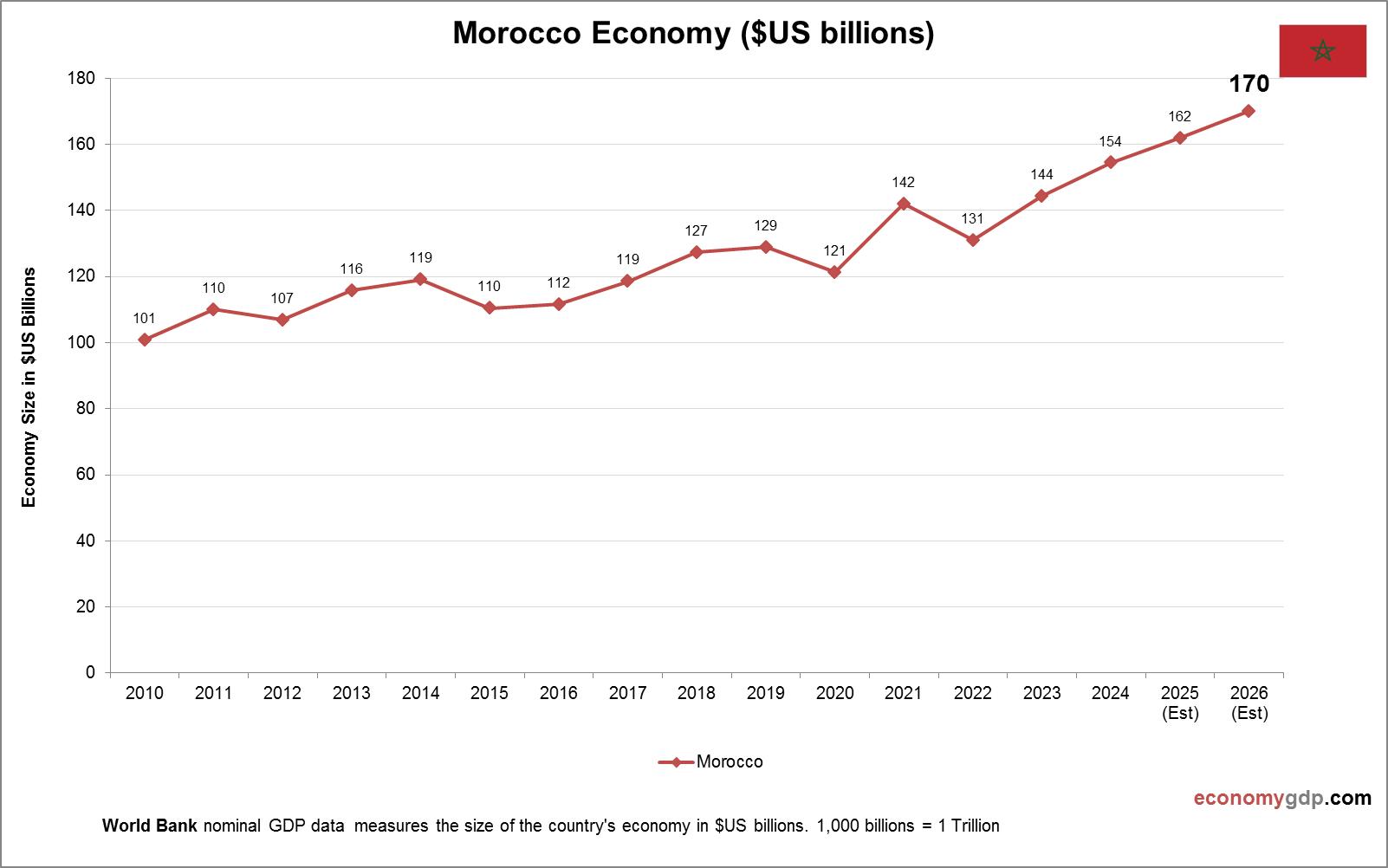
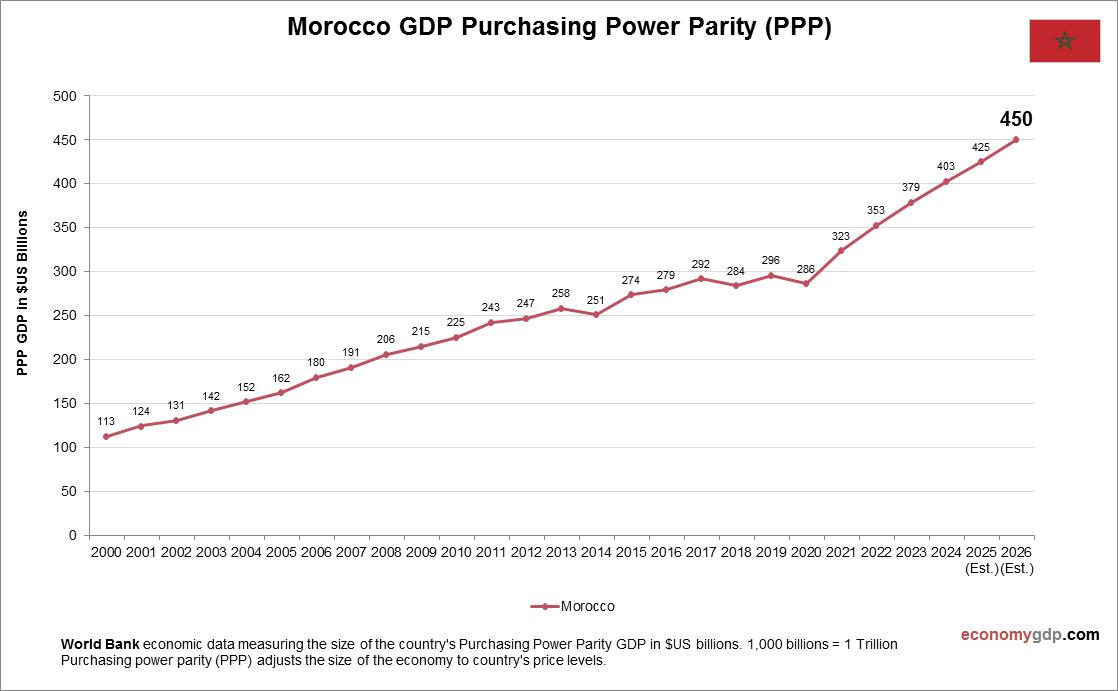
Morocco’s economy, at $140 billion, is sizable for North Africa, with agriculture and industry driving its GDP, bolstered by tourism. See Morocco GDP.
Morocco Purchasing Power Parity (PPP)
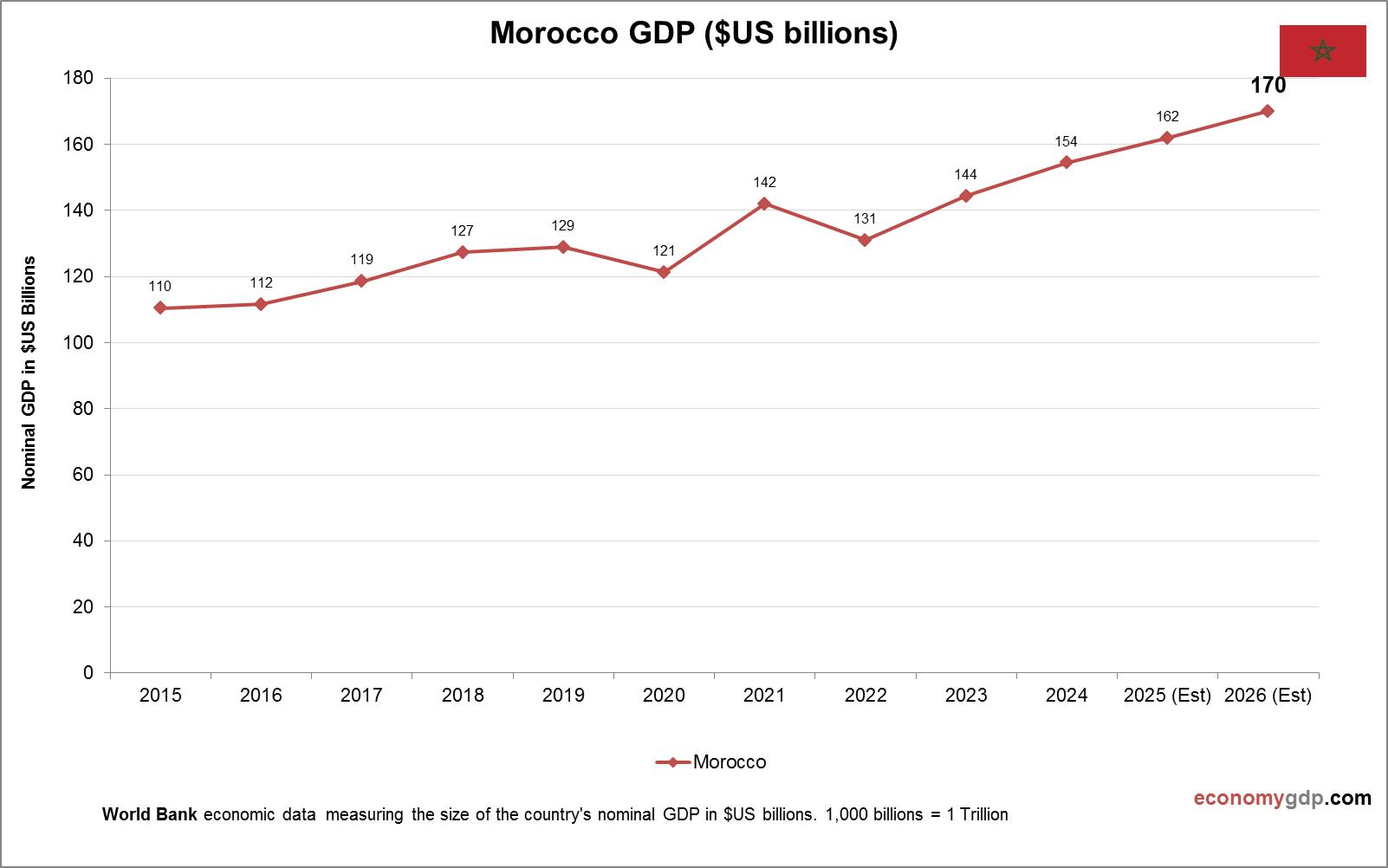
Morocco’s economy has a PPP GDP of $400 billion, nearly three times its $140 billion nominal GDP, due to low costs for agriculture and industry. PPP per capita is around $11,000, indicating modest purchasing power. Domestic pricing supports local markets, with tourism and trade amplifying PPP-driven growth.
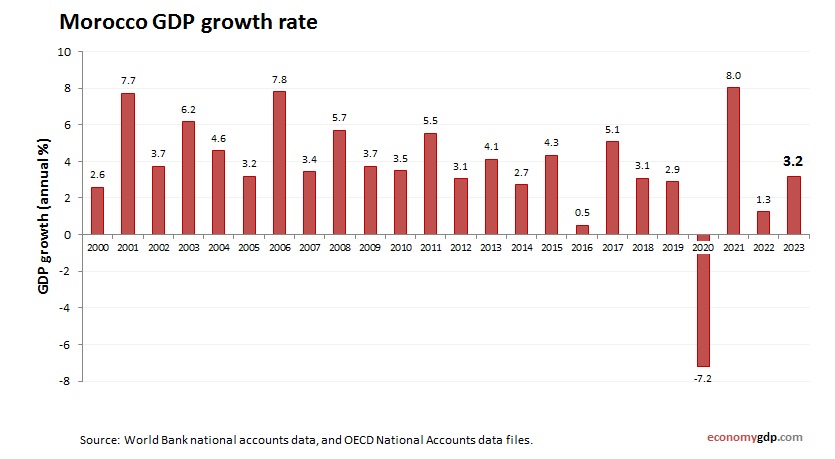
Morocco Growth Rate
The economic growth rate is 3.8% in 2024, driven by agriculture and tourism. Phosphate exports and infrastructure investments support growth, but water scarcity and unemployment pose risks. Trade with Europe and renewable energy drive resilience, while stability enhances momentum, positioning the economy for steady progress in North Africa.
Morocco Inflation
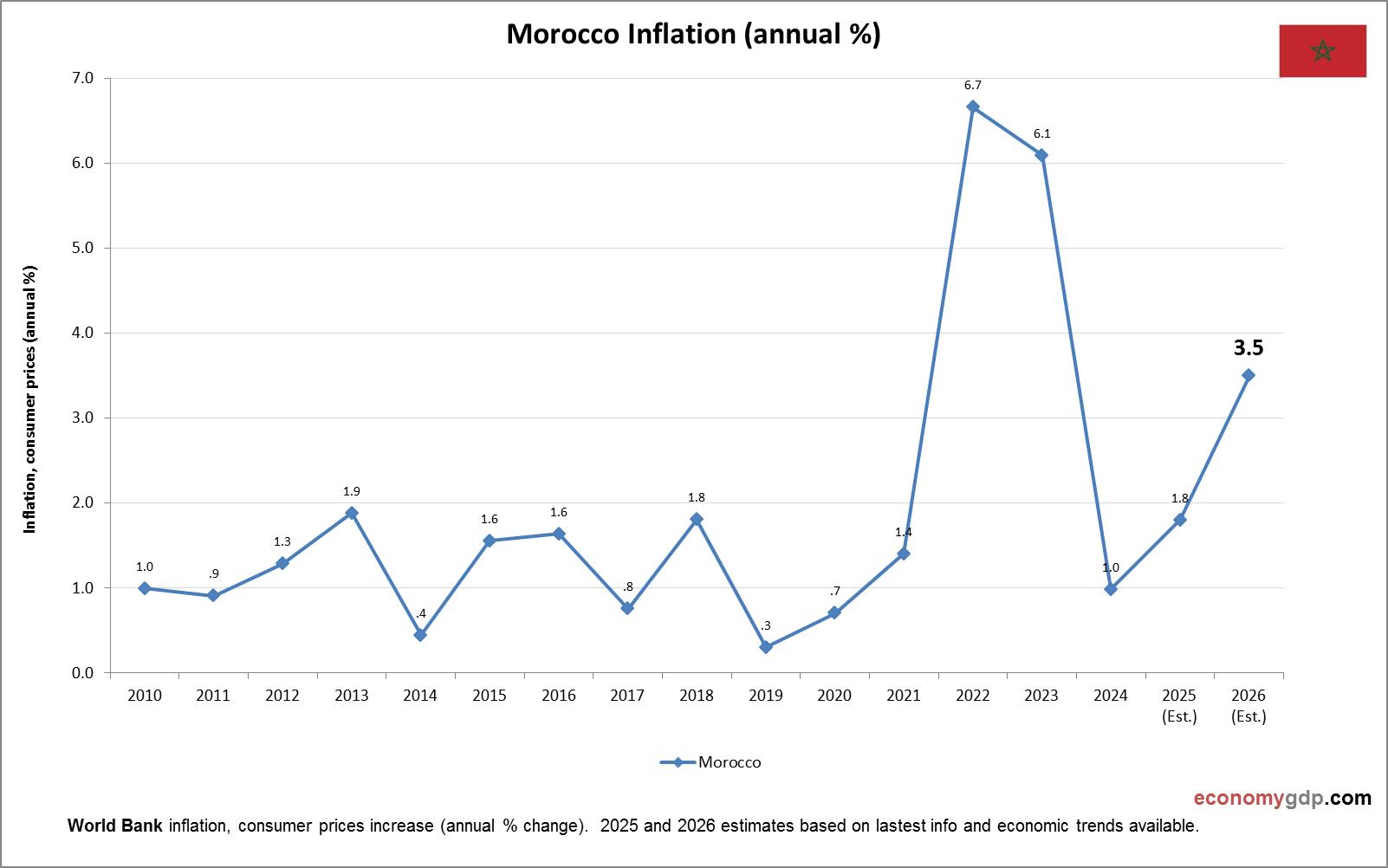
Morocco’s inflation rate is approximately 3.5% in 2024, driven by rising global food and energy prices. Agricultural disruptions from drought increase food costs, while tourism and export demand add pressure. Currency stability and monetary tightening help moderate inflation, though import reliance and water scarcity sustain price volatility.