
The Cuba economy is state-controlled, with tourism, sugar, and tobacco as key sectors. Medical services and biotechnology exports, particularly to Latin America, provide revenue. Economic reforms have introduced limited private enterprise, but U.S. sanctions and inefficiencies hinder growth. Agriculture and remittances support livelihoods, though shortages and inflation persist. Efforts to modernize infrastructure and attract investment face challenges, with reliance on tourism and external aid shaping economic prospects.
Cuba Economy Size
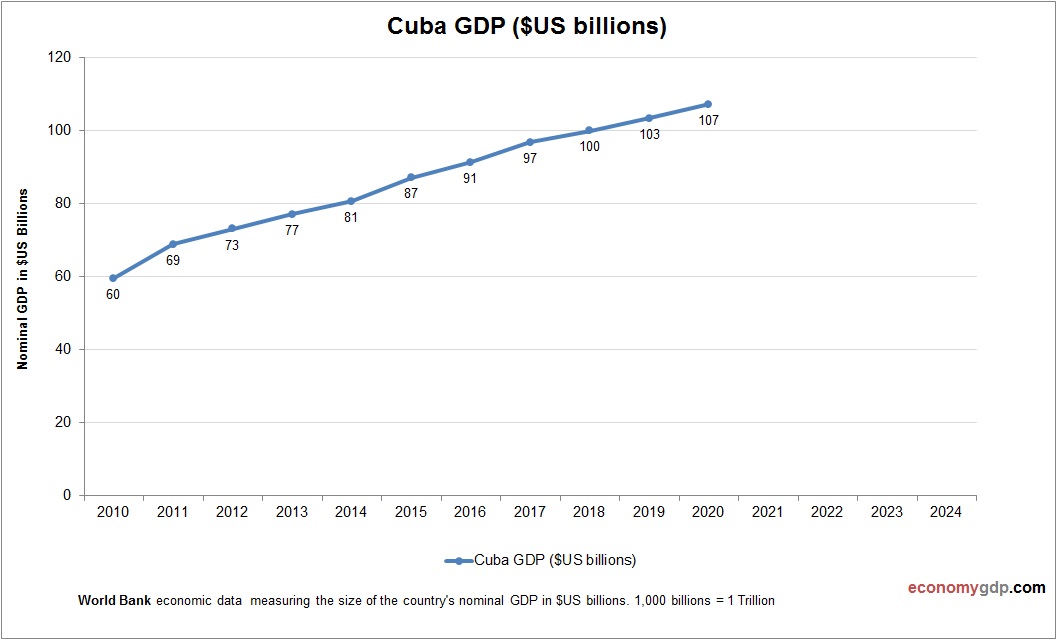
Cuba’s economy, estimated at $100 billion, is mid-sized but stagnant, shaped by state control. Services and agriculture drive its GDP, limited by sanctions and inefficiencies. See Cuba GDP.
Cuba Purchasing Power Parity (PPP)
Cuba’s economy has a PPP GDP of $150 billion, exceeding its $100 billion nominal GDP, reflecting lower local costs for services and agriculture. PPP per capita is around $13,000, indicating modest purchasing power. State control limits PPP benefits, but domestic pricing supports basic needs, with sanctions constraining growth potential.

Cuba Growth Rate
The economic growth rate is 1.0% in 2024, reflecting stagnation due to state control and U.S. sanctions. Agriculture and tourism drive limited activity, but inefficiencies and restricted trade hinder progress. Remittances and informal markets provide some stability, though lack of reforms and isolation constrain meaningful economic recovery.

Cuba Inflation
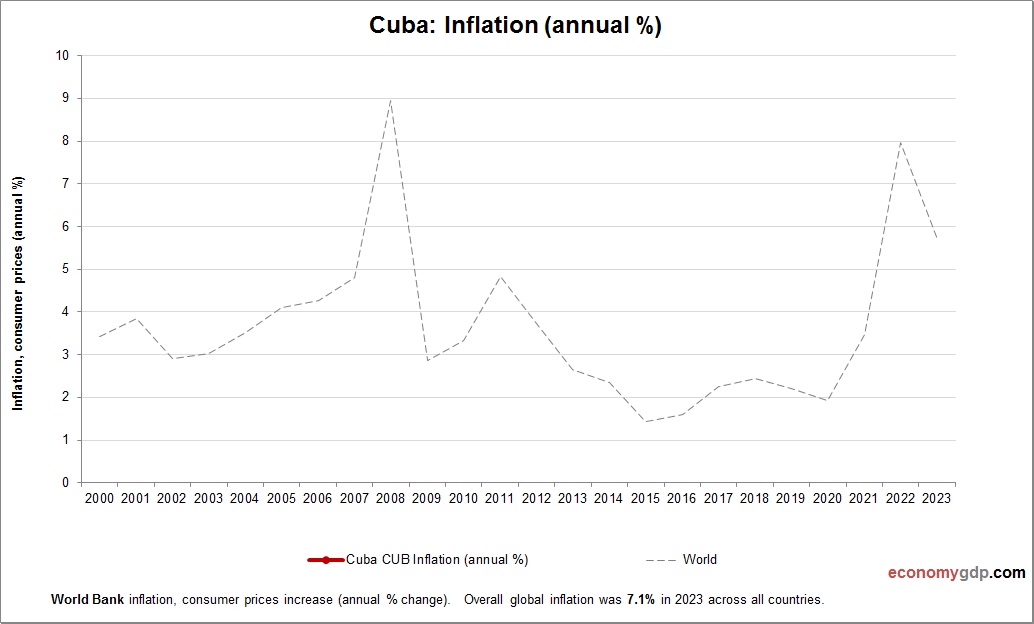
Cuba’s inflation rate is estimated at 30% in 2024, driven by U.S. sanctions and currency depreciation. Import reliance for food and fuel increases costs, while state-controlled pricing fuels black-market activity. Agricultural disruptions and fiscal deficits add pressure. Economic reforms aim to stabilize, but limited trade access sustains high inflation.