The Botswana economy relies heavily on diamond mining, which accounts for a significant portion of GDP and export revenue. Tourism, centered on wildlife and national parks, and cattle ranching also contribute. Prudent fiscal management has fostered stability, but overdependence on diamonds exposes it to global market fluctuations. Diversification into services and manufacturing is a priority, though unemployment and inequality persist. Investments in education and renewable energy aim to support long-term sustainable growth.
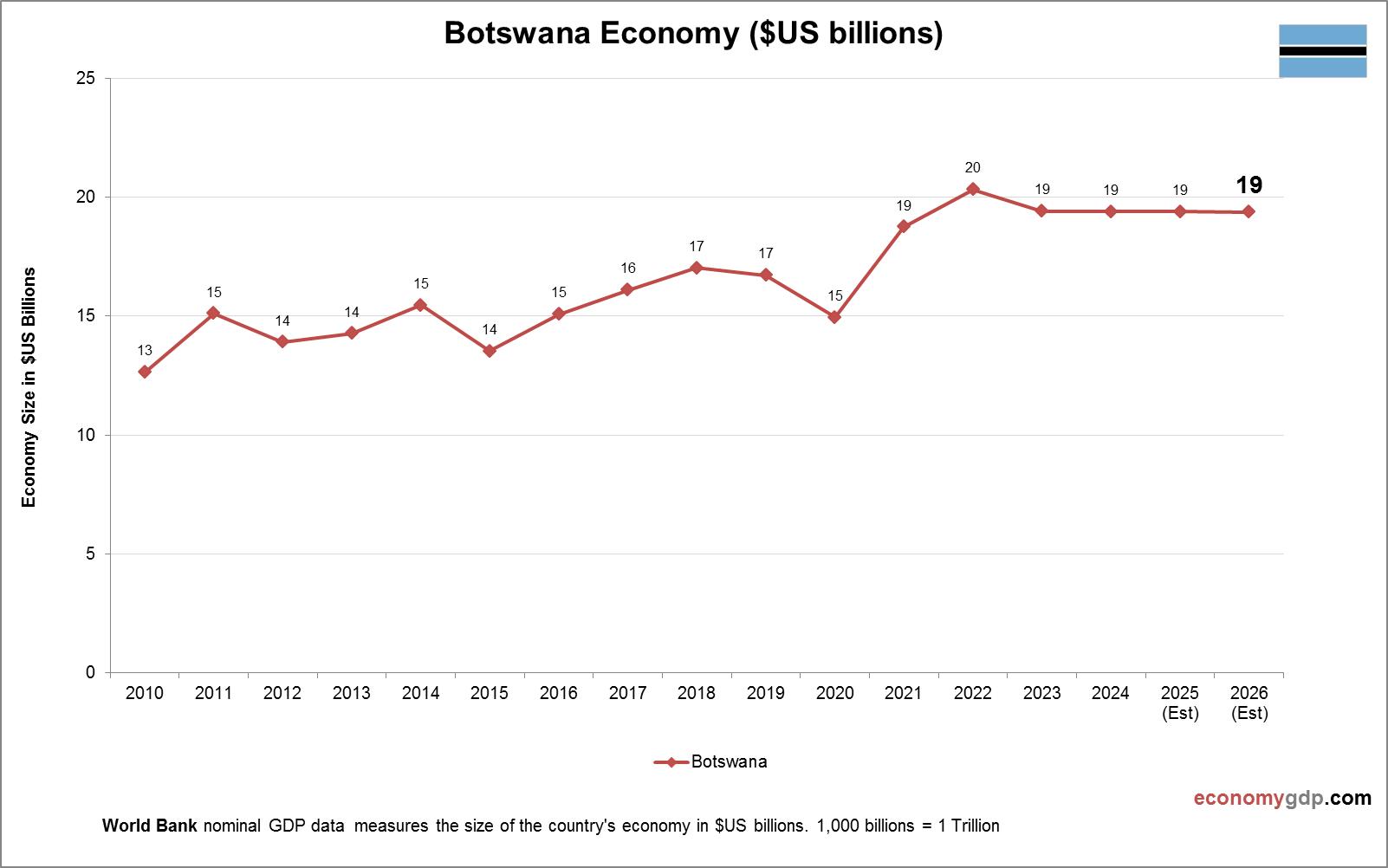
Botswana Economy Size
Botswana’s economy, at $20 billion, is relatively small but stable, with diamonds driving significant export revenue. Its GDP supports steady growth, bolstered by prudent fiscal management. See Botswana GDP.

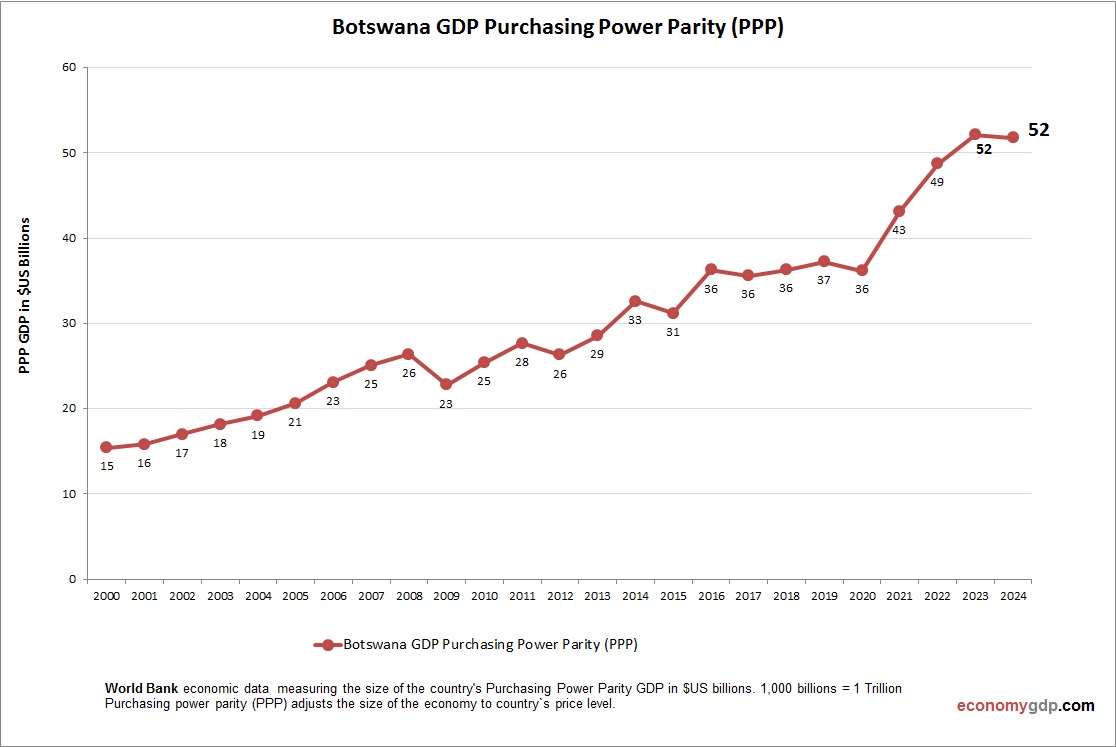
Botswana Purchasing Power Parity (PPP)
Botswana’s economy has a PPP GDP of $50 billion, over double its $20 billion nominal GDP, driven by low costs for diamonds and agriculture. PPP per capita is about $19,000, indicating solid purchasing power. Mining dominates, but PPP underscores potential in tourism and services, though reliance on exports poses risks to broader gains.
Botswana Growth Rate
The economic growth rate is 3.5% in 2024, driven by diamond exports and tourism. Stable governance and high global diamond prices support growth, but single-commodity reliance poses risks. Diversification into services and renewables aids resilience, though global demand fluctuations and inequality challenge broader expansion in this stable market.

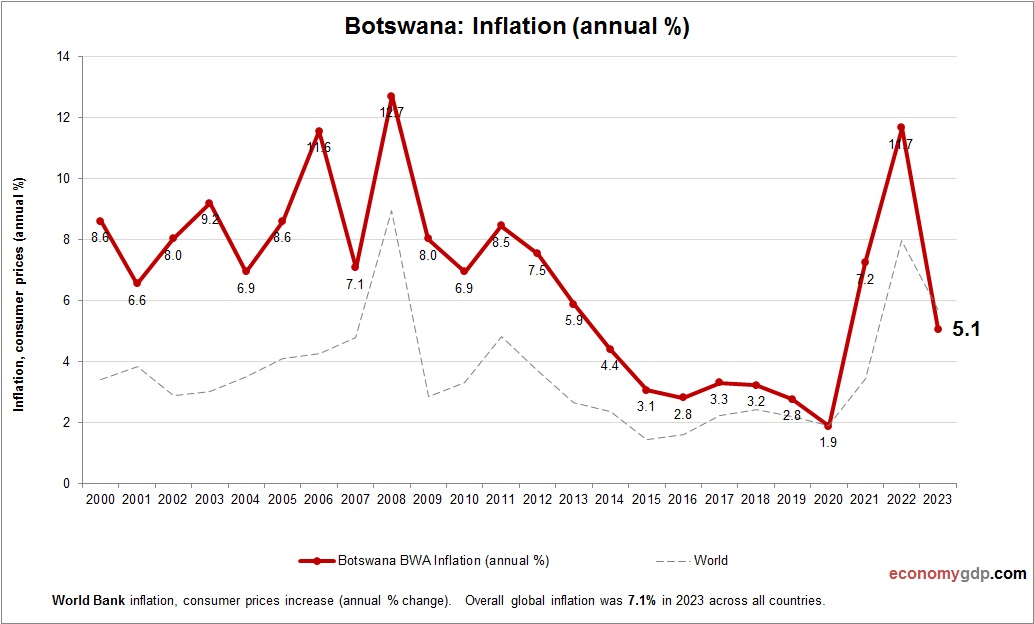
Botswana Inflation
Botswana’s inflation rate is around 4% in 2024, driven by rising global food prices and moderate demand from diamond exports. Currency stability, pegged to the South African rand, limits imported inflation, but drought-related agricultural shortages increase prices. Prudent fiscal management and tight monetary policy help contain inflation.