The Bulgaria economy is driven by industry, services, and agriculture within the EU framework. Manufacturing, including electronics and textiles, supports exports, while tourism benefits from Black Sea resorts and historical sites. EU membership has spurred infrastructure investment, but corruption, low wages, and an aging population hinder progress. Efforts to boost innovation and renewable energy aim to enhance competitiveness, though brain drain and bureaucratic inefficiencies remain challenges for sustained economic growth.
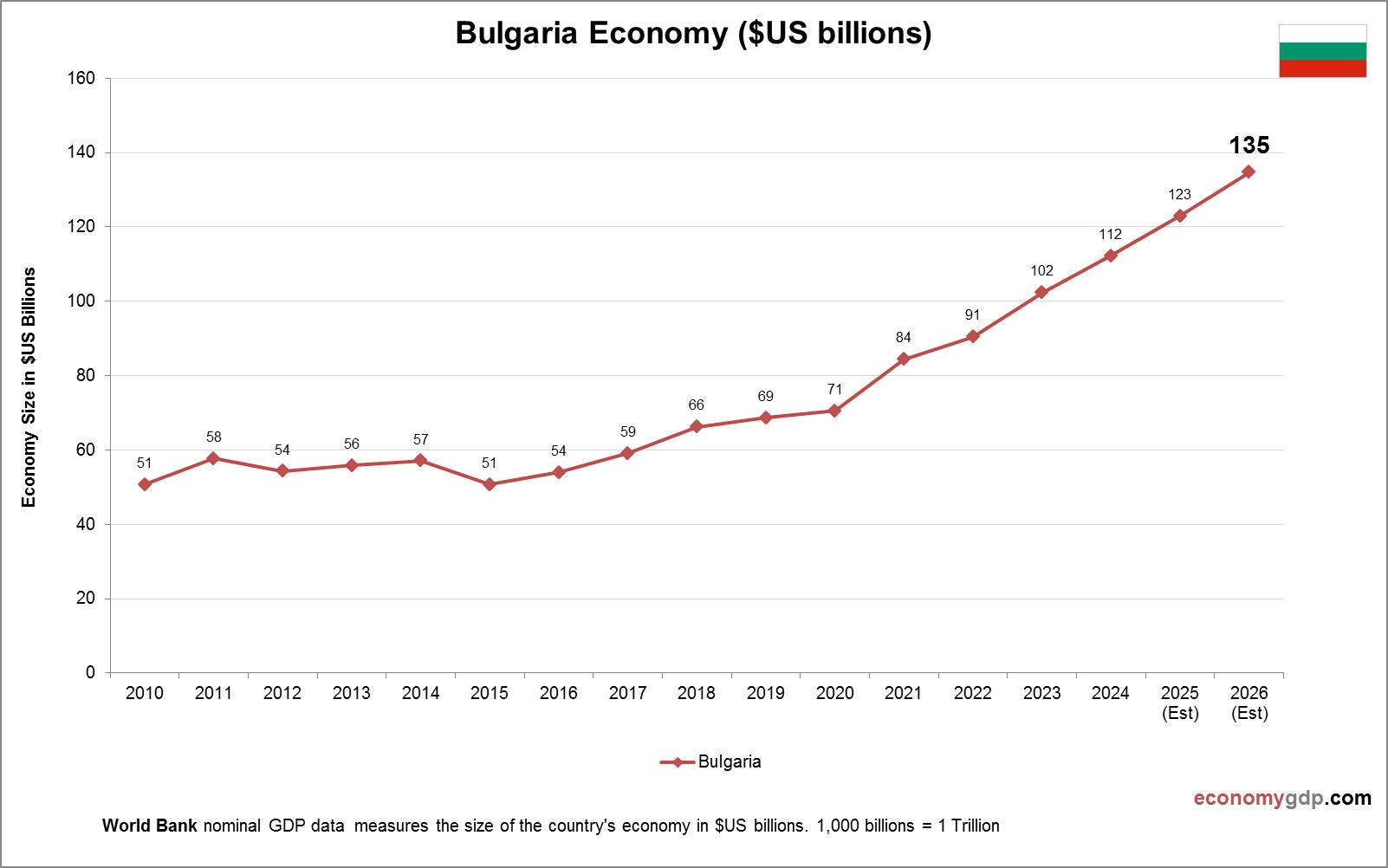
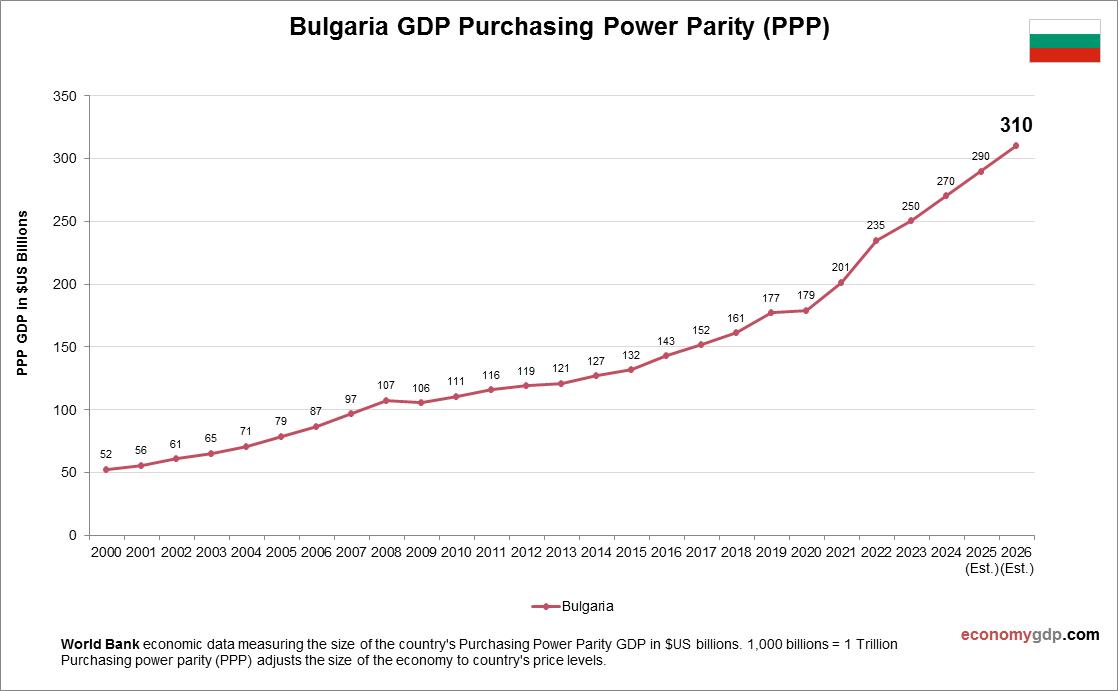
Bulgaria Economy Size
Bulgaria’s economy, worth $85 billion, is moderately sized within the EU. Industry, services, and agriculture contribute to its GDP, with growth tied to European trade integration. See Bulgaria GDP.
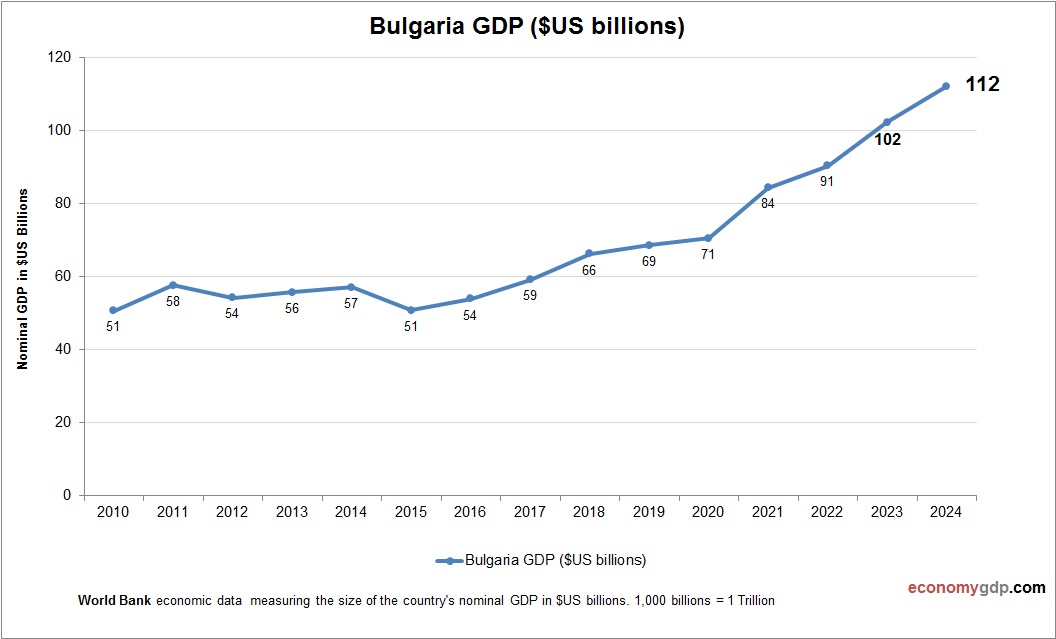
Bulgaria Purchasing Power Parity (PPP)
Bulgaria’s economy has a PPP GDP of $200 billion, over double its $85 billion nominal GDP, reflecting lower costs for industry and services. PPP per capita is around $30,000, suggesting good purchasing power within the EU. Agriculture and IT benefit from cost advantages, but emigration challenges growth. PPP highlights Bulgaria’s competitive domestic market potential.
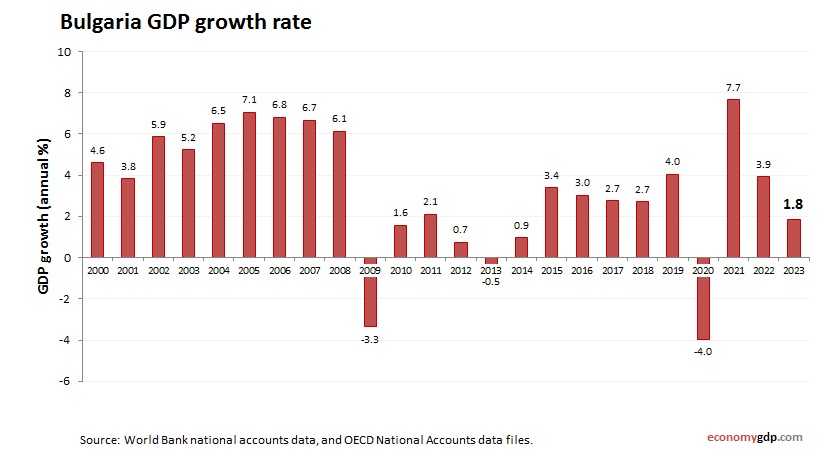
Bulgaria Growth Rate
The economic growth rate is 2.2% in 2024, fueled by EU-funded infrastructure and IT exports. Tourism and agriculture contribute, but an aging population and emigration slow progress. Recovery from trade disruptions supports growth, though energy import reliance and corruption limit gains. EU integration drives economic stability.
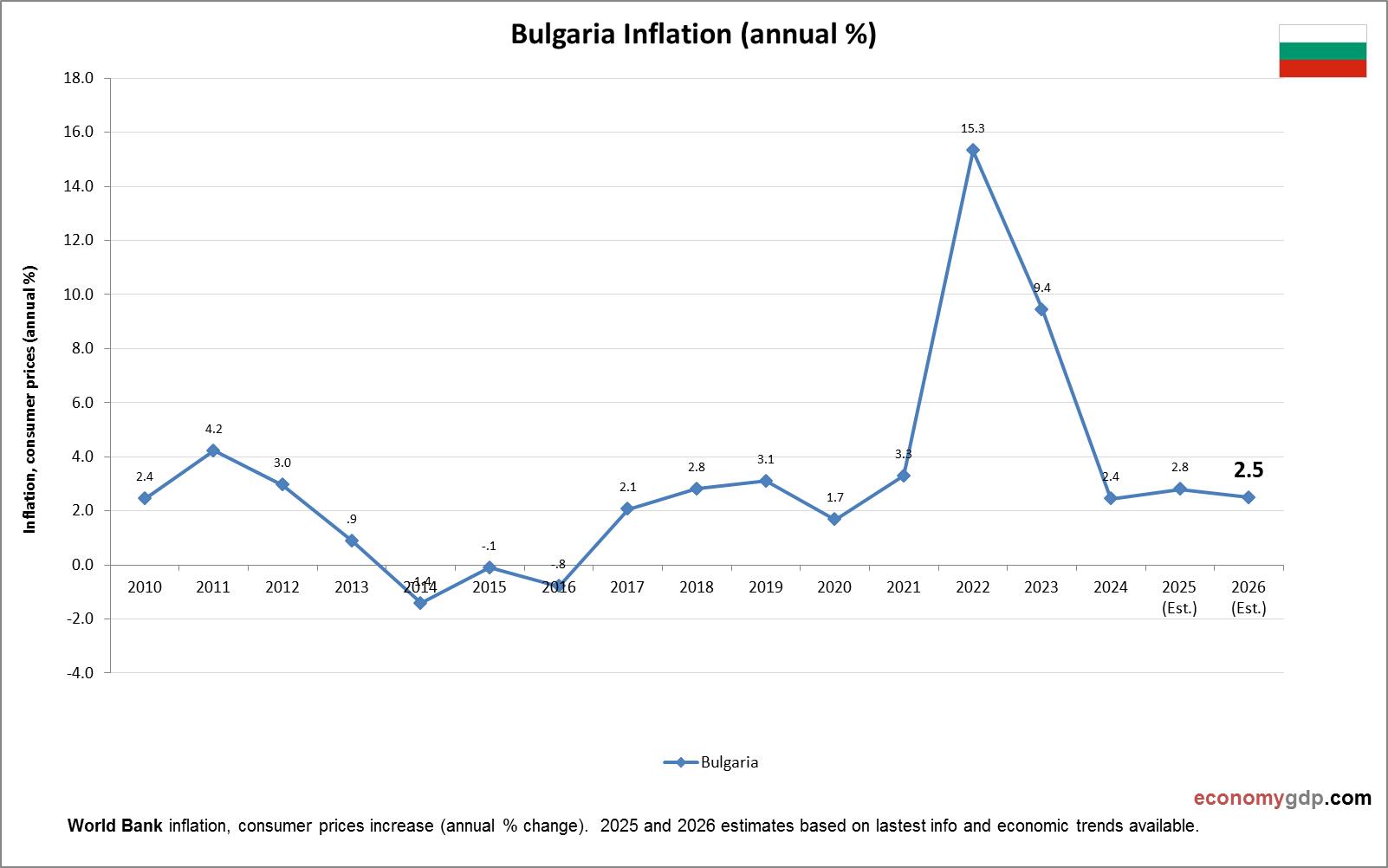
Bulgaria Inflation
Bulgaria’s inflation rate is approximately 3.5% in 2024, driven by rising energy and food import costs within the EU. Wage growth and infrastructure spending add demand-side pressure, while global supply chain issues persist. EU integration and monetary tightening help moderate inflation, though reliance on energy imports poses risks.