The Belize economy depends on tourism, agriculture, and offshore services. Eco-tourism, driven by coral reefs and rainforests, attracts visitors, while sugar, citrus, and seafood exports contribute to GDP. Offshore banking provides revenue, but high public debt, unemployment, and hurricane vulnerability limit growth. Efforts to diversify into renewable energy and improve infrastructure face funding constraints, with remittances playing a growing role in economic stability.
Belize Economy Size
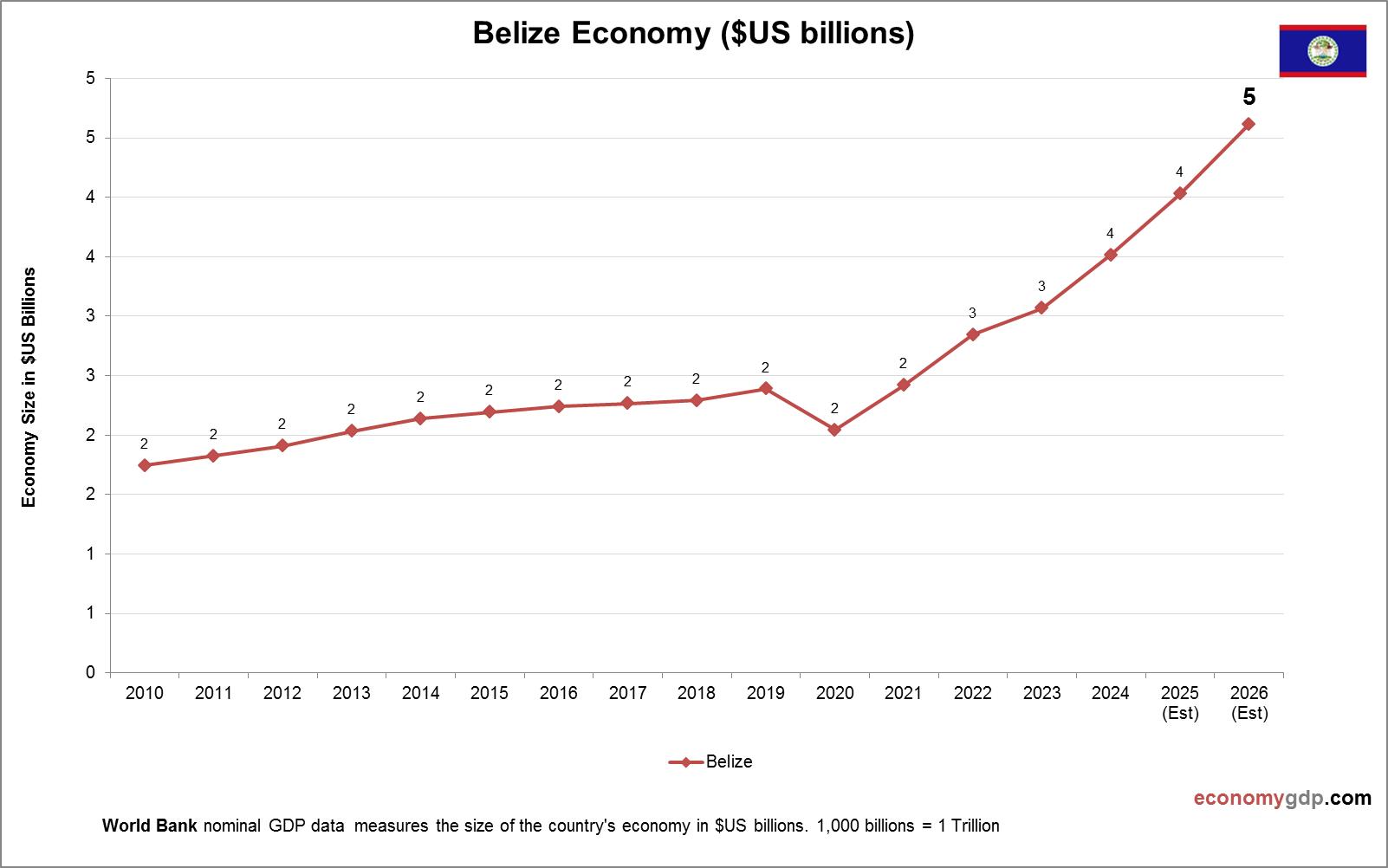
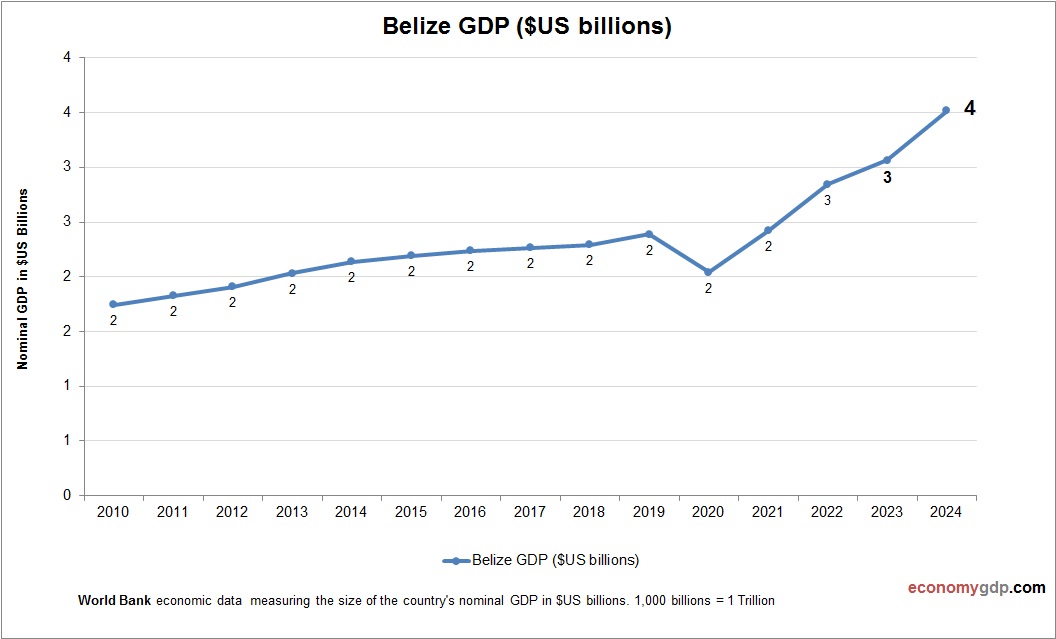
Belize’s economy, at $3 billion, is among the smallest in Central America. Tourism and agriculture drive its modest GDP, with growth constrained by limited infrastructure and market size. See Belize GDP.
Belize Purchasing Power Parity (PPP)
Belize’s economy has a PPP GDP of $6 billion, double its $3 billion nominal GDP, due to lower costs for tourism and agriculture. PPP per capita is around $14,000, indicating moderate purchasing power. The small economy benefits from domestic pricing, but reliance on exports and limited diversification constrain PPP advantages, with tourism driving most activity.

Belize Growth Rate
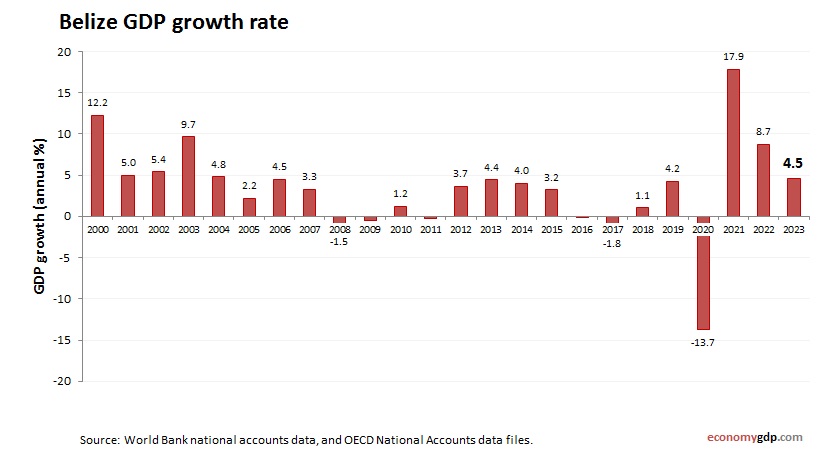
The economic growth rate is 3.0% in 2024, driven by tourism and agriculture. Increased visitor arrivals and citrus exports boost activity, but climate vulnerabilities and debt constrain gains. Eco-tourism and infrastructure investments support growth, though reliance on a narrow base and external shocks limit progress in this small market.
Belize Inflation
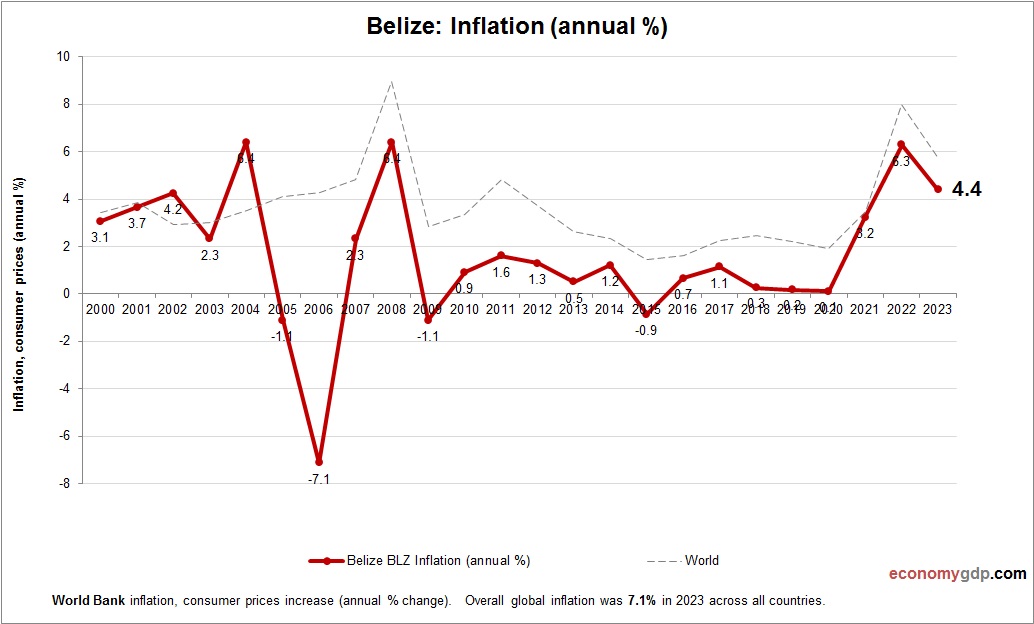
Belize’s inflation rate is approximately 4% in 2024, driven by rising global food and fuel prices in this import-heavy economy. Tourism recovery increases demand for services, pushing prices up. Limited local production and climate vulnerabilities exacerbate costs, but stable monetary policy helps keep inflation moderate for a small economy.