The Greece economy relies on tourism, shipping, and agriculture within the EU. Mediterranean islands and historical sites draw millions, while shipping is a global leader. Olive oil and feta are key exports. Post-debt crisis reforms have stabilized finances, but high unemployment and public debt linger. Investments in renewable energy and digital infrastructure aim to boost growth, though brain drain and bureaucratic inefficiencies challenge long-term competitiveness in a recovering economy.
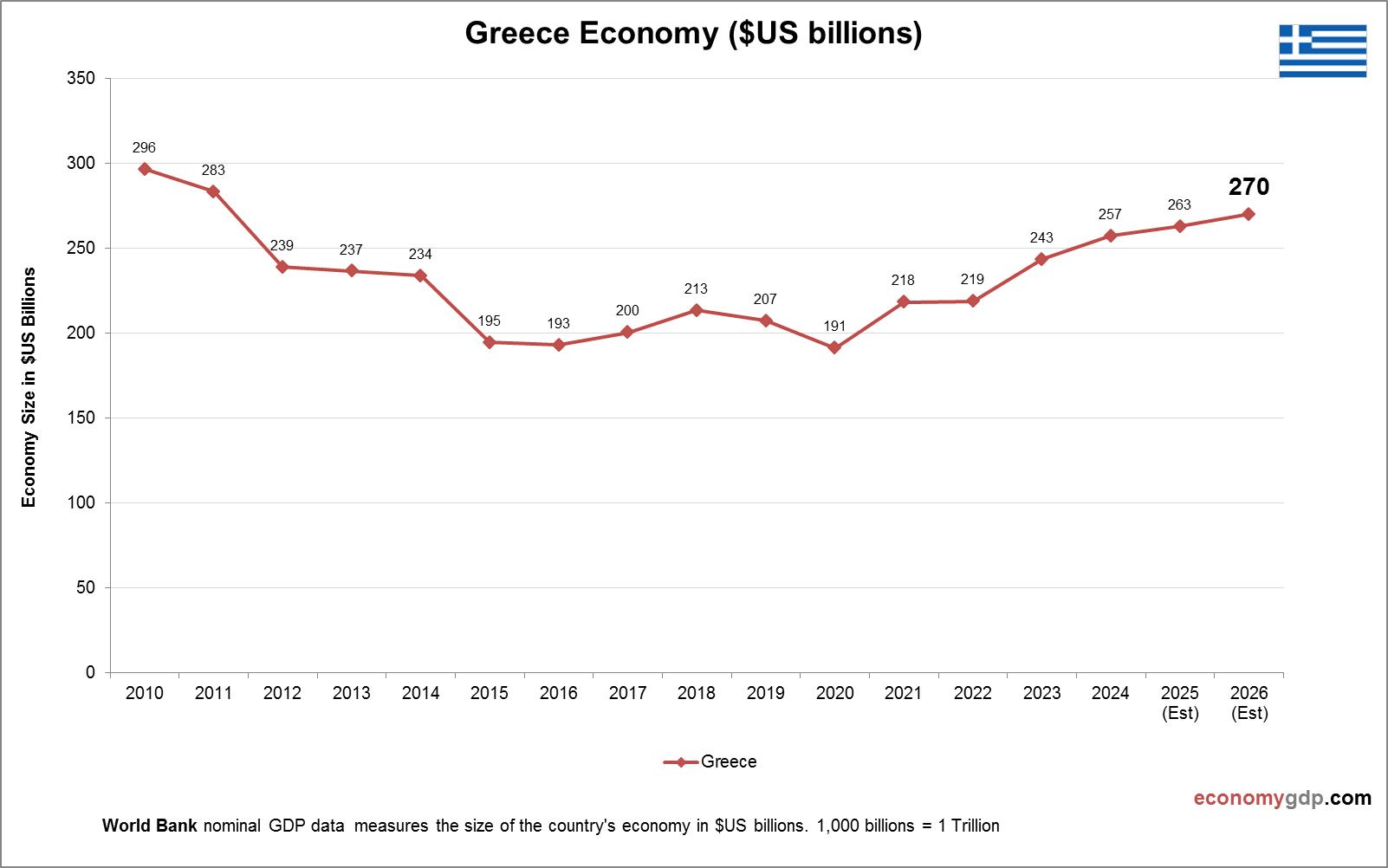
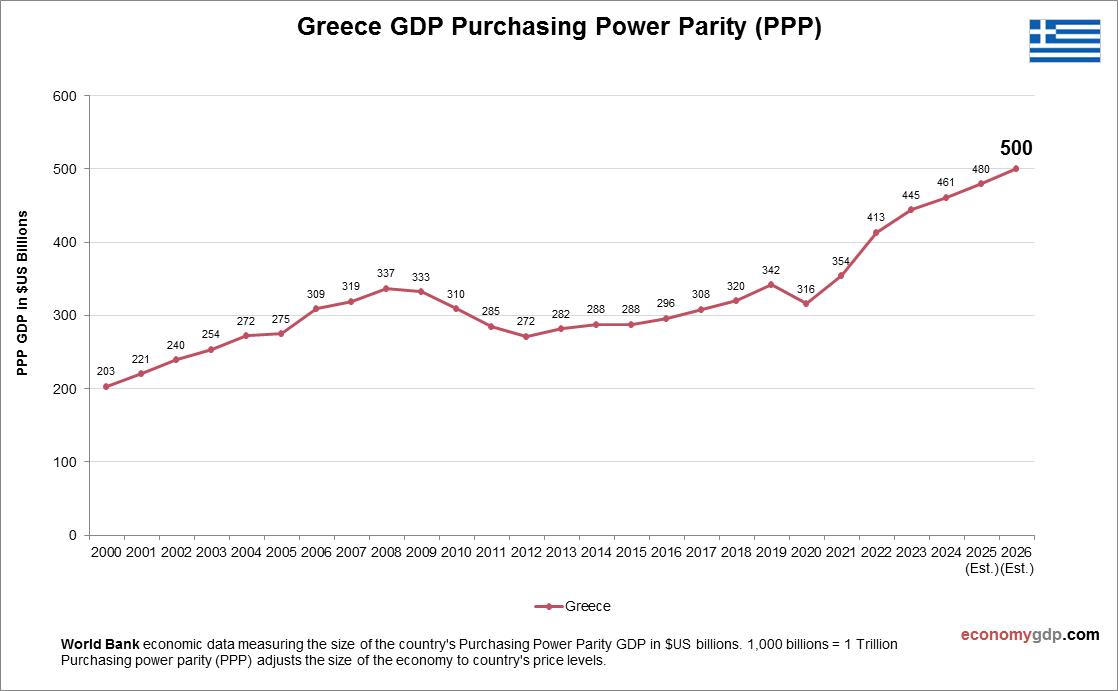
Greece Economy Size
Greece’s economy, at $220 billion, is moderately sized within the EU, driven by tourism and shipping. Its GDP has stabilized post-debt crisis with reforms. See Greece GDP.
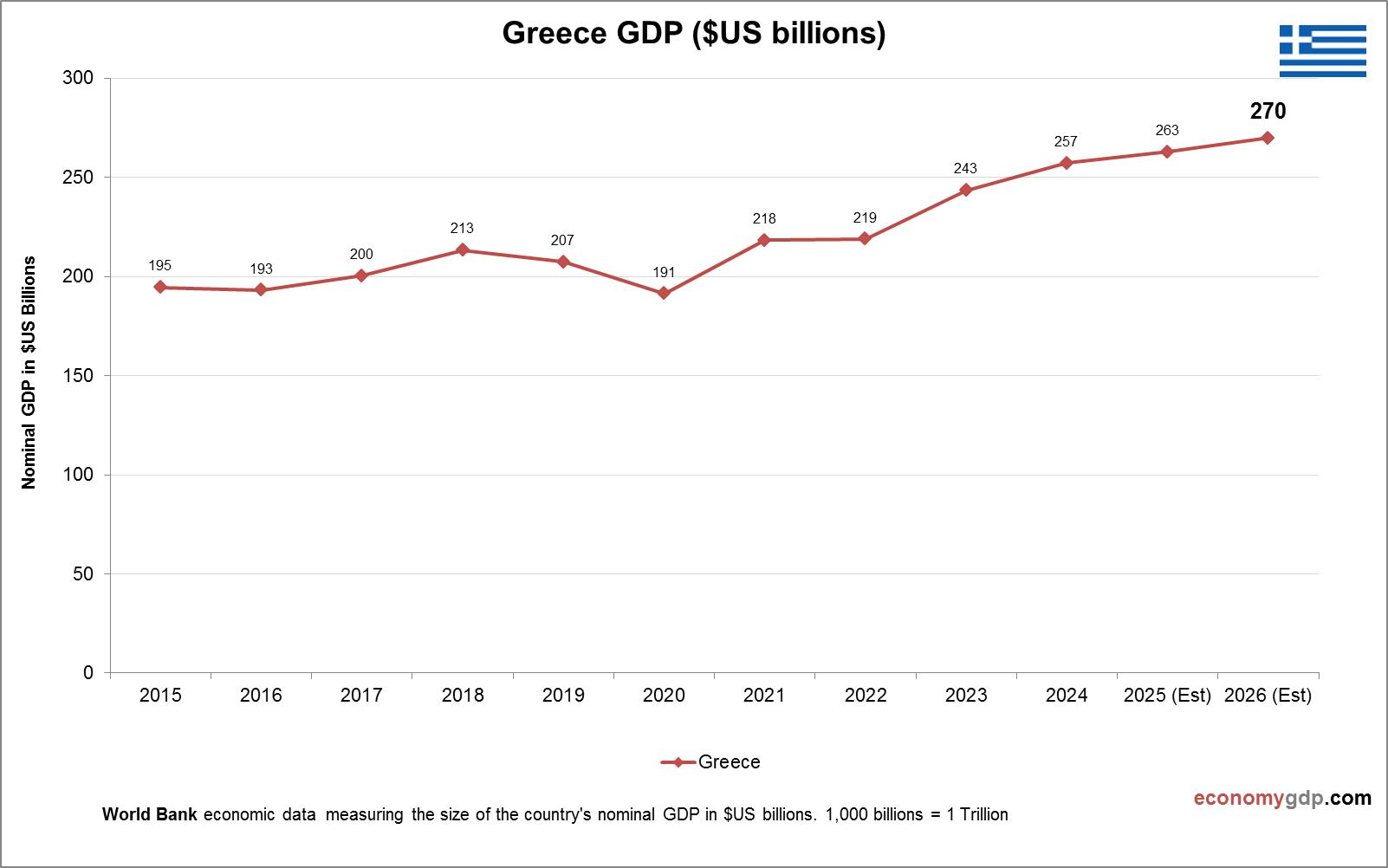
Greece Purchasing Power Parity (PPP)
Greece’s economy has a PPP GDP of $430 billion, nearly double its $220 billion nominal GDP, reflecting lower costs for tourism and services. PPP per capita is about $40,000, showing strong purchasing power within the EU. Domestic pricing boosts markets, but debt and aging population limit broader PPP benefits.
Greece Growth Rate
The economic growth rate is 1.8% in 2024, driven by tourism and shipping. EU membership and debt restructuring support growth, but an aging population and high costs limit gains. Agriculture contributes modestly, while renewable energy investments enhance resilience, positioning the economy for modest recovery within the EU.

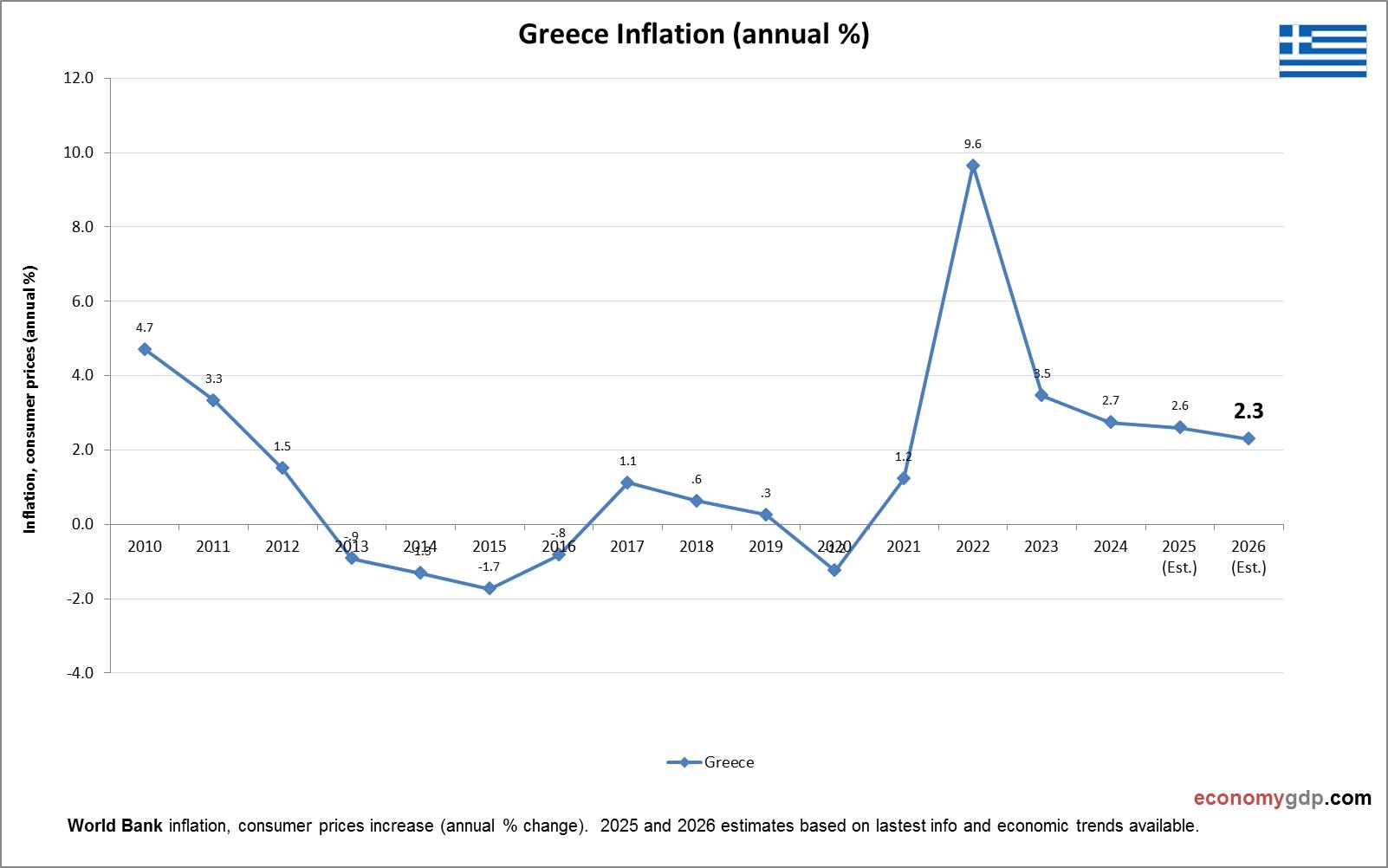
Greece Inflation
Greece’s inflation rate is around 3% in 2024, driven by rising energy and food import costs within the EU. Tourism recovery increases service prices, while wage growth adds pressure. Eurozone monetary tightening and fiscal reforms help contain inflation, though reliance on imports and global price trends sustain moderate price increases.