The Guatemala economy depends on agriculture, remittances, and manufacturing. Coffee, bananas, and sugar are major exports, while remittances from U.S.-based workers support GDP. Textiles and light industry are growing, but poverty, inequality, and crime hinder progress. Infrastructure deficits and limited access to education pose challenges, with efforts to attract investment and diversify into tourism and renewable energy underway to enhance economic stability.
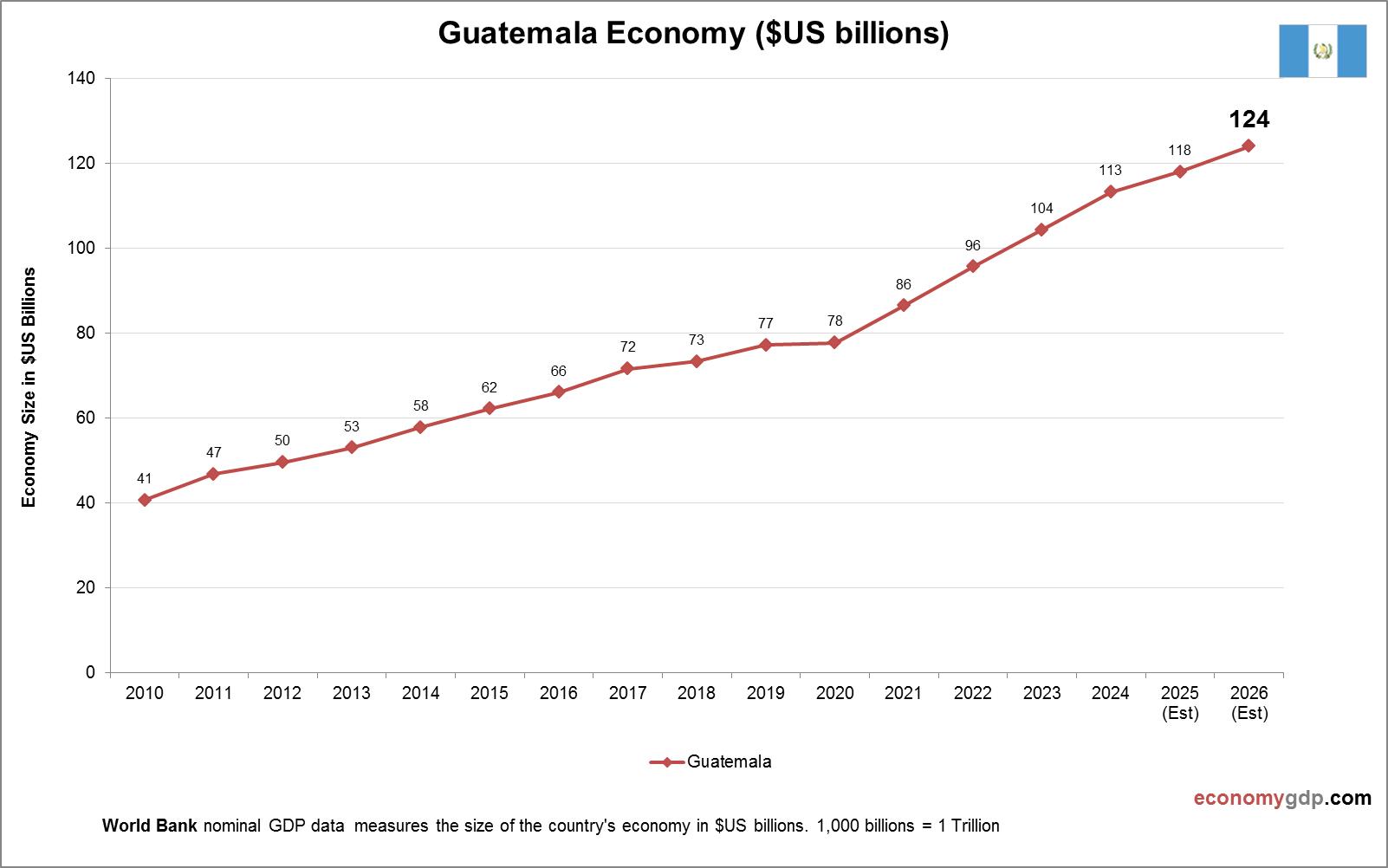
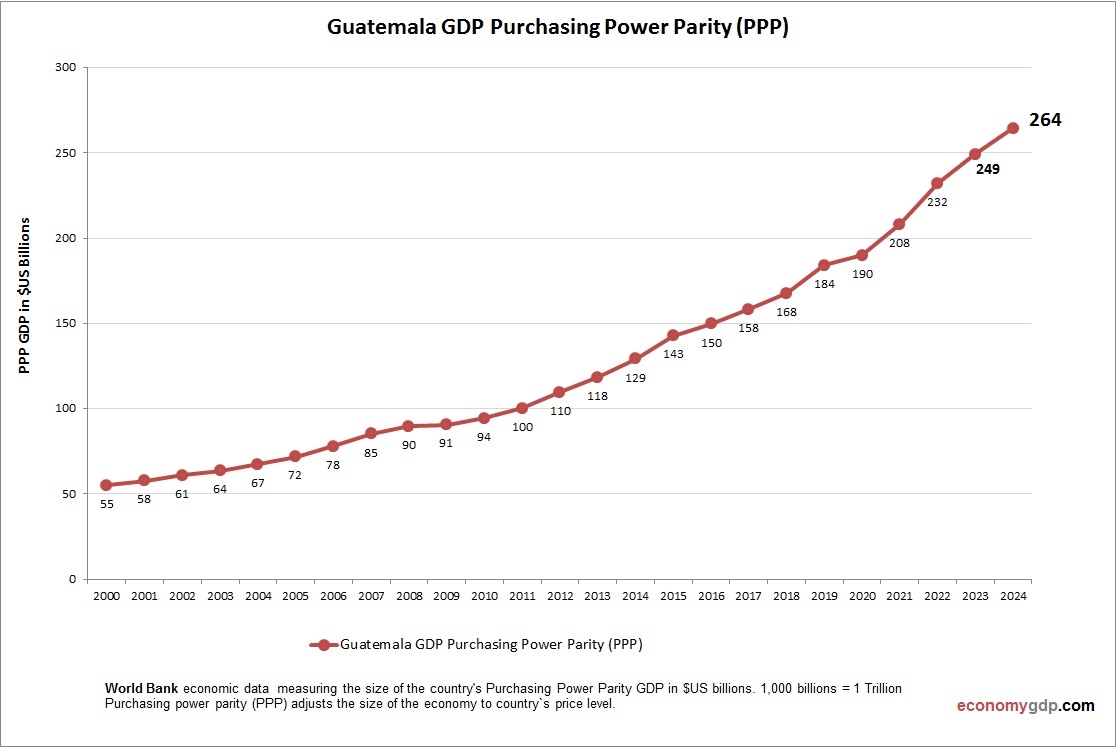
Guatemala Economy Size
Guatemala’s economy, worth $95 billion, is Central America’s largest, with agriculture and services driving its GDP, though inequality limits broader growth. See Guatemala GDP.
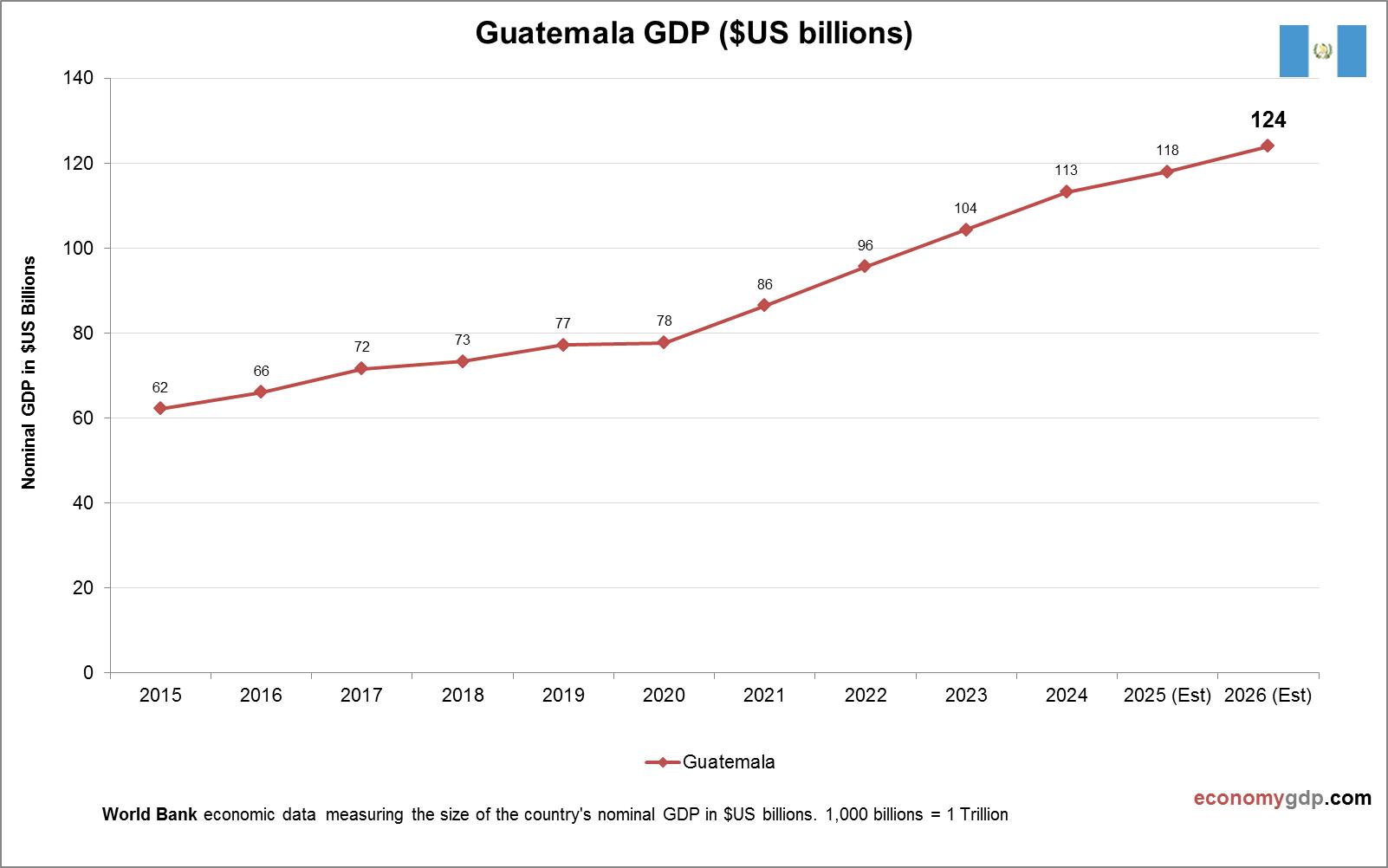
Guatemala Purchasing Power Parity (PPP)
Guatemala’s economy has a PPP GDP of $200 billion, over double its $95 billion nominal GDP, due to low costs for agriculture and services. PPP per capita is around $11,000, reflecting modest purchasing power. Domestic pricing supports local markets, but inequality and limited diversification hinder broader PPP-driven growth.
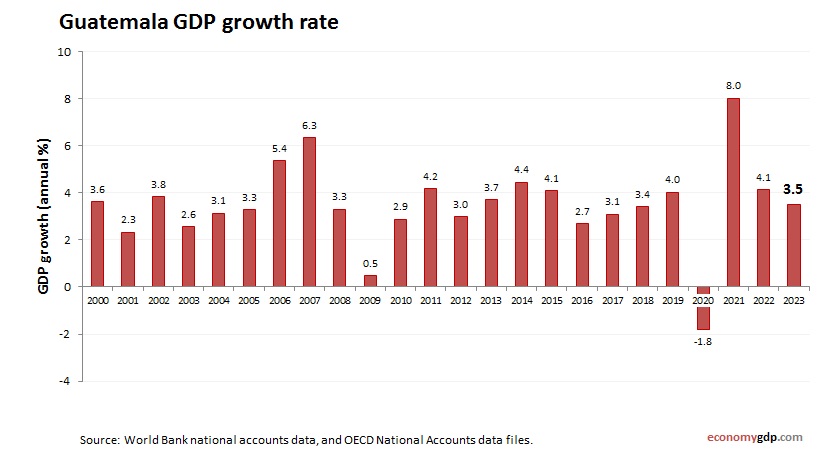
Guatemala Growth Rate
The economic growth rate is 3.5% in 2024, fueled by agriculture and remittances. Coffee exports and manufacturing drive growth, but inequality and political instability limit gains. Infrastructure investments and regional trade support resilience, while foreign investment in agro-processing enhances momentum, positioning the economy for steady progress.
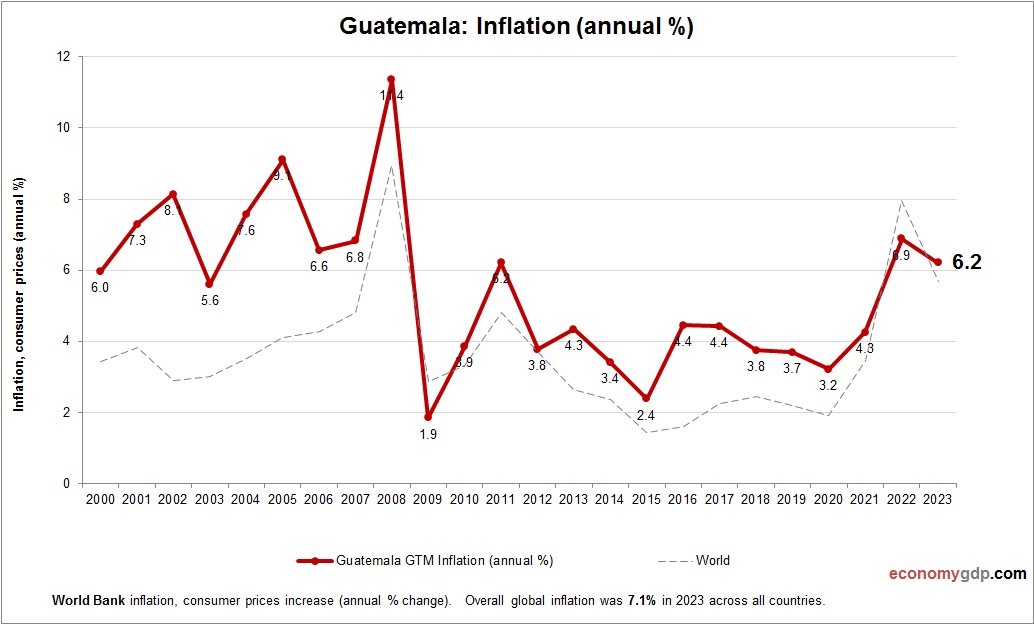
Guatemala Inflation
Guatemala’s inflation rate is approximately 4% in 2024, driven by rising global food and fuel prices. Remittances and agricultural exports increase domestic demand, while weather-related crop disruptions add pressure. Stable monetary policy and regional trade help moderate inflation, though import reliance sustains price volatility in this small economy.