The Central African Republic economy is one of the worlds least developed, relying on subsistence agriculture, diamonds, and timber. Small-scale farming dominates, while diamond exports provide limited revenue. Ongoing conflict, weak governance, and lack of infrastructure severely hamper growth. Humanitarian crises and widespread poverty exacerbate challenges, with minimal foreign investment. Efforts to stabilize security and develop agriculture face significant obstacles, leaving the economy highly vulnerable to external shocks and internal instability.
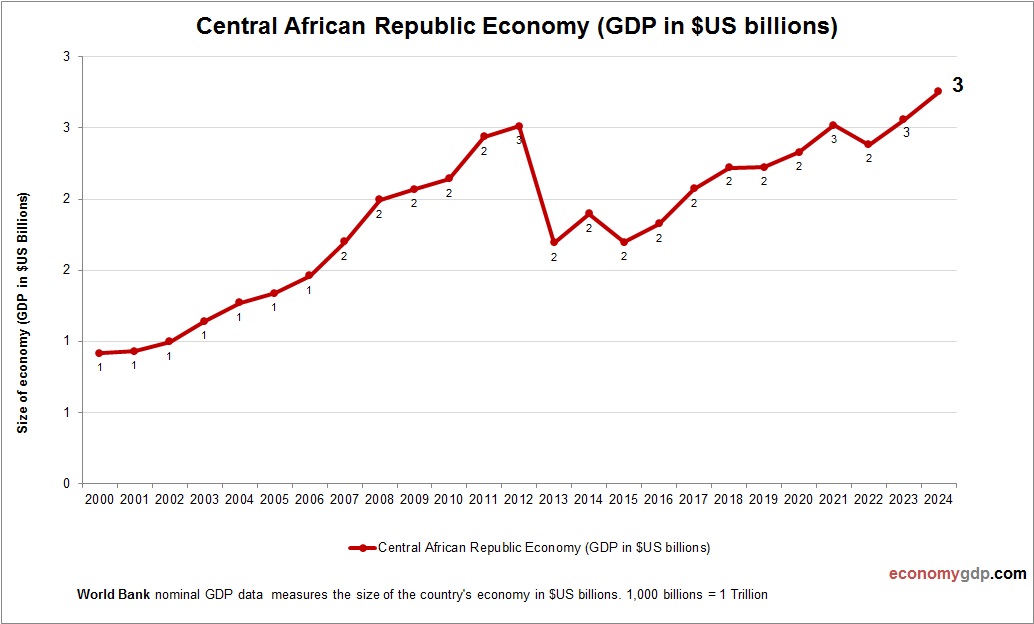
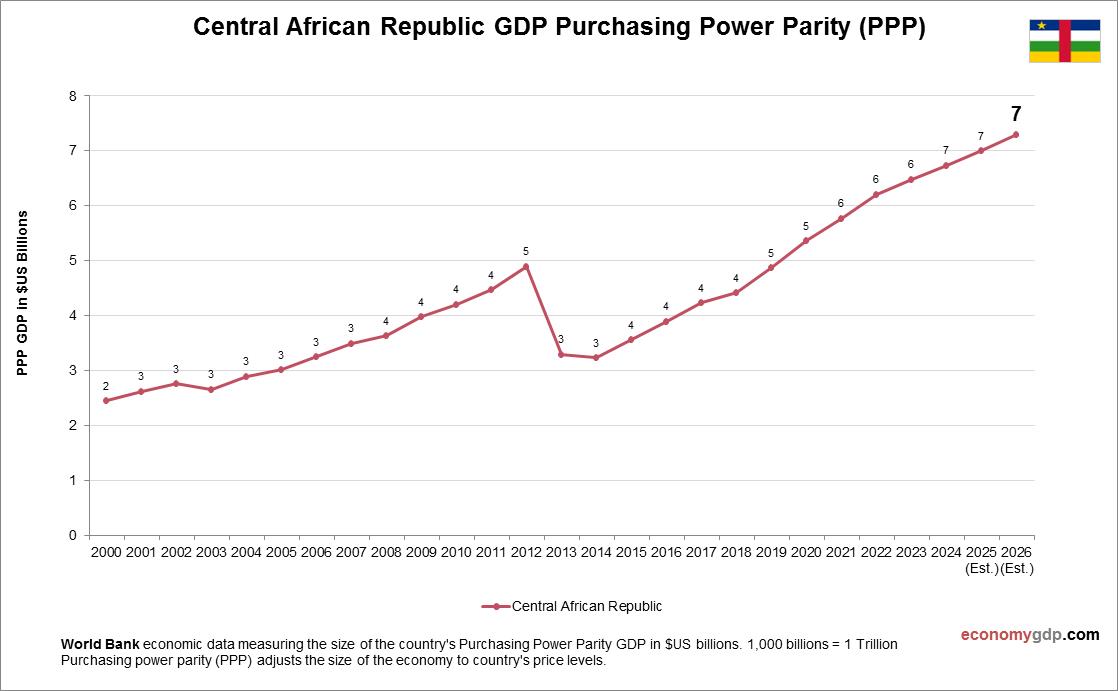
Central African Republic Economy Size
The Central African Republic’s economy, worth $2.5 billion, is among the world’s smallest. Conflict and poverty severely limit its GDP, reliant on agriculture and mining. See Central African Republic GDP.
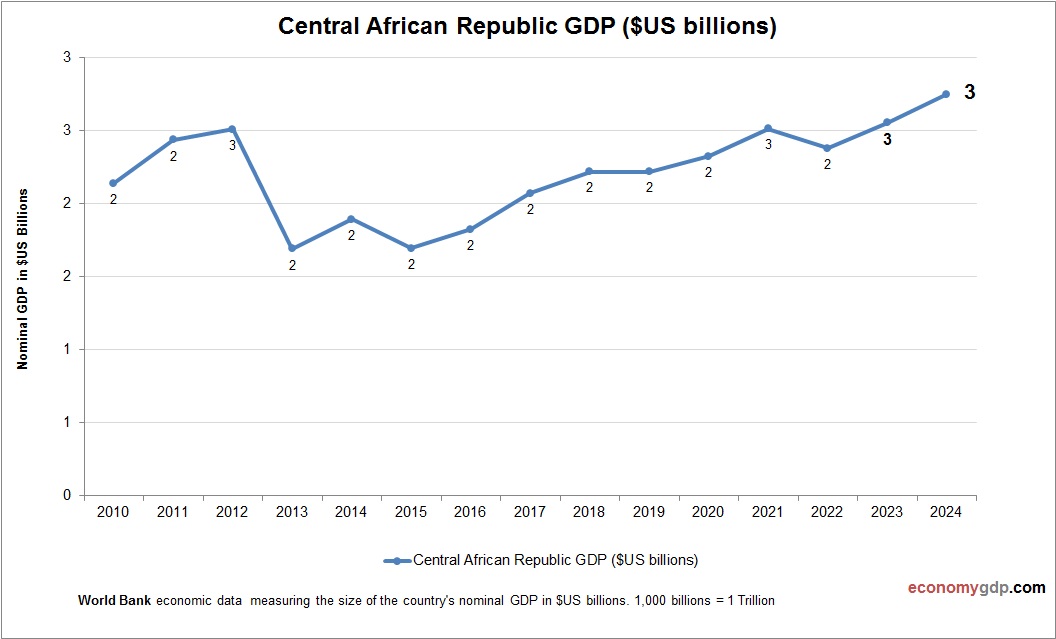
Central African Republic Purchasing Power Parity (PPP)
The Central African Republic’s economy has a PPP GDP of $6 billion, over double its $2.5 billion nominal GDP, due to low local costs. PPP per capita is around $1,000, among the lowest globally, reflecting extreme poverty. Agriculture and mining benefit from cost advantages, but conflict severely limits economic output and PPP gains.
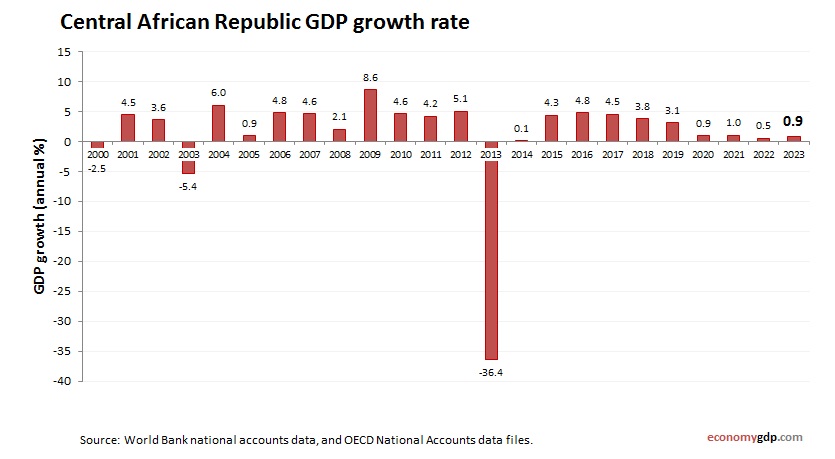
Central African Republic Growth Rate
The economic growth rate is 0.5% in 2024, reflecting stagnation due to ongoing conflict and weak governance. Subsistence agriculture and limited diamond exports drive minimal activity, but insecurity and infrastructure collapse hinder progress. International aid provides some support, though widespread poverty and instability severely constrain any meaningful economic recovery.
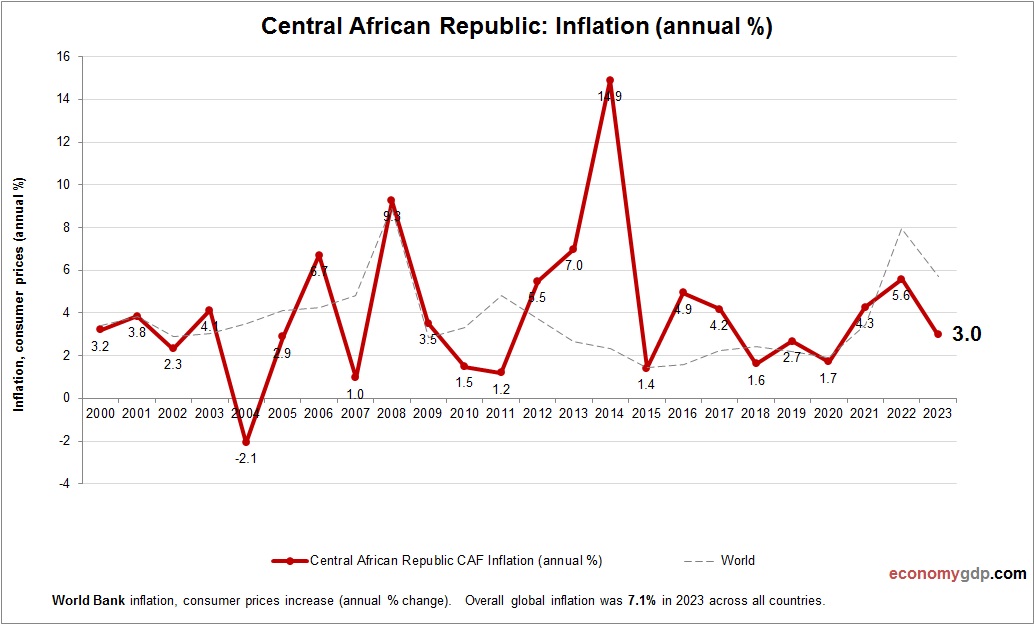
Central African Republic Inflation
The Central African Republic’s inflation rate is around 8% in 2024, driven by conflict-related supply disruptions and reliance on imported food and fuel. Currency depreciation and weak agricultural output increase prices, while limited governance fuels volatility. Humanitarian aid mitigates shortages, but persistent insecurity keeps inflation high, impacting basic goods.