Armenia’s economy, worth $20 billion, shifted from Soviet industry to agriculture and services. Agriculture, including wine and fruits, employs 30% of the workforce. The IT sector, contributing 7% to GDP, is a rising star, with Yerevan emerging as a tech hub. Mining (copper, molybdenum) and hydropower are key. Tourism, tied to cultural sites, grows steadily. Closed borders with Turkey and Azerbaijan limit trade, increasing reliance on remittances (10% of GDP). Anti-corruption reforms support growth, but geopolitical isolation challenges diversification efforts.
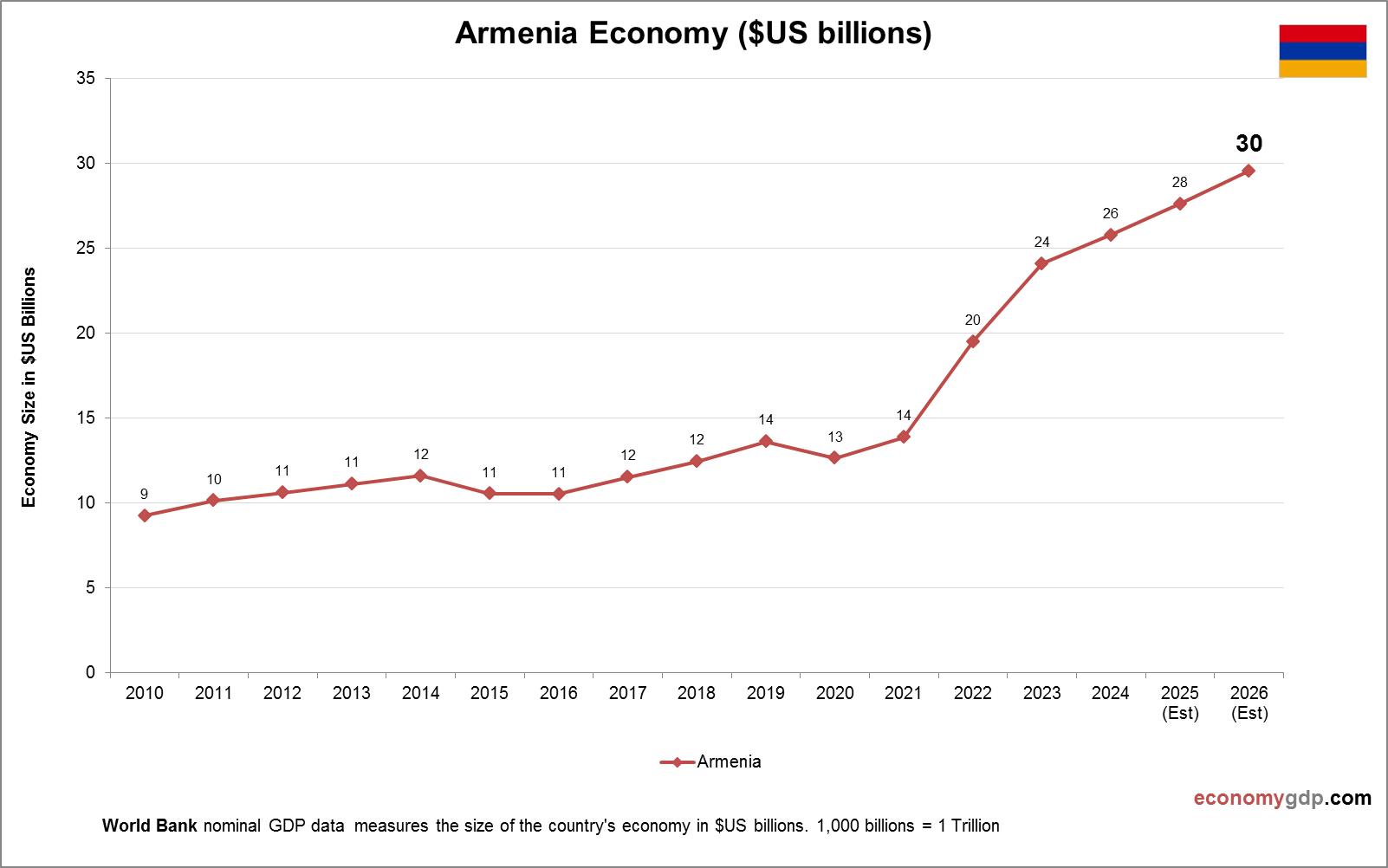
Armenia Economy Size
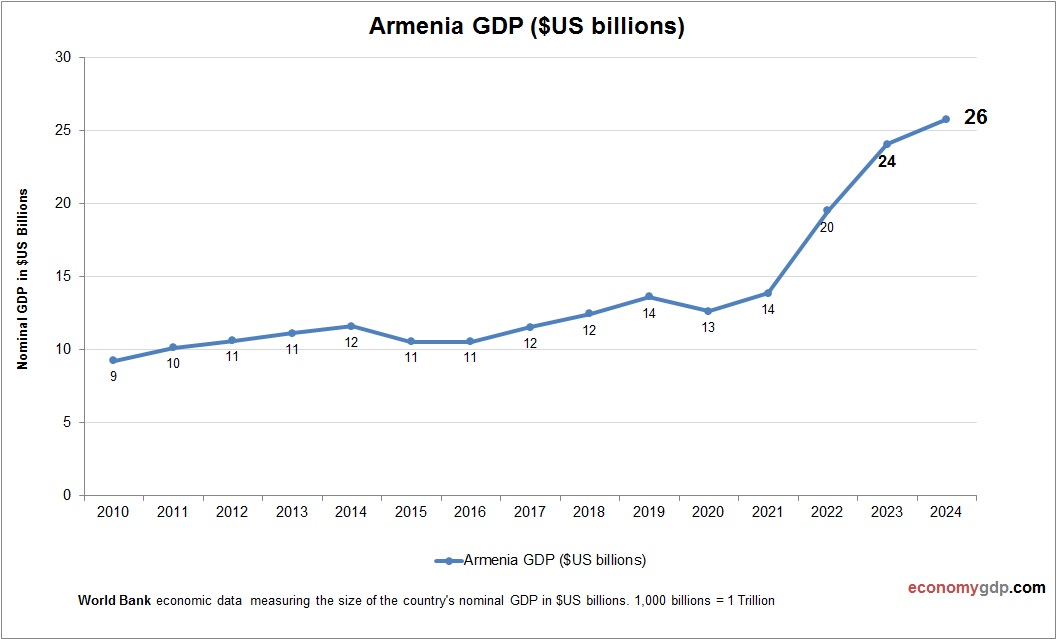
Armenia’s economy is worth around $20 billion, reflecting a small but growing market. Its size is constrained by geopolitical isolation, with IT and agriculture driving modest expansion within a limited industrial framework. See Armenia GDP.
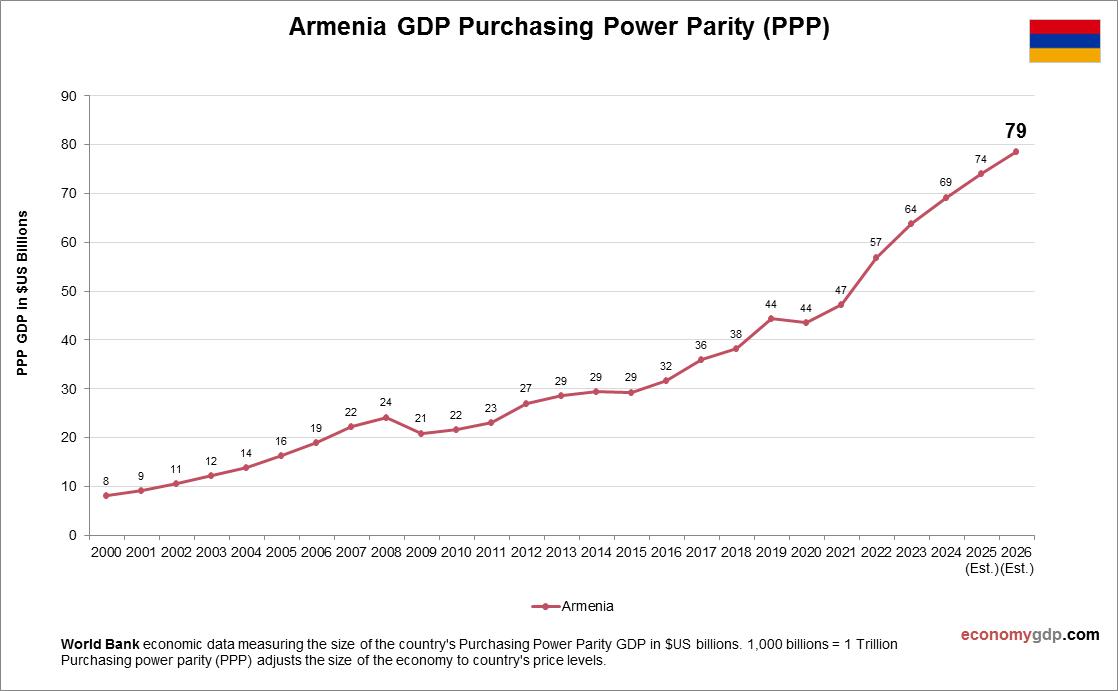
Armenia Purchasing Power Parity (PPP)
Armenia’s economy has a PPP GDP of $55 billion, nearly triple its $20 billion nominal GDP, reflecting low costs for services and agriculture. PPP per capita is about $18,000, suggesting reasonable living standards. IT and remittances benefit from cost advantages, but closed borders limit trade. PPP reveals Armenia’s potential for domestic growth, particularly in tech, though geopolitical isolation and reliance on external funds constrain broader economic expansion in this small market.
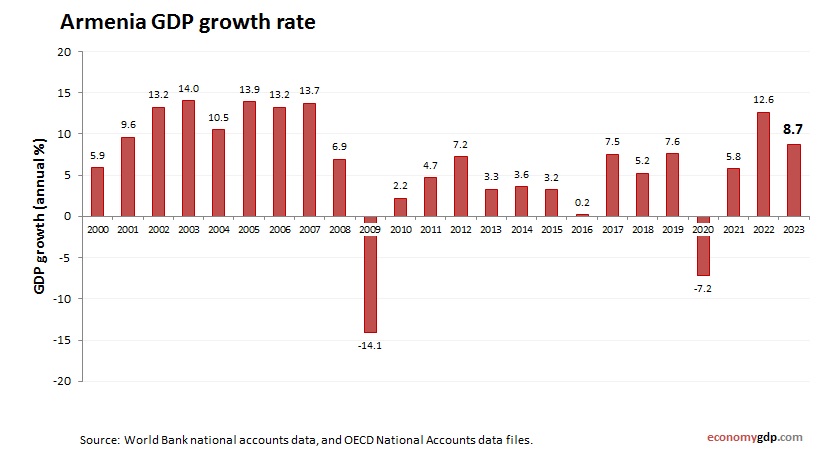
Armenia Growth Rate
The economic growth rate is 5.5% in 2024, driven by IT sector expansion and remittances. Trade with Russia and regional stability support growth, despite closed borders with Azerbaijan and Turkey. Tech infrastructure investments and anti-corruption reforms bolster activity, though geopolitical risks and external fund reliance pose challenges.
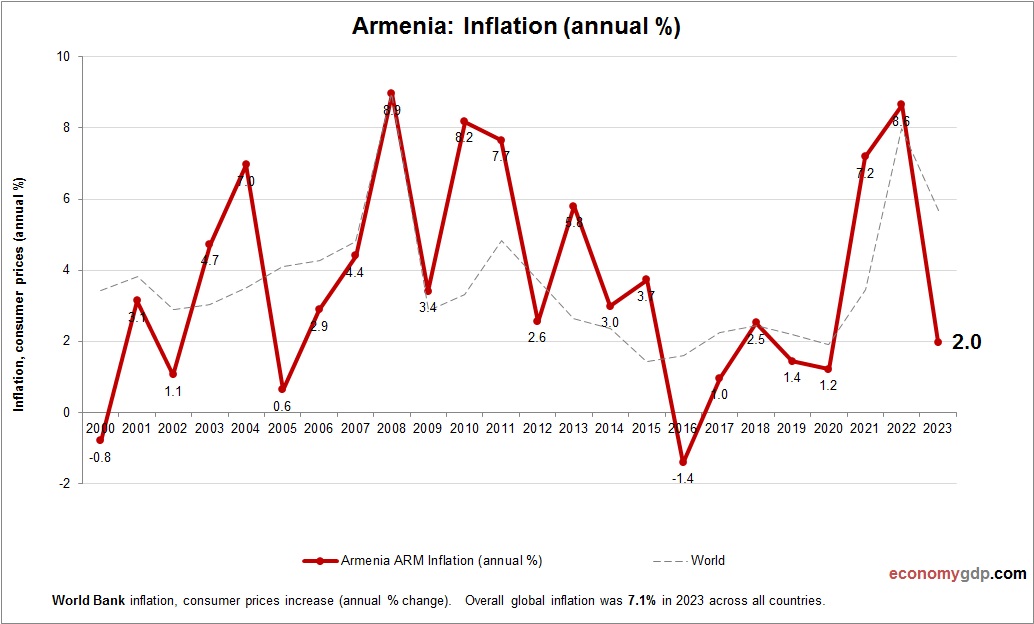
Armenia Inflation
Armenia’s inflation rate is about 5% in 2024, driven by imported food and energy price increases. Currency depreciation and trade disruptions with Azerbaijan raise costs. Strong remittances and IT sector growth add demand-side pressure, but tight monetary policy and stable governance contain inflation compared to regional peers.