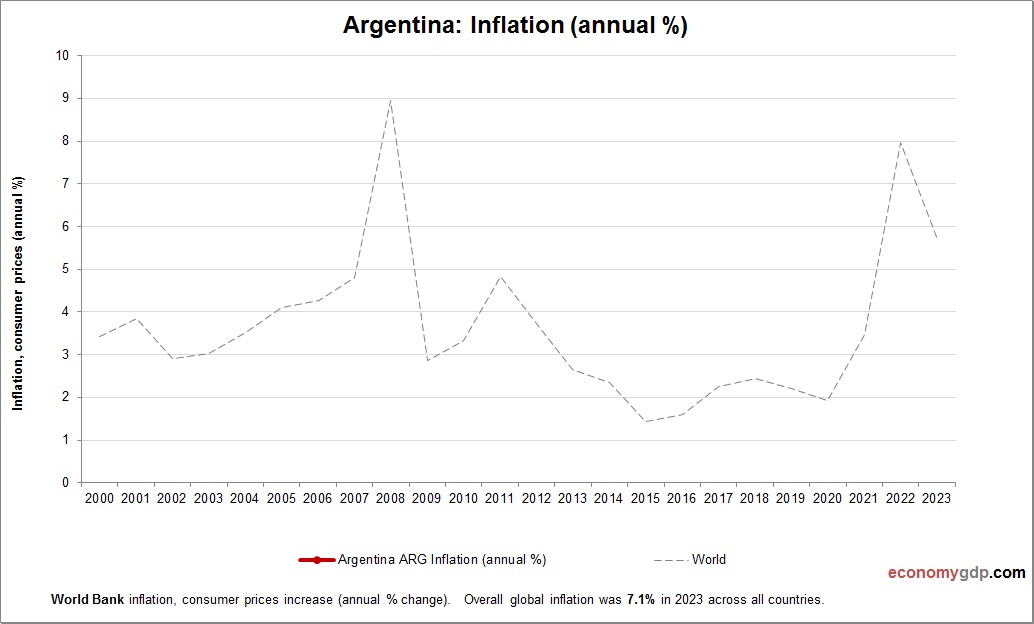

Argentina’s economy, valued at $630 billion, is led by agriculture, a global powerhouse in soy, corn, and beef exports, contributing 10% to GDP. Industry, including automotive and food processing, is vital, while mining, especially lithium for batteries, is emerging. Services, notably finance and tourism, thrive in Buenos Aires. Tech startups and renewable energy (wind, solar) show potential. High inflation and debt hinder stability, but Argentina’s vast resources and skilled labor offer growth prospects. Structural reforms are critical to unlocking potential in non-agricultural sectors.
Argentina Economy Size
Argentina’s economy, valued at $630 billion, is one of Latin America’s largest. Despite its size, persistent inflation and debt issues limit growth, with agriculture and industry forming the backbone of its economic output. See Argentina GDP.
Argentina Purchasing Power Parity (PPP)
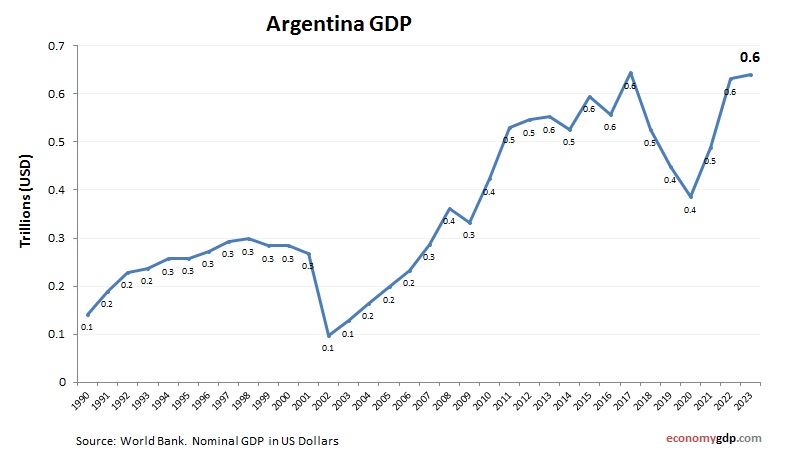
Argentina’s economy boasts a PPP GDP of $1.3 trillion, doubling its $630 billion nominal GDP, as local prices for agriculture and services are lower than global averages. PPP per capita is around $27,000, reflecting decent purchasing power despite inflation. Industry and agriculture gain from cost advantages, but economic instability erodes gains. PPP highlights Argentina’s sizable domestic market, yet debt and currency volatility hinder leveraging this potential for broader prosperity across its diverse economic sectors.

Argentina Growth Rate
The economic growth rate is -3.5% in 2024, reflecting contraction from austerity measures and high inflation. Currency devaluation and fiscal reforms aim to stabilize, but reduced public spending and consumer confidence dampen growth. Agriculture exports provide a cushion, though debt and structural issues hinder short-term recovery.
Argentina Inflation
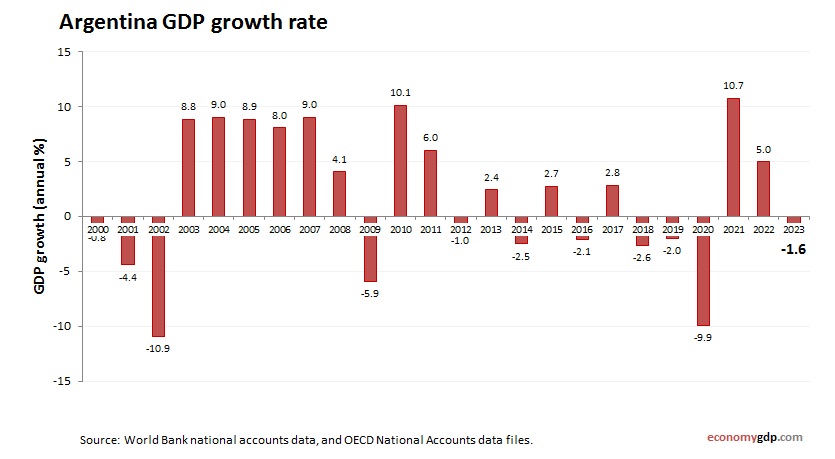
Argentina’s inflation rate is around 60% in 2024, among the world’s highest. Currency devaluation and fiscal deficits drive price surges, exacerbated by supply chain bottlenecks and import restrictions. High public spending and monetary expansion fuel demand, while agricultural export disruptions add pressure. Austerity measures aim to curb inflation but risk slowing growth.