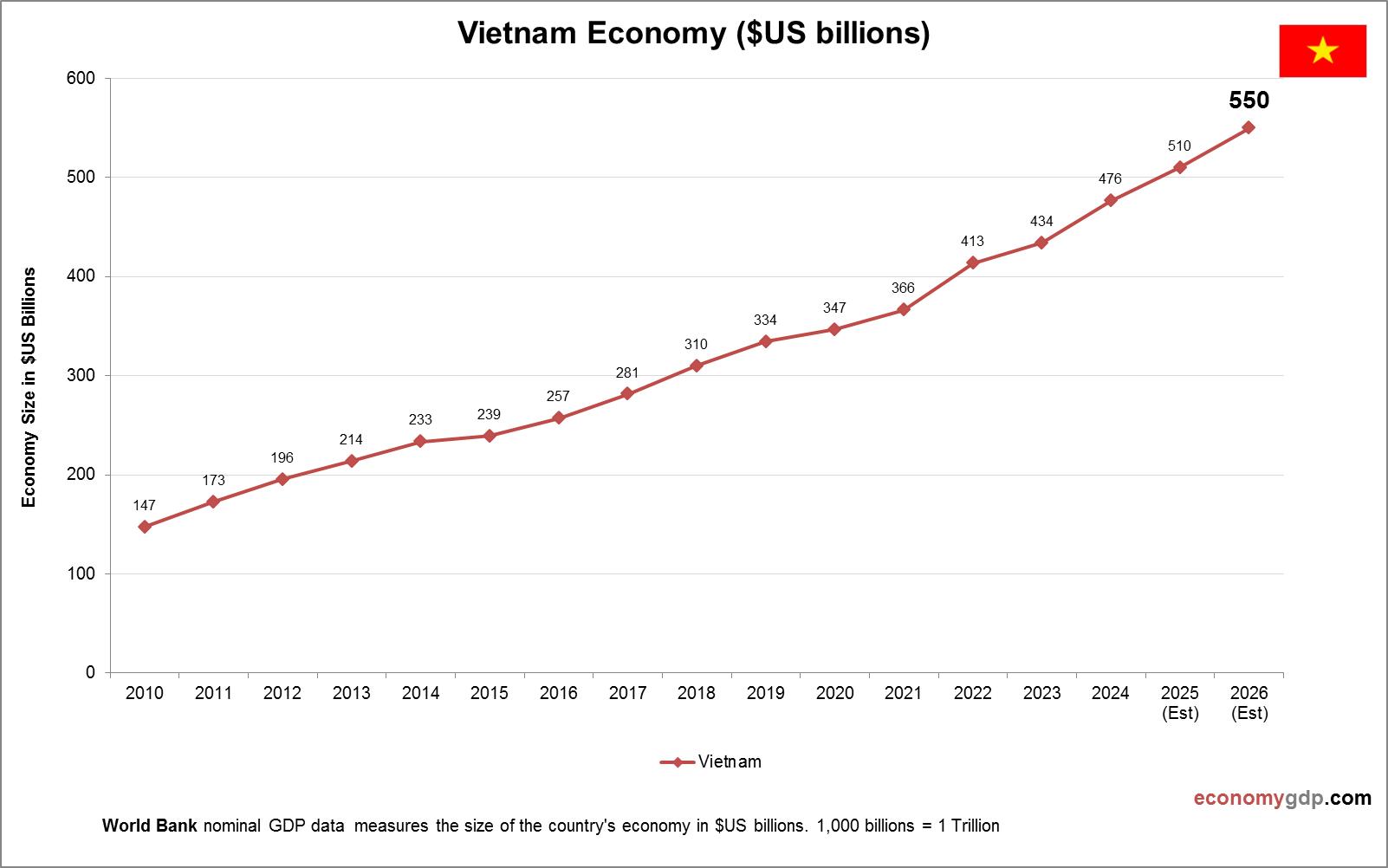
Vietnam’s economy, worth $400 billion, is driven by manufacturing, particularly electronics and textiles, with Samsung leading exports. Agriculture, employing 30% of the workforce, produces rice, fish, and coffee. Services, including tourism and manufacturing, particularly electronics and garments, drive exports. tourism, contribute contributes 10% to GDP. Emerging sectors include tech, with Hanoi and Ho Chi Minh City as hubs, and renewable energy (solar, wind). Trade agreements like CPTPP boost competitiveness, but infrastructure and environmental challenges persist. A young workforce and FDI inflows position Vietnam as a manufacturing powerhouse, with sustained growth potential.
Vietnam Economy Size
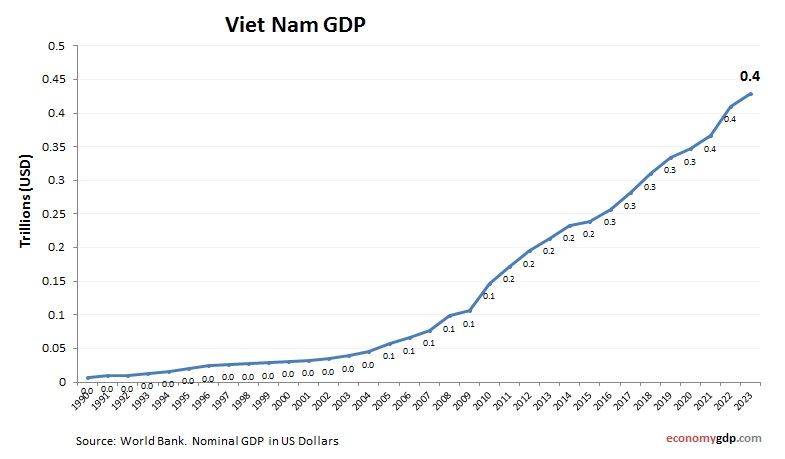
Vietnam’s economy, at $400 billion, is sizable, with manufacturing and services driving its GDP, fueled by trade agreements. See Vietnam GDP.
Vietnam Purchasing Power Parity (PPP)
Vietnam’s economy has a PPP GDP of $1.5 trillion, nearly four times its $400 billion nominal GDP, driven by low costs for manufacturing and services. PPP per capita is around $15,000, reflecting moderate purchasing power. Domestic pricing and trade boost markets, amplifying robust PPP-driven economic growth.

Vietnam Growth Rate
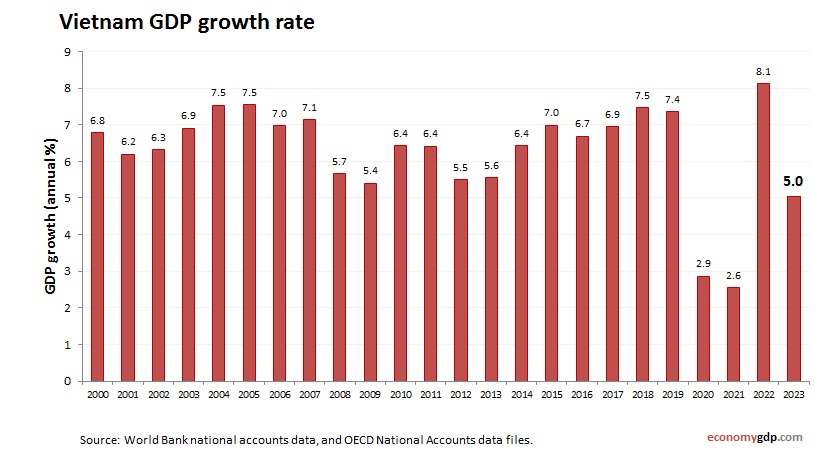
The economic growth rate is 6.5% in 2024, propelled by manufacturing and exports. Electronics and garment production drive growth, but infrastructure deficits and global slowdowns pose risks. Tourism contributes, while trade agreements drive resilience, positioning the economy for robust progress as an ASEAN powerhouse.
Vietnam Inflation
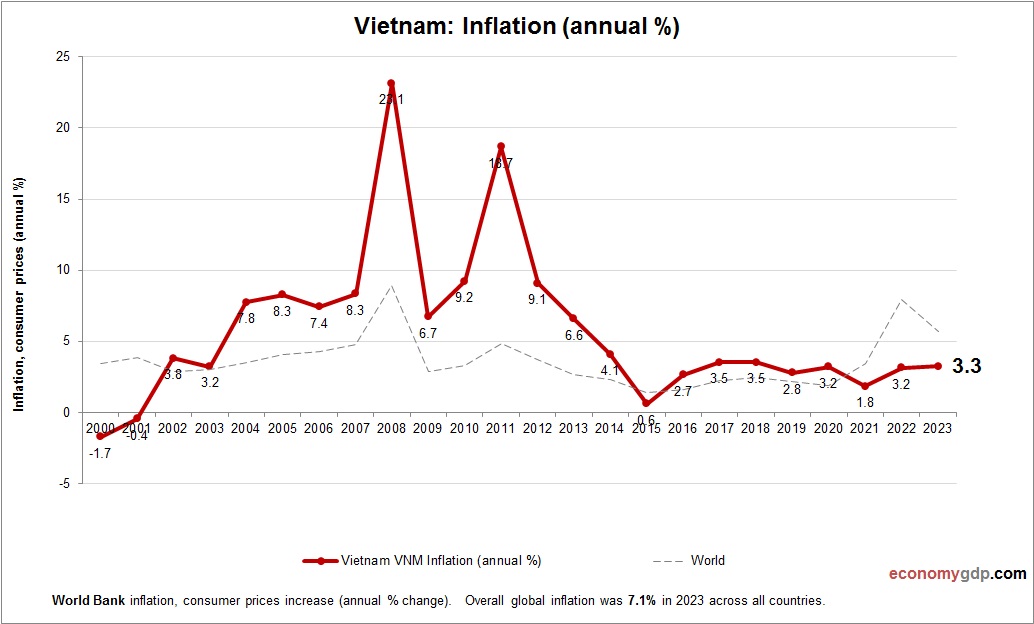
Vietnam’s inflation rate is approximately 4% in 2024, driven by rising global food and energy prices. Strong manufacturing exports and domestic demand add pressure, while agricultural disruptions from weather increase costs. Currency stability and monetary tightening help moderate inflation, positioning the economy for stability amidst global challenges.