North Korea’s economy, estimated at $40 billion, is centrally planned and heavily reliant on state-controlled industries like mining (coal, iron ore) and military production. Agriculture, employing 50% of the workforce, produces rice and corn but struggles with food insecurity. Textiles and seafood exports to China are significant, though limited by sanctions. Informal markets and small-scale private trade are emerging, despite restrictions. Energy shortages and outdated infrastructure impede growth. Data is scarce, but North Korea’s isolation and focus on self-reliance constrain diversification, with little progress in modern sectors like tech.
North Korea Economy Size
North Korea’s economy, estimated at $40 billion, is small and opaque, with state industries driving its GDP, limited by sanctions and isolation. See North Korea GDP.
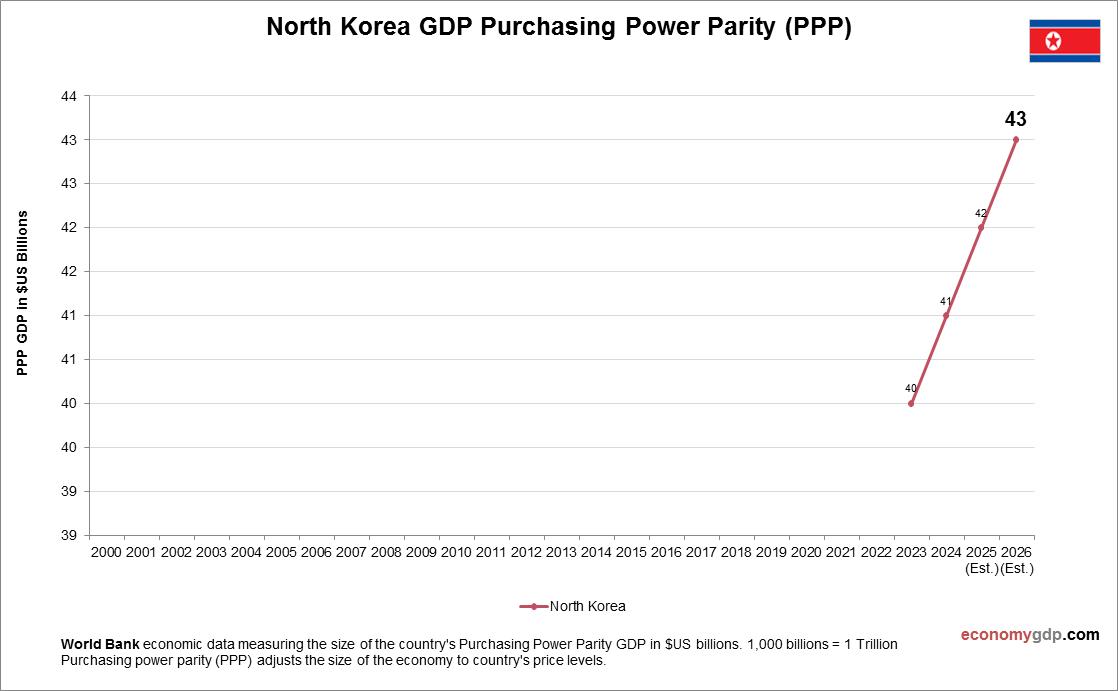
North Korea Purchasing Power Parity (PPP)
North Korea’s economy has an estimated PPP GDP of $100 billion, over double its $40 billion nominal GDP, reflecting low local costs for state industries. PPP per capita is around $4,000, indicating low purchasing power. Isolation and sanctions limit PPP benefits, with domestic pricing supporting basic economic activity.
North Korea Growth Rate
The economic growth rate is 0.5% in 2024, reflecting stagnation due to sanctions and isolation. State-driven industry and agriculture drive limited activity, but inefficiencies and restricted trade hinder progress. Informal markets provide some resilience, though lack of reforms and data opacity constrain meaningful economic recovery.
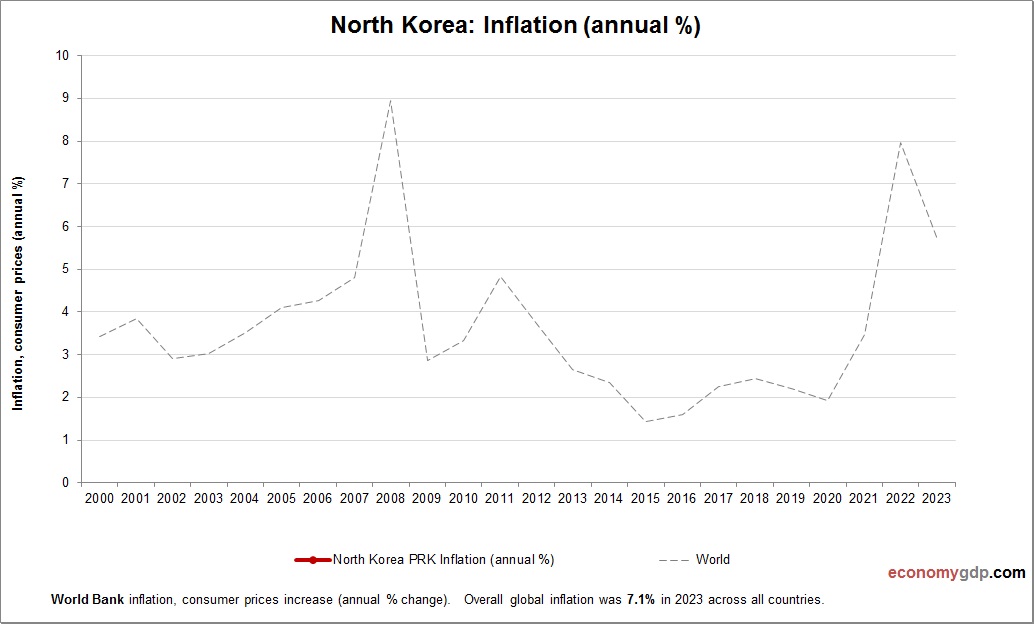
North Korea Inflation
North Korea’s inflation rate is estimated at 20% in 2024, driven by sanctions and isolation. Import restrictions increase food and fuel costs, while state-controlled pricing fuels black-market activity. Agricultural disruptions and monetary expansion sustain high inflation, with limited data and trade access exacerbating price volatility in this closed economy.