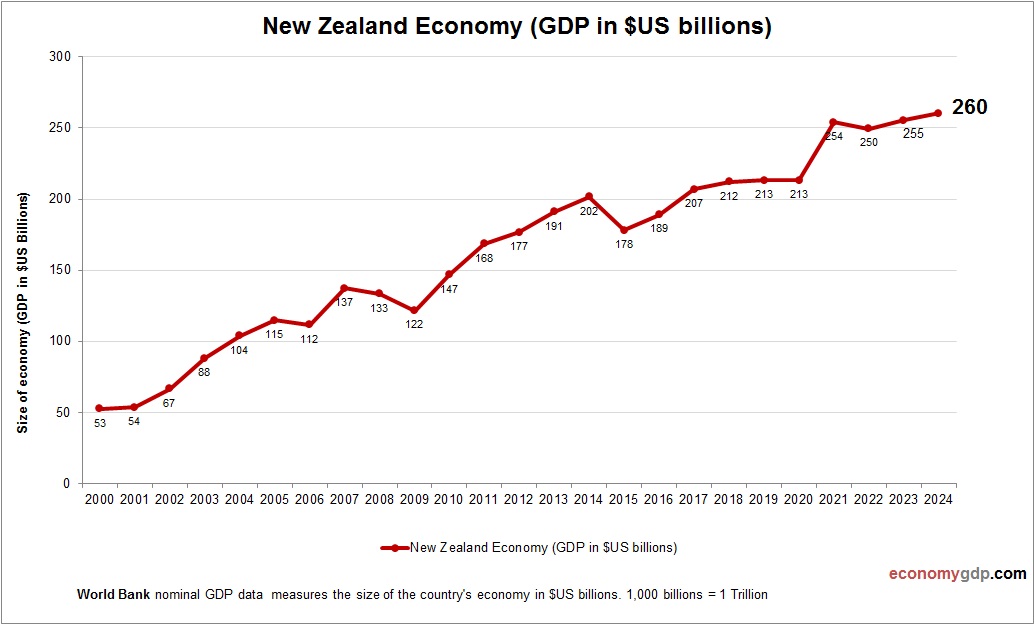
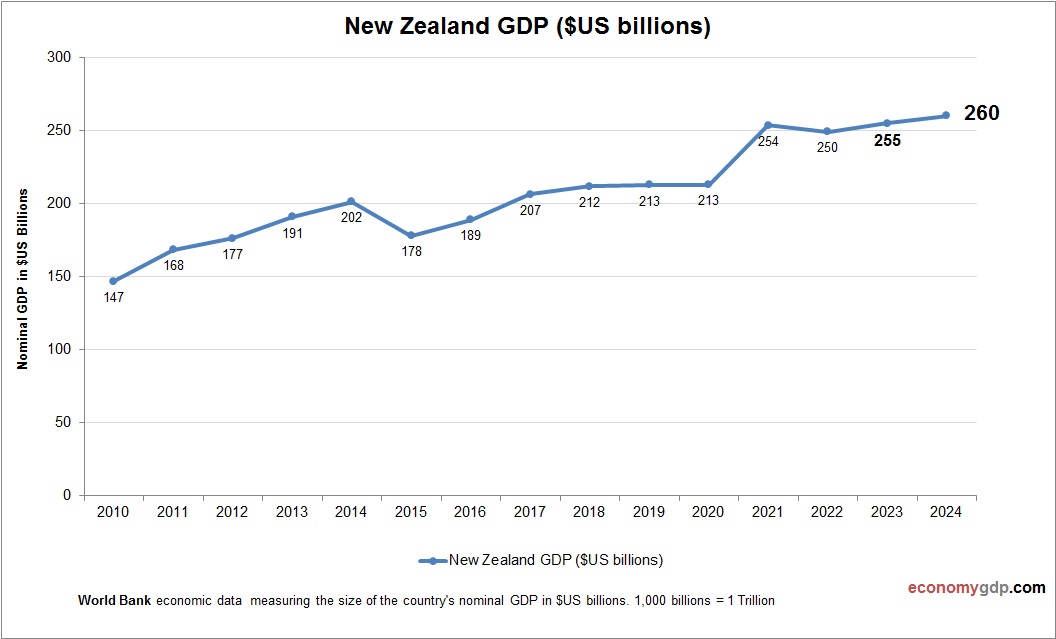
New Zealand’s economy, valued at $250 billion, is driven by agriculture, particularly dairy, meat, and wine, which account for 50% of exports. Tourism, leveraging natural landscapes, contributes 10% to GDP. The tech sector, including software and film production, is emerging, with Wellington as a hub. Renewable energy, primarily hydropower and geothermal, supports 80% of electricity needs. Trade with Asia, especially China, is vital. High living costs and reliance on exports pose risks, but innovation and sustainable practices strengthen New Zealand’s global competitiveness.
New Zealand Economy Size
New Zealand’s economy, at $250 billion, is sizable, with agriculture and tourism driving its GDP, supported by strong trade ties. See New Zealand GDP.
New Zealand Purchasing Power Parity (PPP)
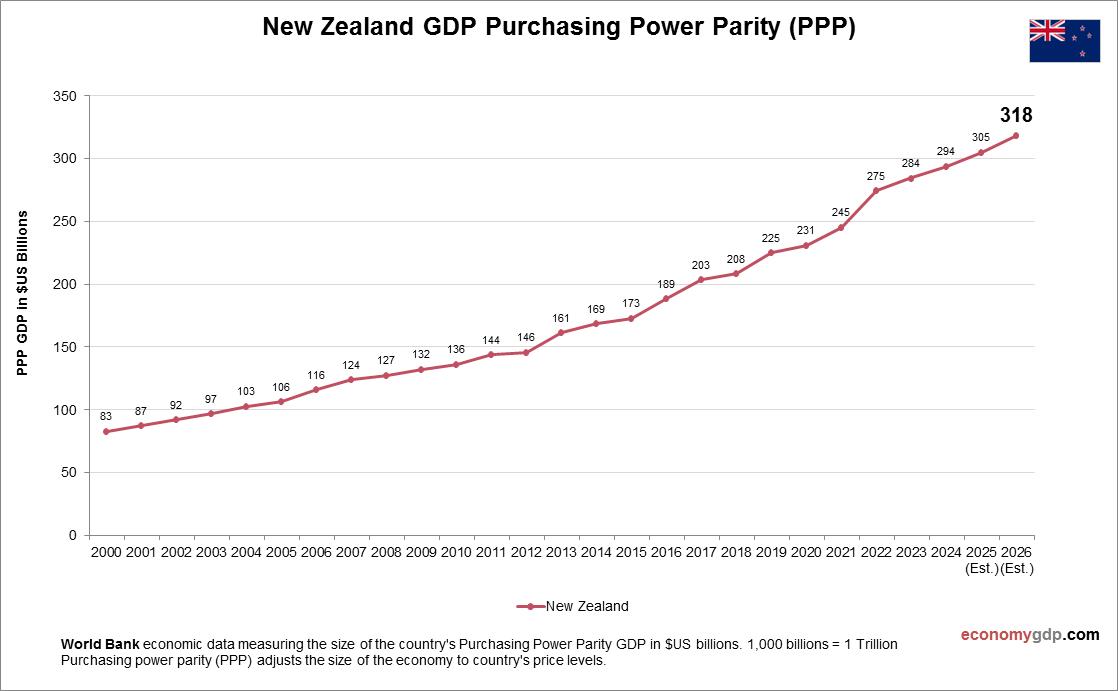
New Zealand’s economy has a PPP GDP of $280 billion, slightly above its $250 billion nominal GDP, reflecting high costs offset by agriculture and tourism. PPP per capita is around $55,000, indicating strong purchasing power. Domestic pricing supports affluent markets, with trade amplifying PPP-driven economic growth.
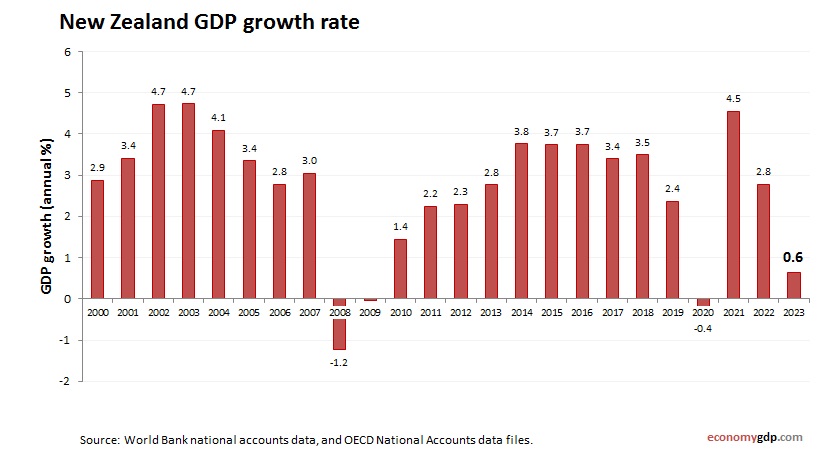
New Zealand Growth Rate
The economic growth rate is 2.8% in 2024, fueled by agriculture and tourism. Dairy exports and visitor arrivals support growth, but global slowdowns and high costs pose risks. Tech and renewable energy contribute, while trade with Asia drives resilience, positioning the economy for steady progress.
New Zealand Inflation
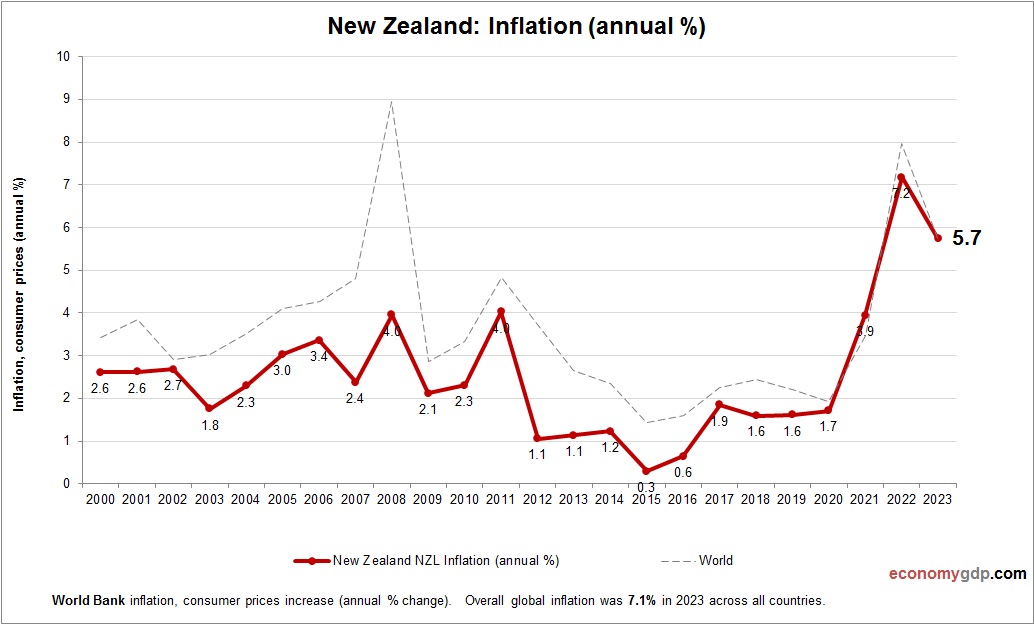
New Zealand’s inflation rate is around 3% in 2024, driven by rising global food and energy prices. Strong agricultural exports and tourism recovery increase domestic demand, pushing service costs up. Currency stability and tight monetary policy help keep inflation moderate, though import reliance sustains price volatility in this trade-driven economy.