The Mongolia economy is driven by mining, particularly coal, copper, and gold. Livestock and cashmere also contribute, supporting rural livelihoods. Chinese demand for minerals fuels growth, but overreliance on commodities and weak infrastructure pose risks. Harsh winters and environmental degradation challenge agriculture. Efforts to diversify into tourism and renewable energy face funding constraints, with foreign investment critical to sustaining economic expansion in a landlocked region.
Mongolia Economy Size
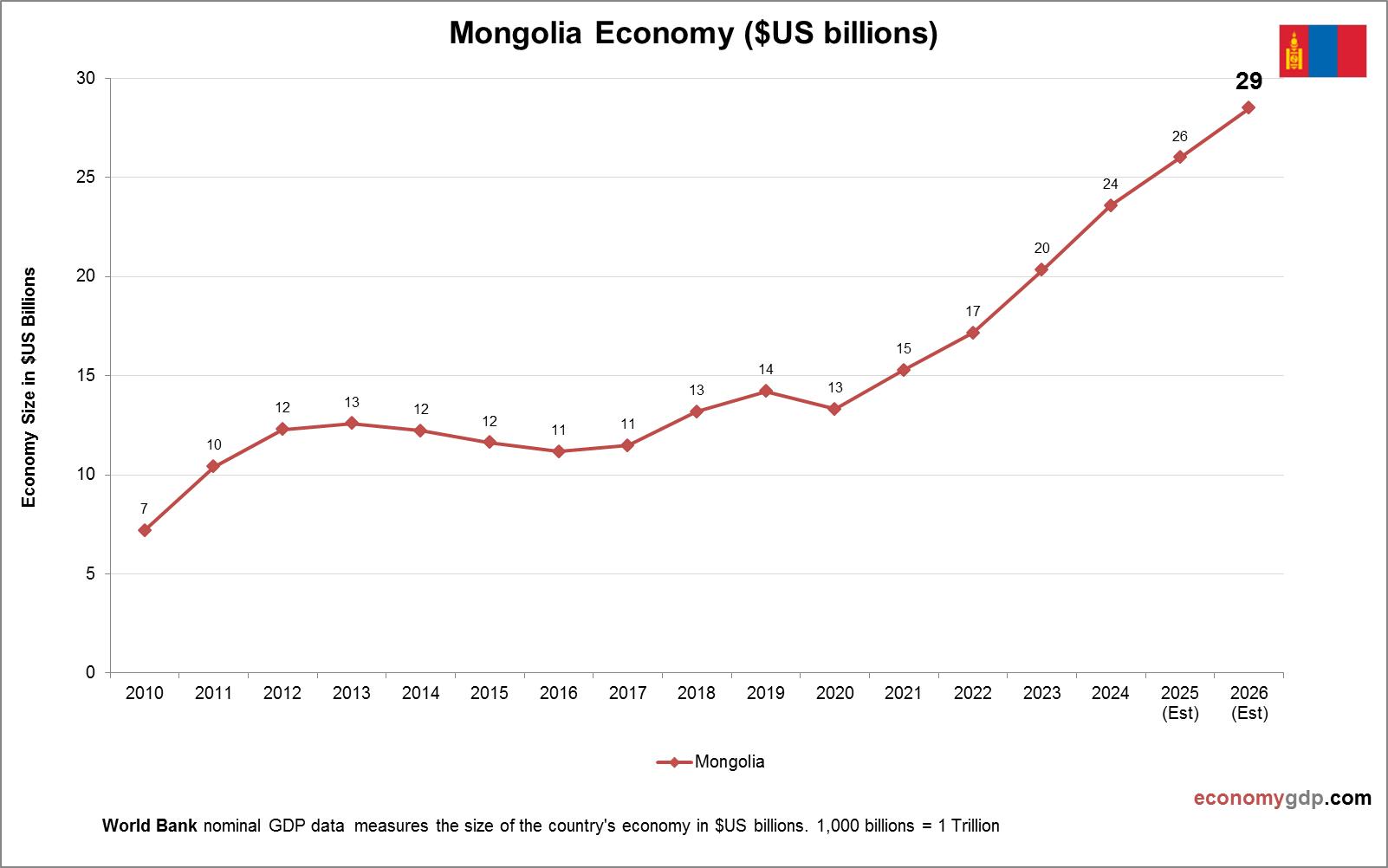
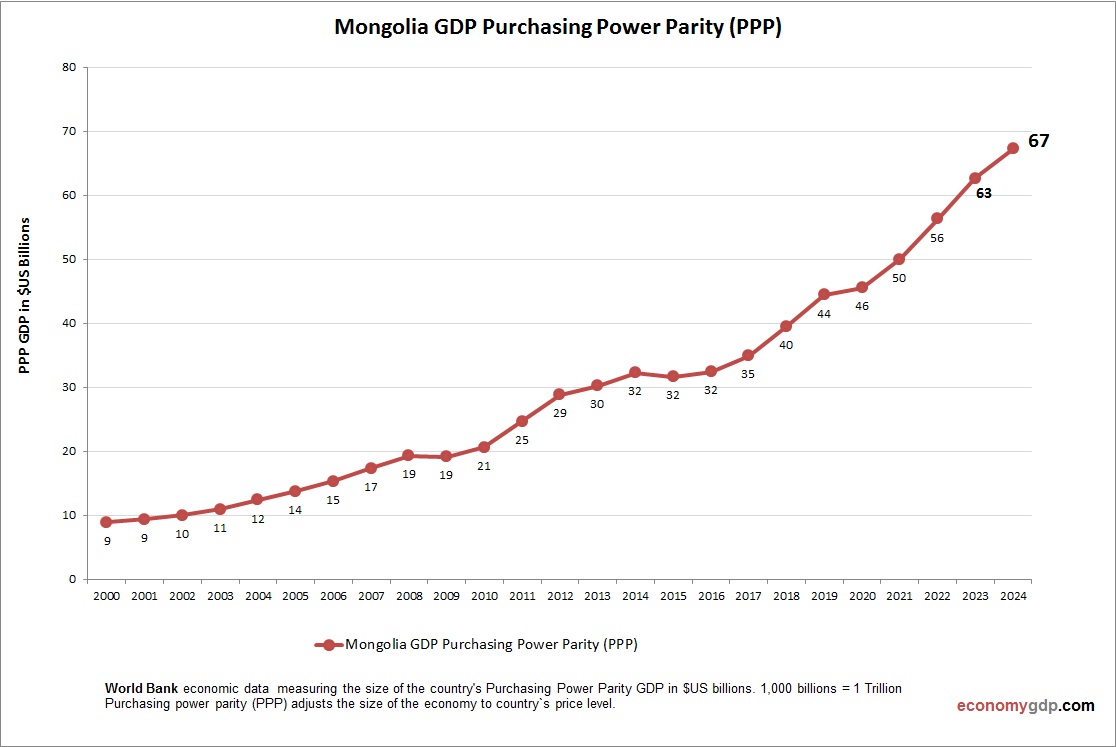
Mongolia’s economy, worth $15 billion, is small, with mining driving its GDP, supported by agriculture and growing trade with China. See Mongolia GDP.
Mongolia Purchasing Power Parity (PPP)
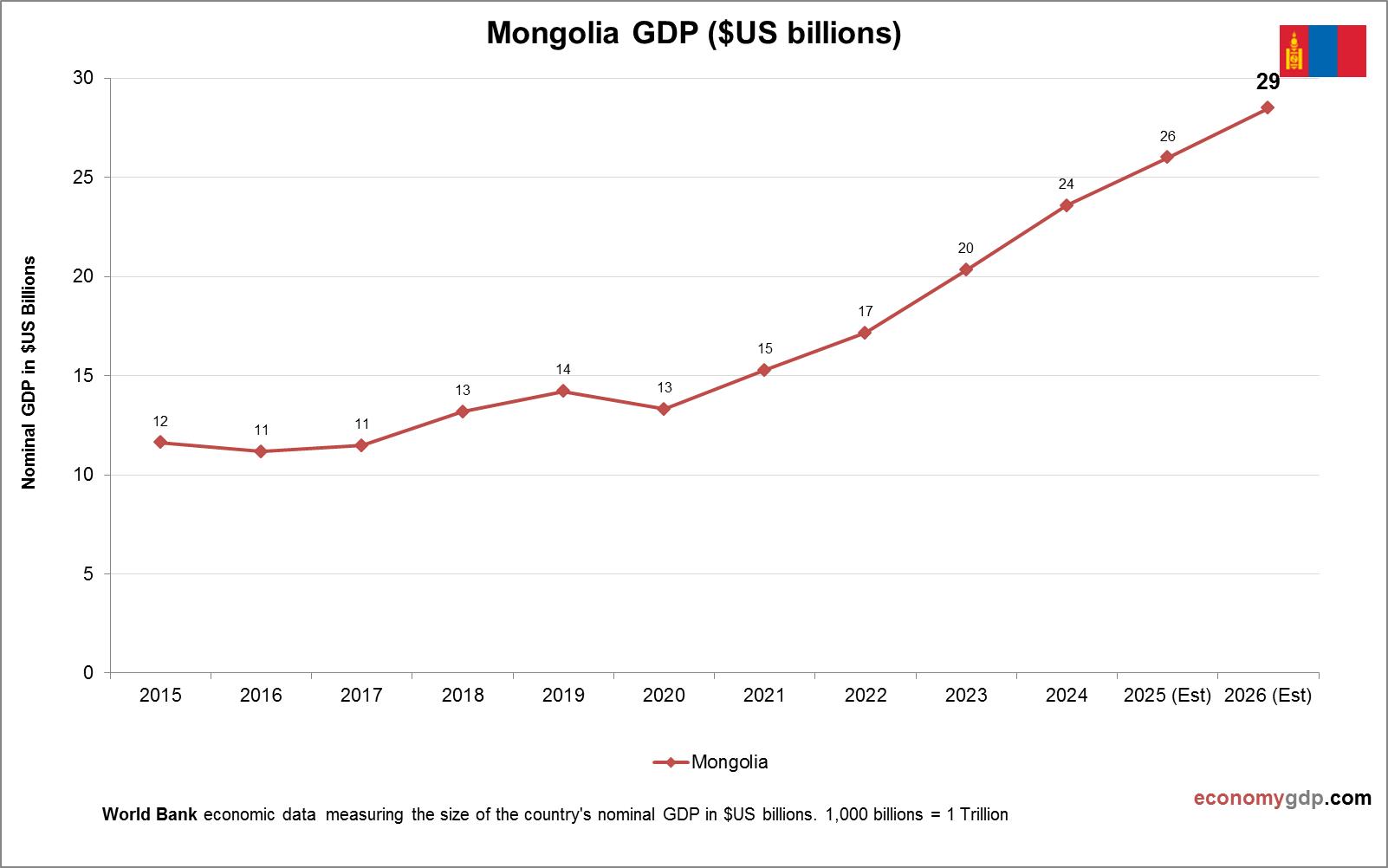
Mongolia’s economy has a PPP GDP of $50 billion, over three times its $15 billion nominal GDP, driven by low costs for mining and agriculture. PPP per capita is around $15,000, reflecting moderate purchasing power. Domestic pricing boosts markets, but export reliance limits broader PPP-driven economic growth.
Mongolia Growth Rate
The economic growth rate is 4.0% in 2024, propelled by mining exports. Copper and coal production and Chinese investment drive growth, but commodity price volatility and debt pose risks. Agriculture contributes modestly, while infrastructure projects drive resilience, positioning the small economy for strong progress in Central Asia.

Mongolia Inflation
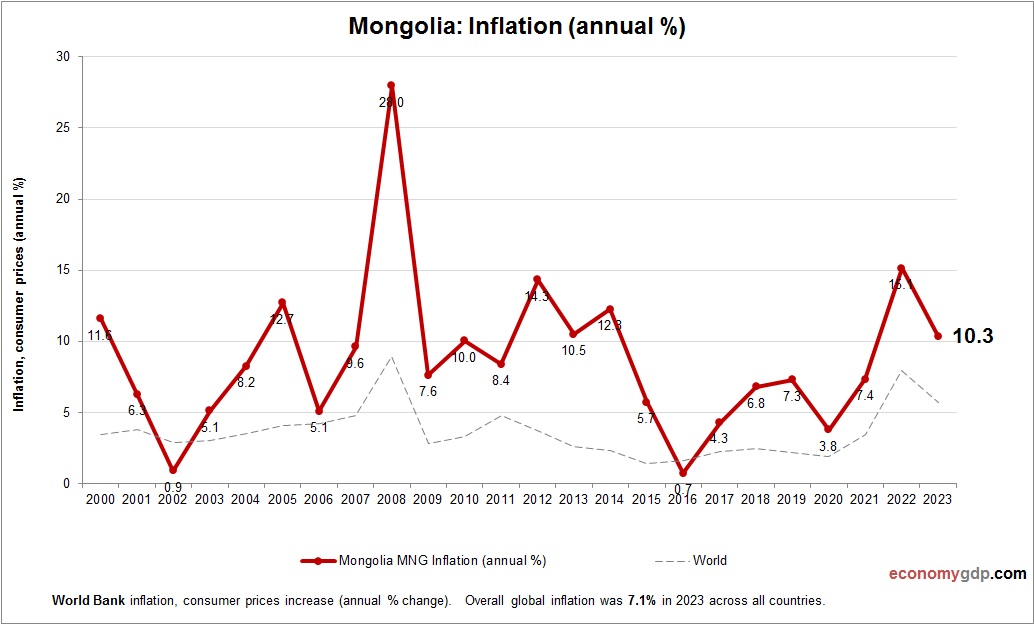
Mongolia’s inflation rate is around 7% in 2024, driven by rising global commodity prices and currency depreciation. Strong mining exports fuel domestic demand, while food and fuel import costs rise. Agricultural disruptions from weather add pressure, but monetary tightening helps moderate inflation, though reliance on exports sustains volatility.