The Luxembourg economy is a global financial hub, driven by banking, investment funds, and steel. Its business-friendly policies attract multinational corporations, while technology and logistics grow. High wages and a strong welfare system ensure stability, though reliance on finance exposes it to global fluctuations. Investments in green finance and digital innovation maintain competitiveness, with EU integration supporting trade in a small, highly developed economy.
Luxembourg Economy Size
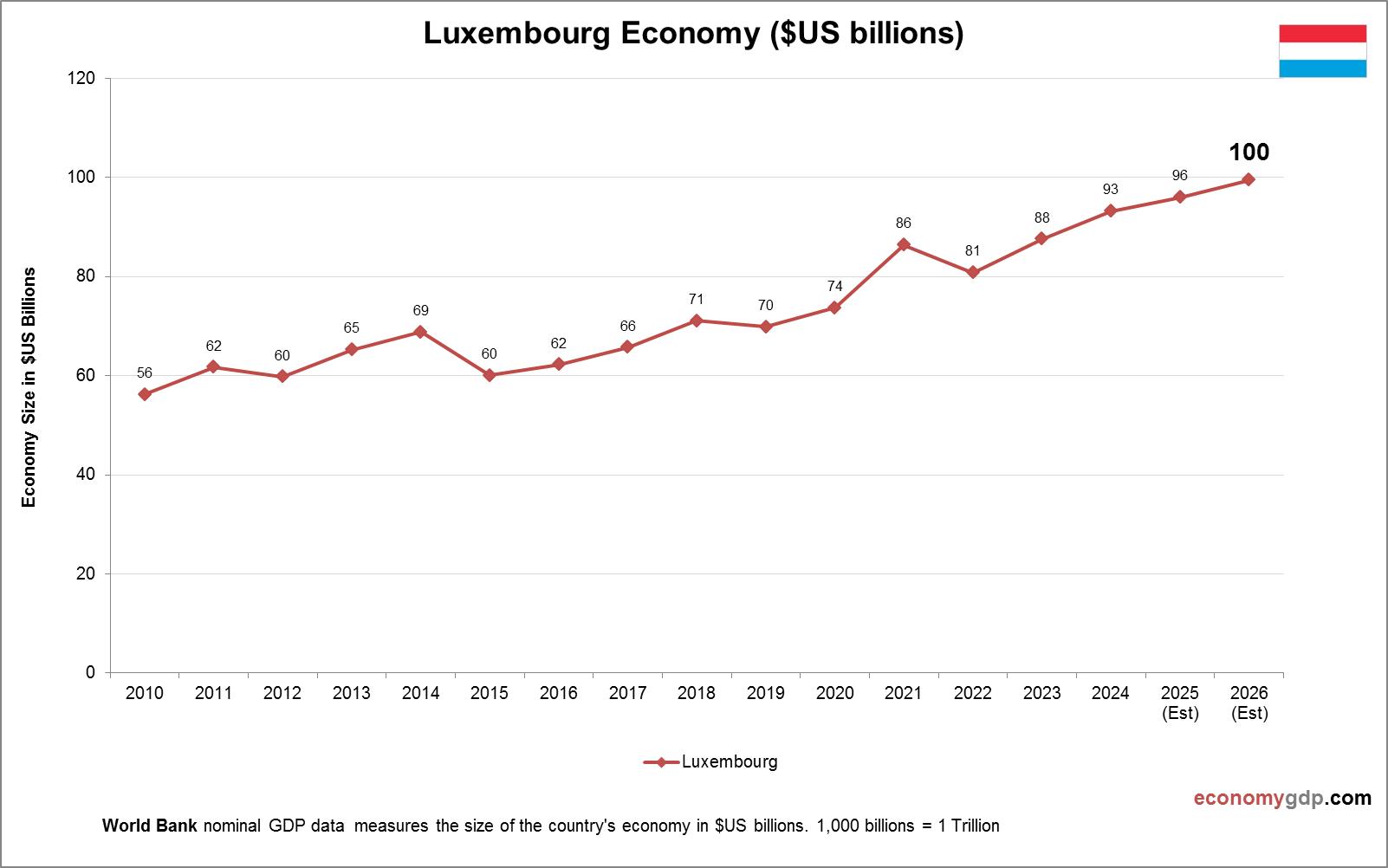
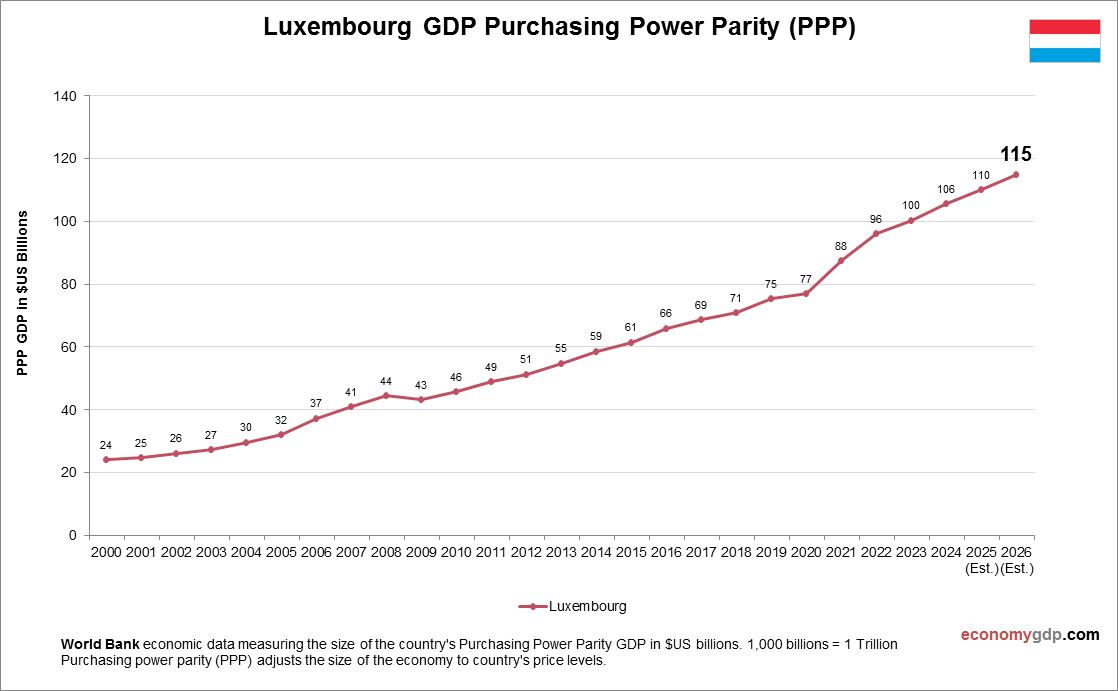
Luxembourg’s economy, worth $85 billion, is small but affluent, with finance driving its GDP, yielding one of the highest per capita incomes. See Luxembourg GDP.
Luxembourg Purchasing Power Parity (PPP)
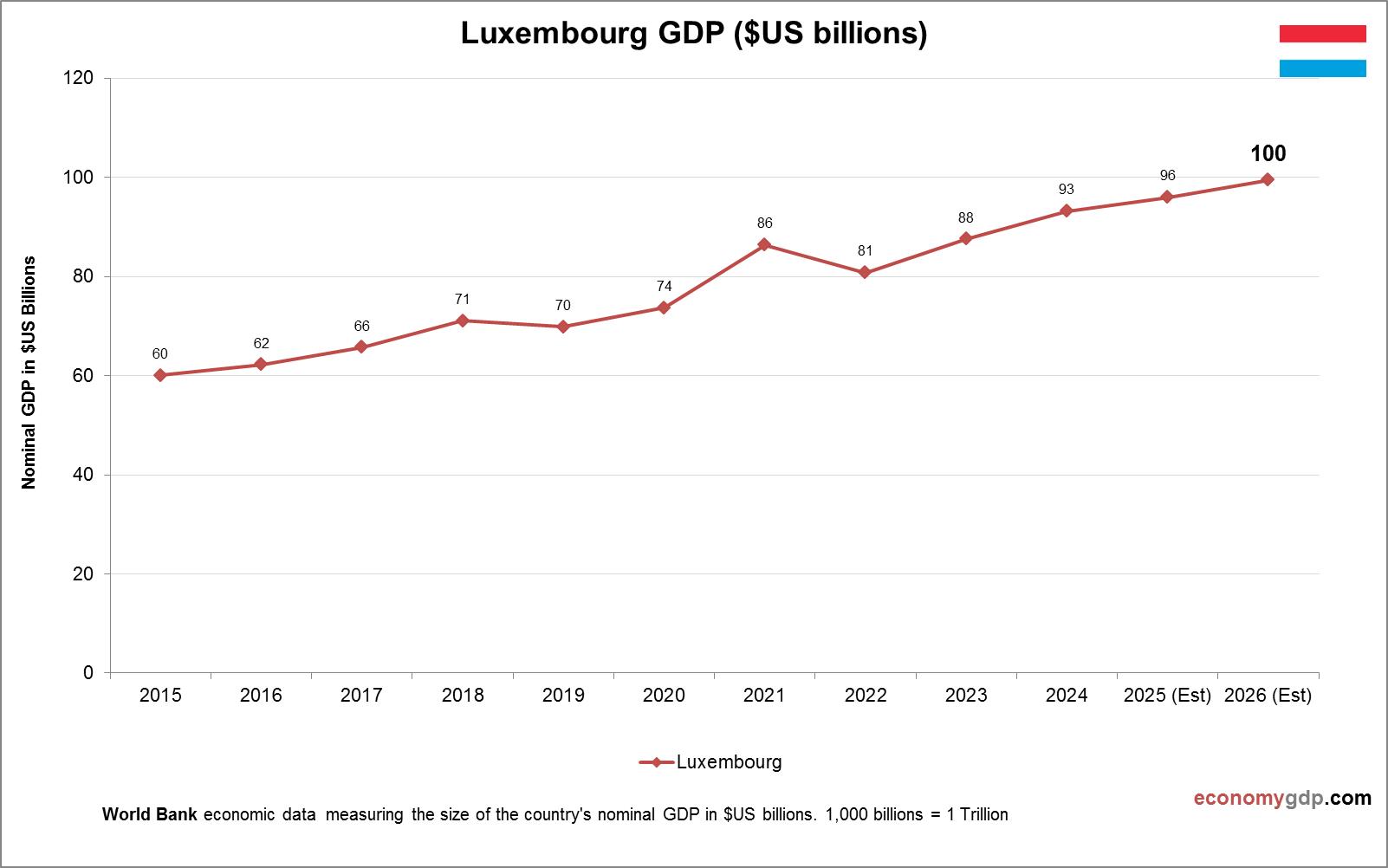
Luxembourg’s economy has a PPP GDP of $95 billion, slightly above its $85 billion nominal GDP, reflecting high costs offset by finance. PPP per capita is around $140,000, the world’s highest, showcasing exceptional purchasing power. PPP underscores Luxembourg’s affluent domestic market, with global finance driving growth.
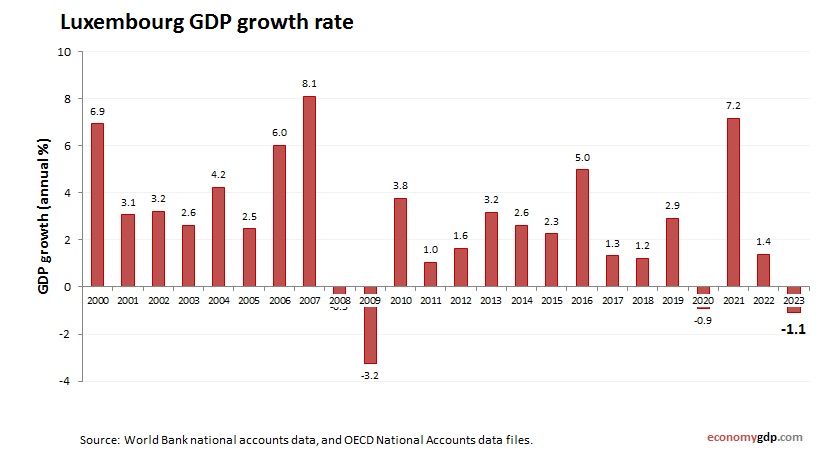
Luxembourg Growth Rate
The economic growth rate is 2.0% in 2024, driven by financial services. Stable global demand and digital innovation support growth, but high costs and global tax pressures limit gains. Tourism contributes modestly, while infrastructure investments drive resilience, positioning the small, affluent economy for modest expansion.
Luxembourg Inflation
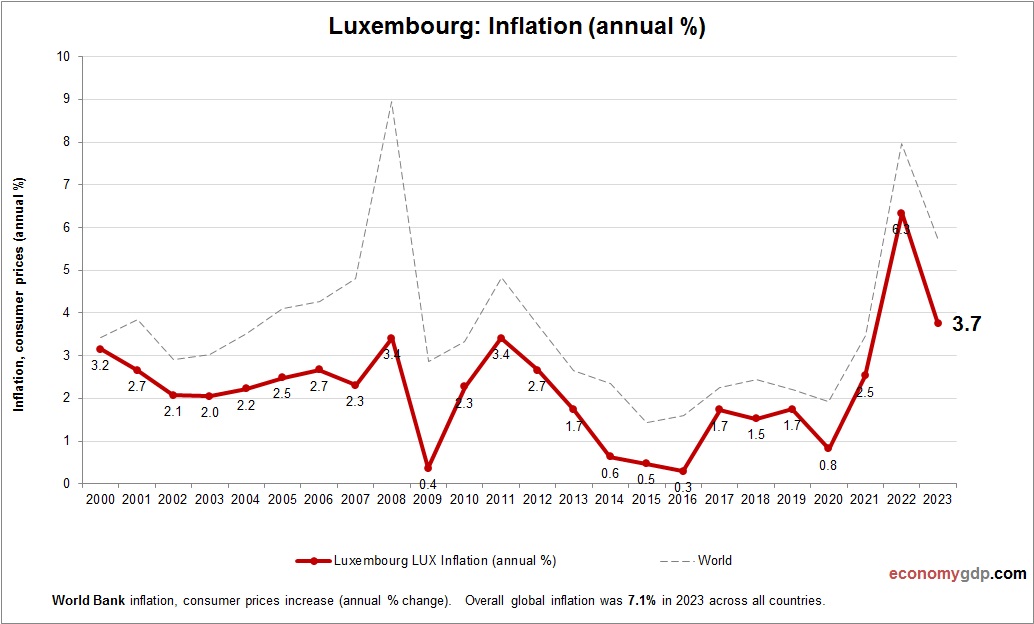
Luxembourg’s inflation rate is about 2% in 2024, among the lowest in the EU, due to strong financial services and fiscal discipline. Rising global food and energy prices add modest pressure, while high domestic demand from exports drives costs. Eurozone monetary tightening keeps inflation low, despite reliance on imports.