The Kyrgyzstan economy relies on agriculture, gold mining, and remittances. Gold from the Kumtor mine drives exports, while cotton and wool support rural areas. Hydropower potential is significant, but political instability and corruption hinder investment. Remittances from migrant workers, mainly in Russia, bolster GDP. Efforts to diversify into tourism and manufacturing face infrastructure and governance challenges, with trade ties to Central Asia critical for growth.
Kyrgyzstan Economy Size
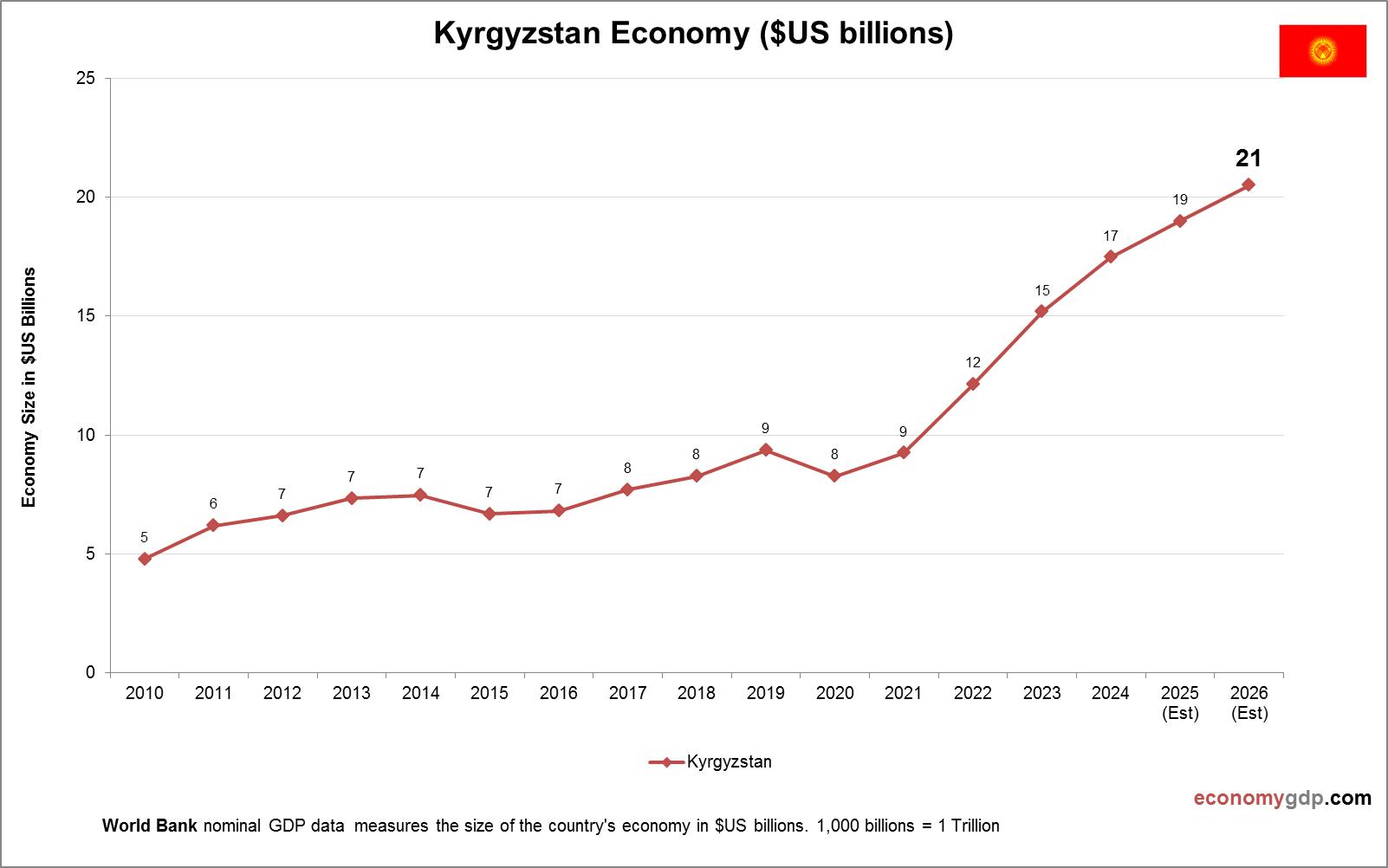
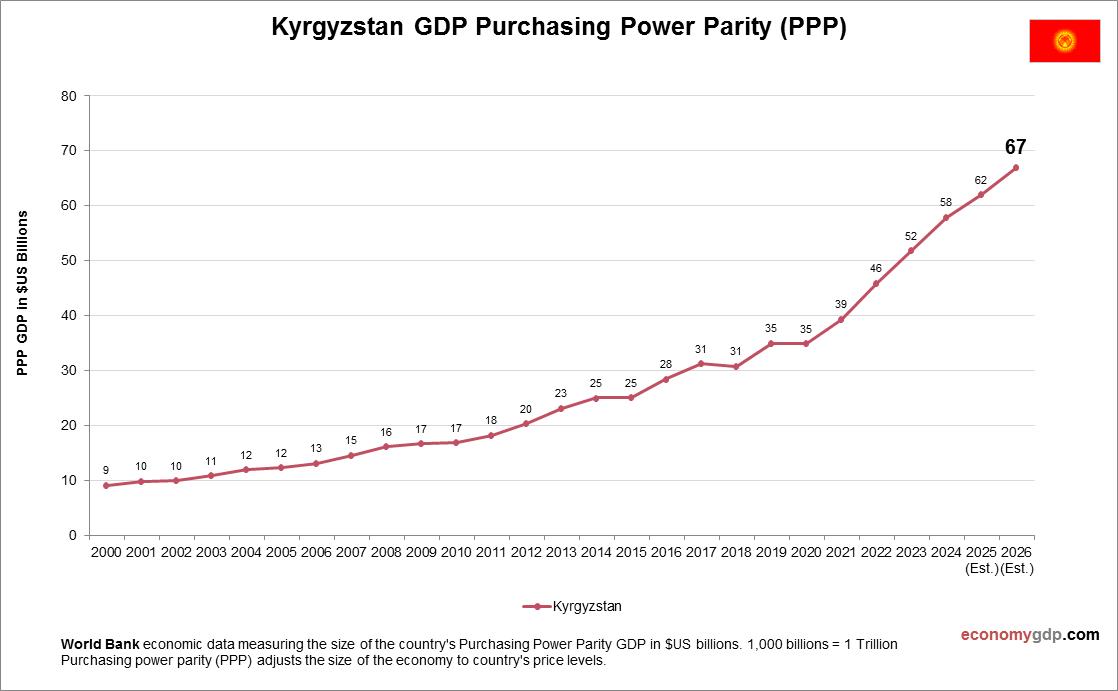
Kyrgyzstan’s economy, worth $10 billion, is small, with agriculture and remittances driving its GDP, limited by infrastructure and geopolitical ties. See Kyrgyzstan GDP.
Kyrgyzstan Purchasing Power Parity (PPP)
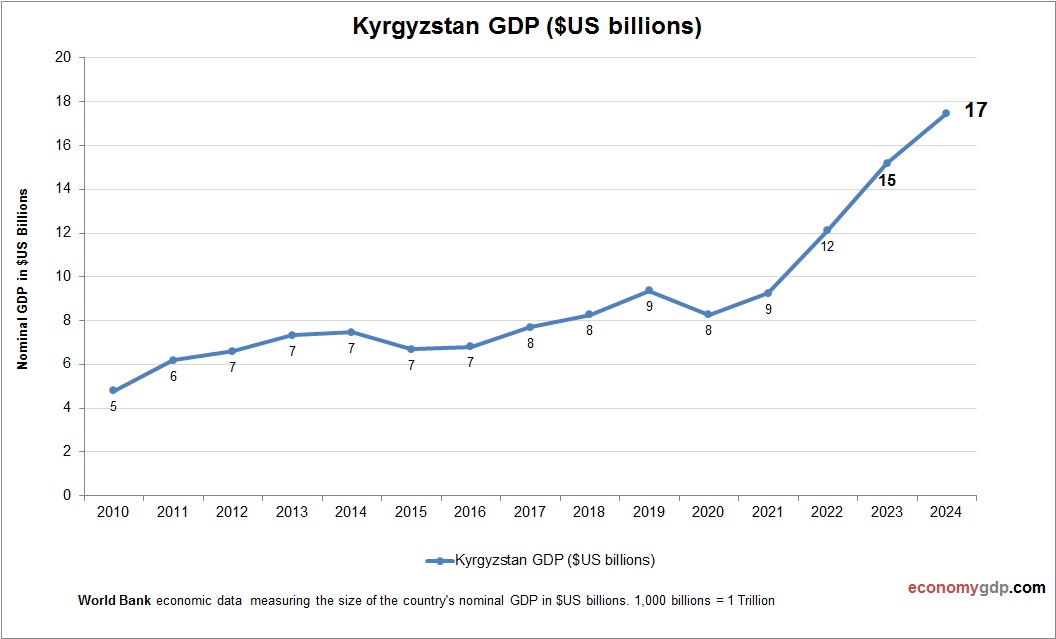
Kyrgyzstan’s economy has a PPP GDP of $45 billion, over four times its $10 billion nominal GDP, due to low costs for agriculture and remittances. PPP per capita is around $6,500, reflecting modest purchasing power. Domestic pricing boosts local markets, but infrastructure and geopolitical ties limit PPP-driven growth.
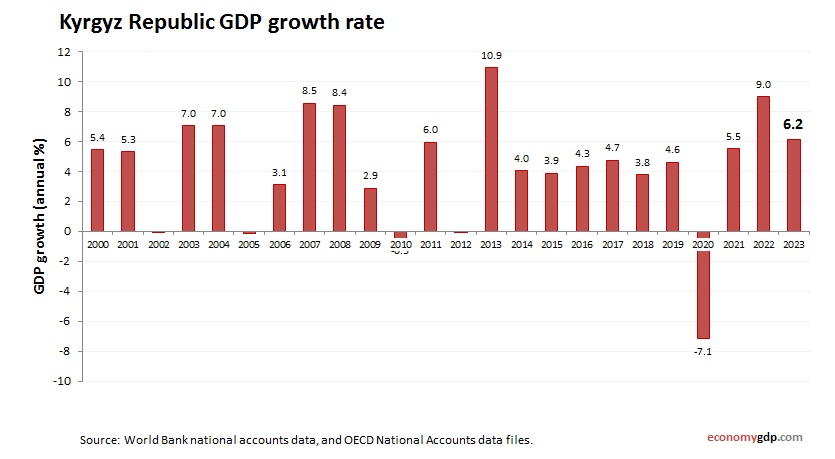
Kyrgyzstan Growth Rate
The economic growth rate is 4.5% in 2024, driven by agriculture and remittances. Gold exports and infrastructure investments support growth, but political instability and infrastructure deficits pose risks. Regional trade and foreign investment drive resilience, while a young workforce enhances momentum, positioning the small economy for robust progress.
Kyrgyzstan Inflation
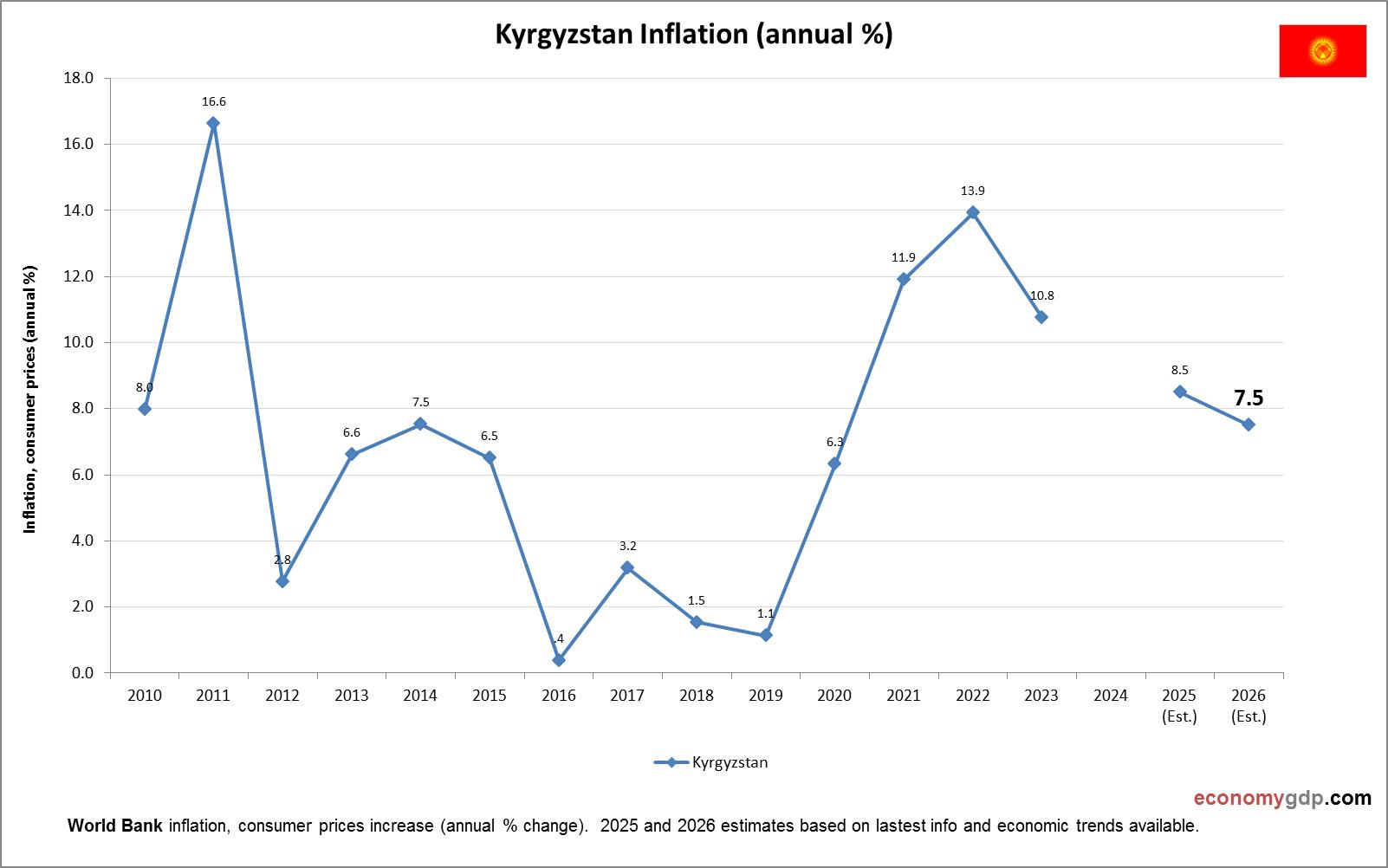
Kyrgyzstan’s inflation rate is about 6% in 2024, driven by rising global food and energy prices. Remittances and gold exports increase domestic demand, while currency depreciation raises import costs. Agricultural disruptions add pressure, but tight monetary policy helps moderate inflation, though reliance on external funds sustains volatility in this small economy.