The Kuwait economy is heavily oil-dependent, with petroleum accounting for most exports and GDP. A strong welfare system supports citizens, while finance and real estate are growing sectors. High oil revenues fund infrastructure, but diversification remains limited. Youth unemployment and global energy transitions pose challenges, with efforts to develop renewable energy and private-sector jobs underway. Political gridlock and reliance on oil prices continue to shape economic prospects.
Kuwait Economy Size
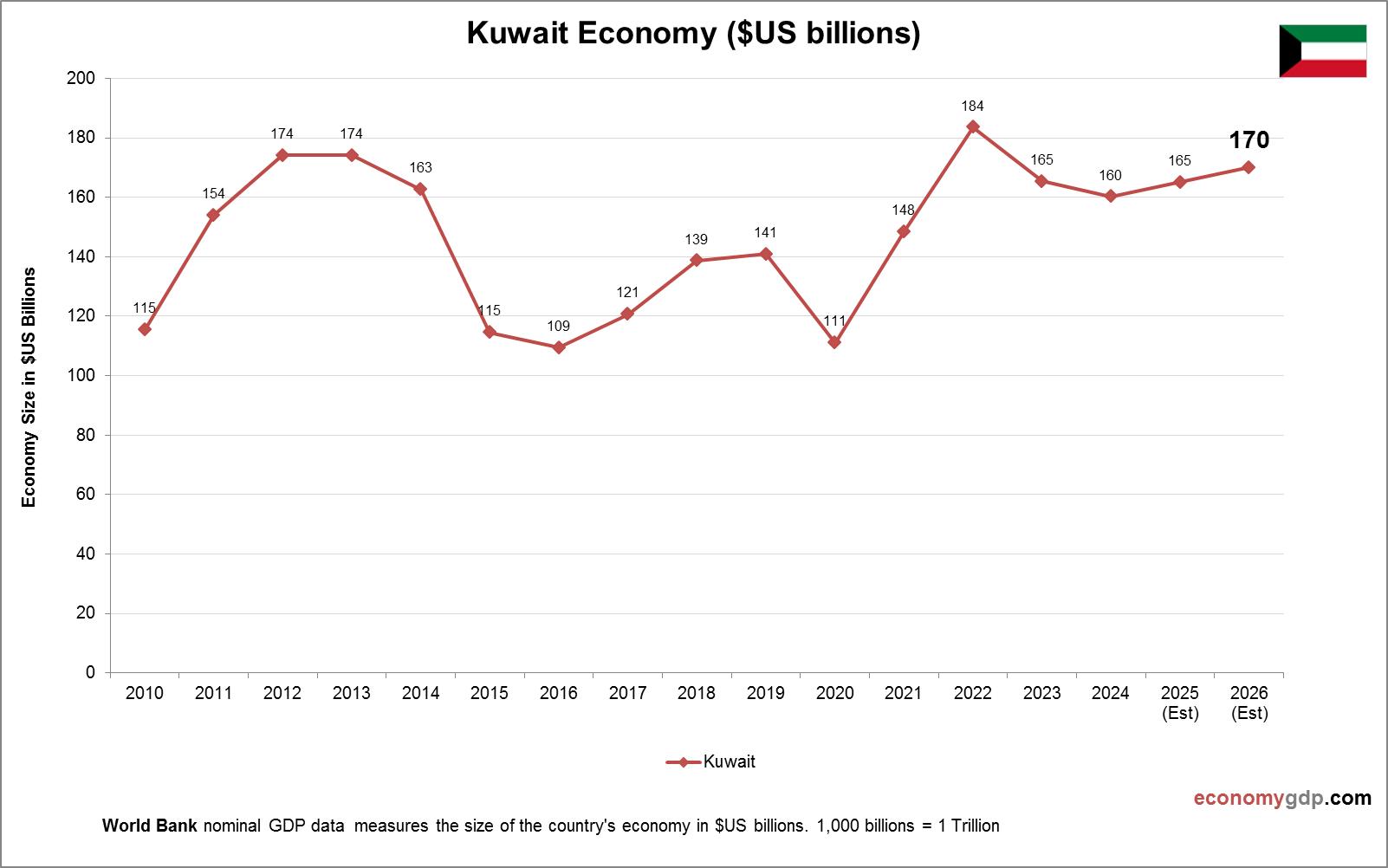
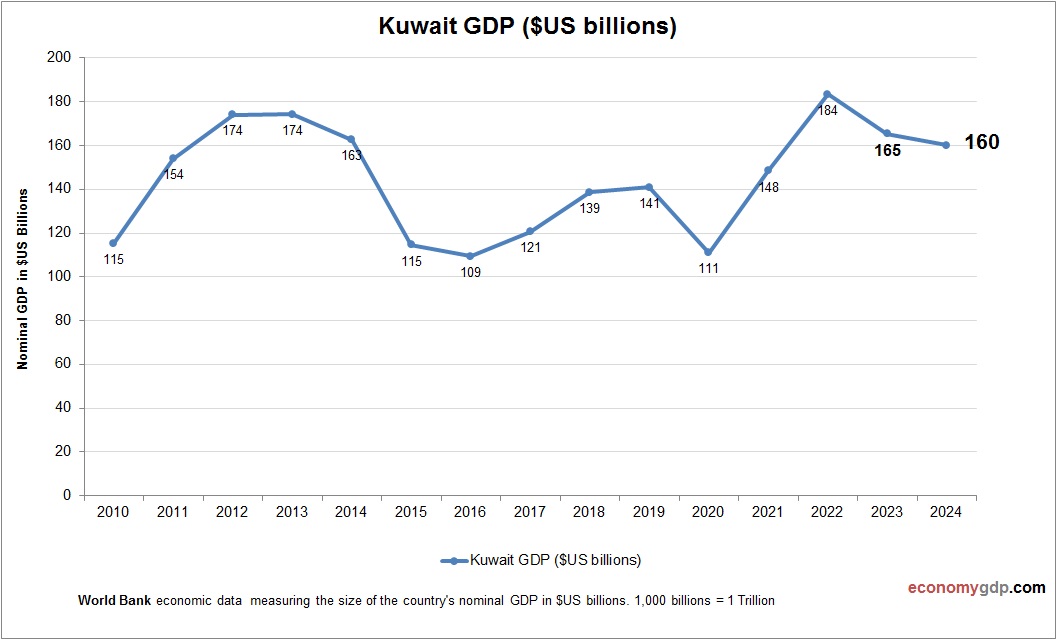
Kuwait’s economy, at $140 billion, is sizable, driven by oil exports. Its GDP reflects high per capita wealth, with diversification efforts underway. See Kuwait GDP.
Kuwait Purchasing Power Parity (PPP)
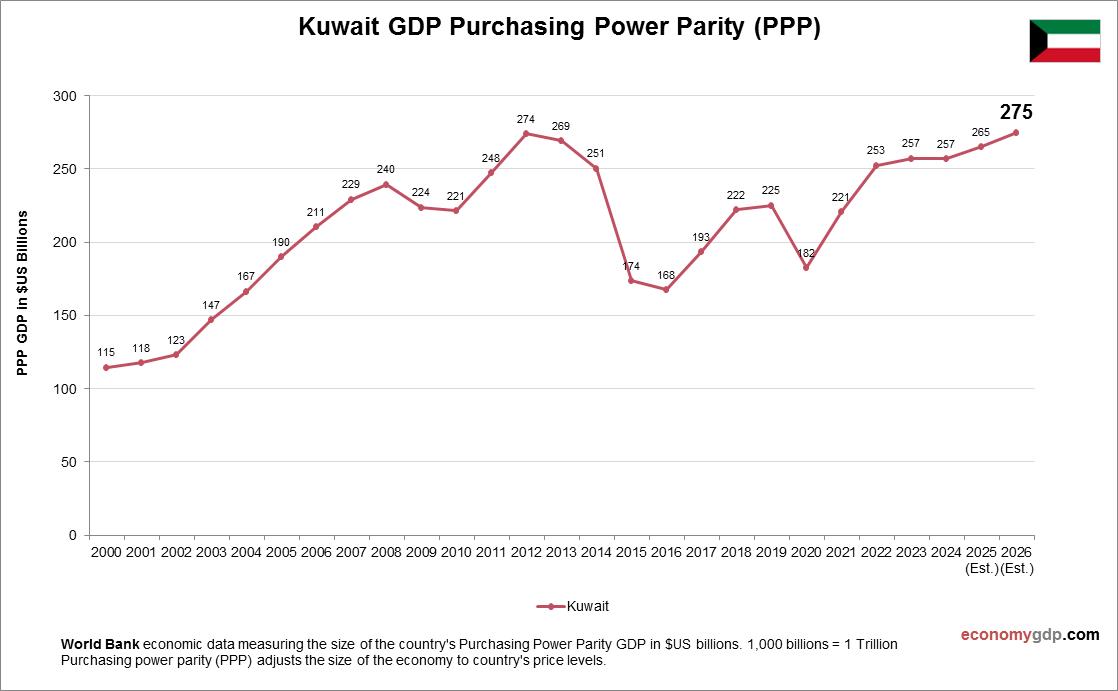
Kuwait’s economy has a PPP GDP of $260 billion, nearly double its $140 billion nominal GDP, reflecting high costs offset by oil wealth. PPP per capita is about $60,000, indicating strong purchasing power. Domestic pricing supports affluent markets, but reliance on oil limits broader PPP benefits and diversification.
Kuwait Growth Rate
The economic growth rate is 2.8% in 2024, fueled by oil exports. High global oil prices and fiscal reforms support growth, but reliance on hydrocarbons and regional tensions limit gains. Diversification into finance and tourism drives resilience, while infrastructure investments enhance momentum, positioning the economy for stable progress.

Kuwait Inflation
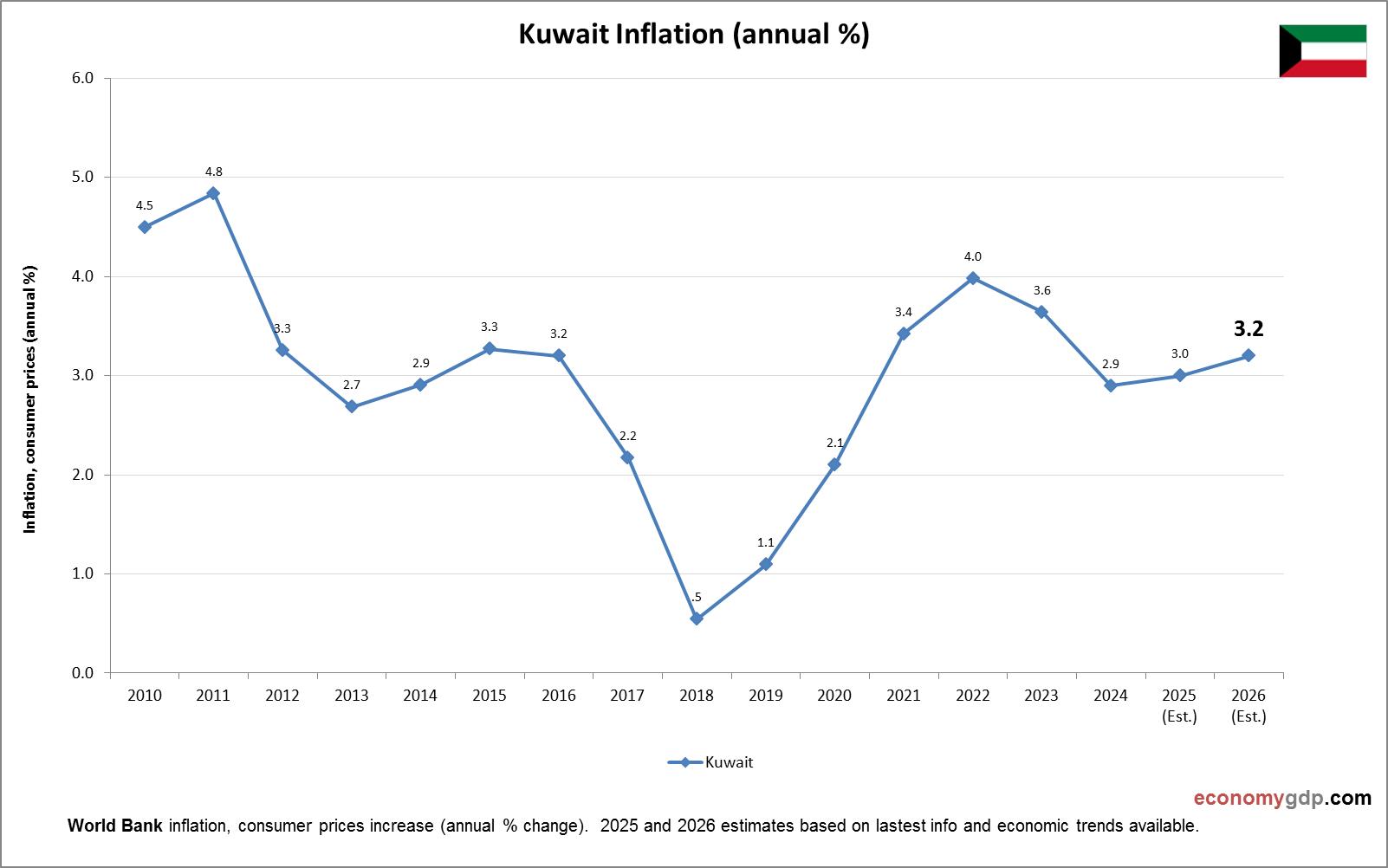
Kuwait’s inflation rate is approximately 3% in 2024, driven by rising global food and housing costs. Strong oil exports fuel domestic demand, while the U.S. dollar peg limits currency volatility. Import reliance adds pressure, but fiscal discipline and subsidies keep inflation low, despite global economic uncertainties impacting this oil-rich economy.