
The Jamaica economy relies on tourism, bauxite, and remittances. Caribbean beaches and cultural attractions draw visitors, while aluminum exports generate revenue. Remittances from overseas workers support households. High debt and crime rates hinder growth, with efforts to diversify into agriculture and services underway. Investments in renewable energy and infrastructure aim to boost competitiveness, though vulnerability to hurricanes and global economic shifts remains a challenge.
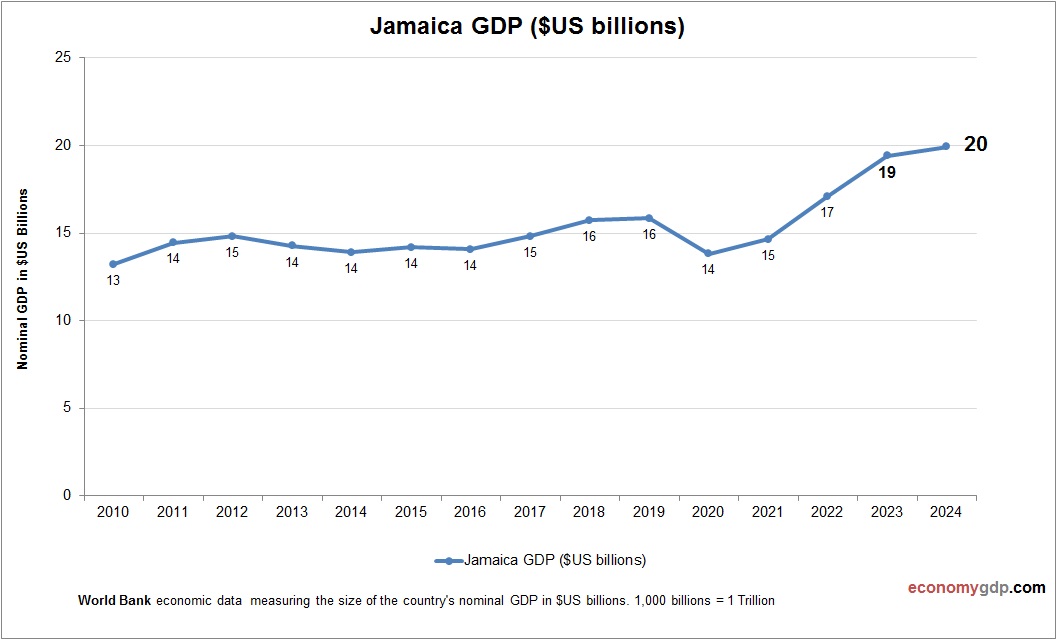
Jamaica Economy Size
Jamaica’s economy, valued at $15 billion, is small, with tourism and remittances driving its GDP, constrained by debt and limited diversification. See Jamaica GDP.
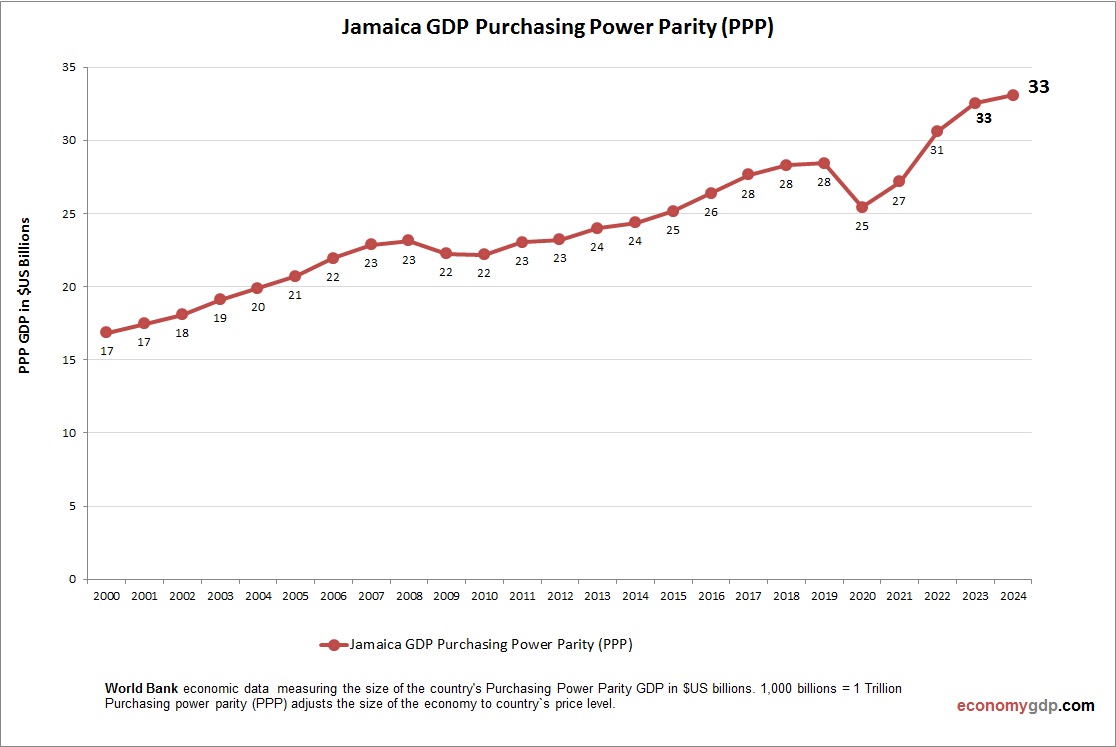
Jamaica Purchasing Power Parity (PPP)
Jamaica’s economy has a PPP GDP of $35 billion, over double its $15 billion nominal GDP, due to low costs for tourism and remittances. PPP per capita is around $12,000, reflecting moderate purchasing power. Domestic pricing boosts local markets, but debt and limited diversification constrain broader PPP benefits.
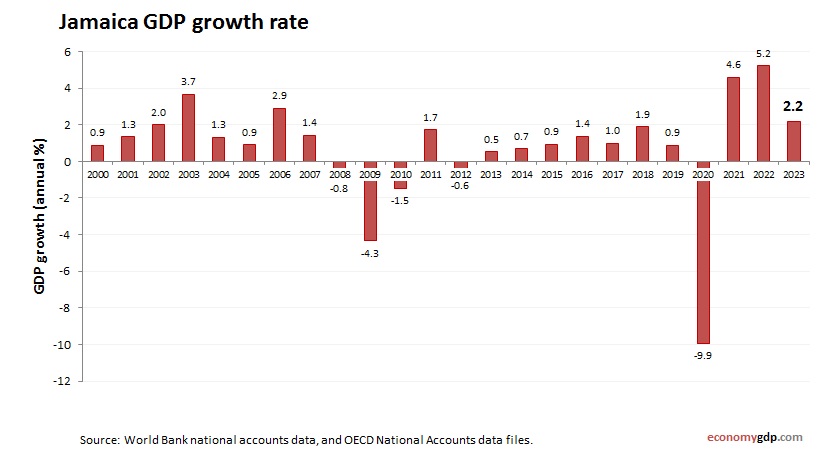
Jamaica Growth Rate
The economic growth rate is 2.5% in 2024, driven by tourism and remittances. Bauxite exports and agriculture support growth, but debt and global slowdowns limit gains. Infrastructure investments and eco-tourism drive resilience, while fiscal reforms enhance momentum, positioning the small economy for steady progress despite vulnerabilities.
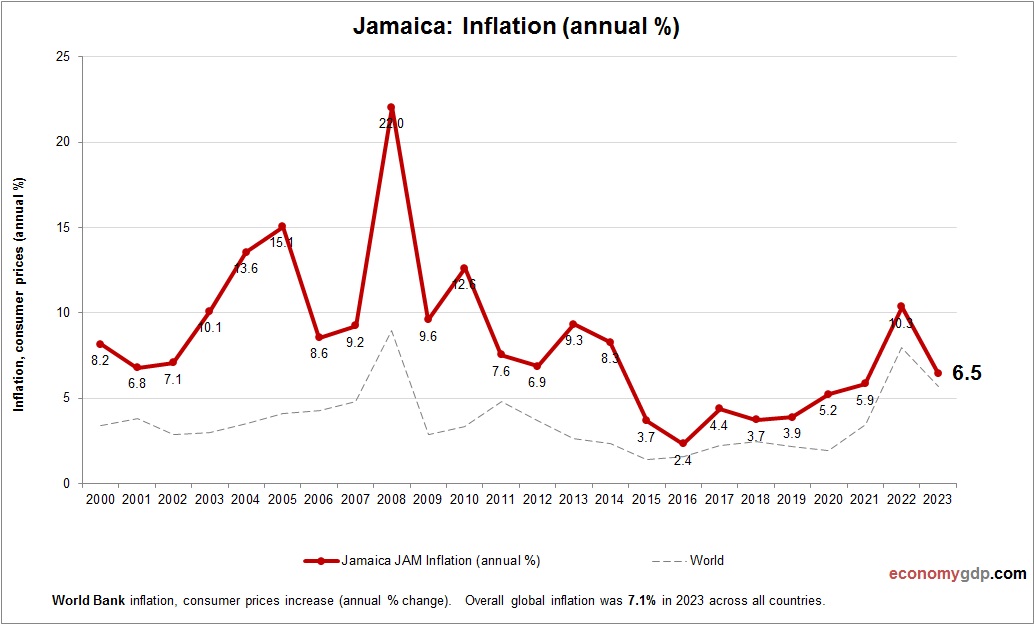
Jamaica Inflation
Jamaica’s inflation rate is around 6% in 2024, driven by rising global food and fuel prices in this import-heavy economy. Tourism recovery increases service costs, while remittances fuel demand. Currency depreciation adds pressure, but tight monetary policy helps moderate inflation, though reliance on imports sustains price volatility in this small market.