The Iceland economy relies on tourism, fisheries, and renewable energy. Geothermal and hydroelectric power support energy exports, while fish and aluminum are key commodities. Tourism, driven by natural wonders like geysers and waterfalls, has surged, but overreliance poses risks. A small population and high living costs limit diversification, with efforts to expand tech and green industries ongoing. Strong welfare and EU trade ties ensure stability, though global market fluctuations challenge growth.
Iceland Economy Size
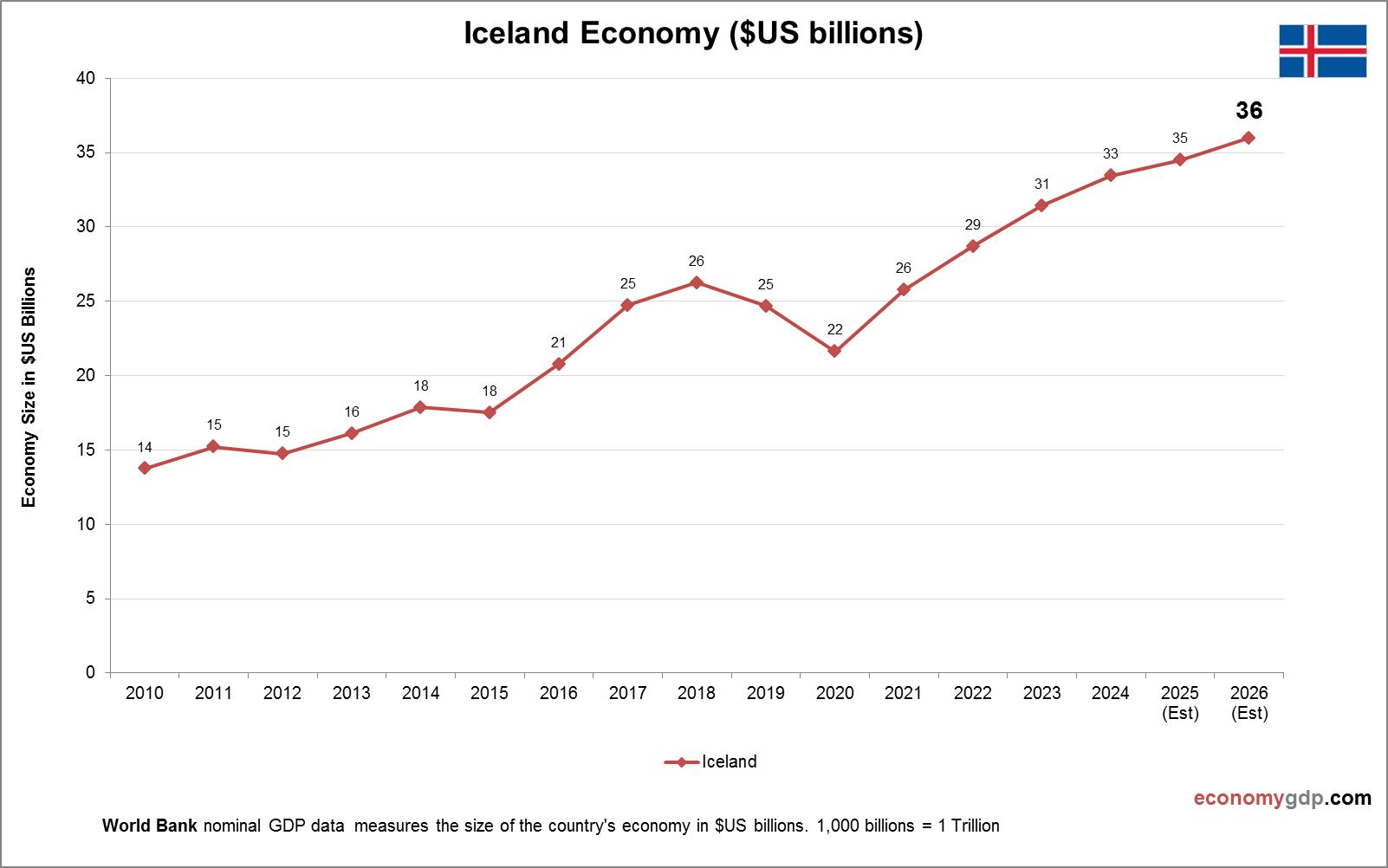
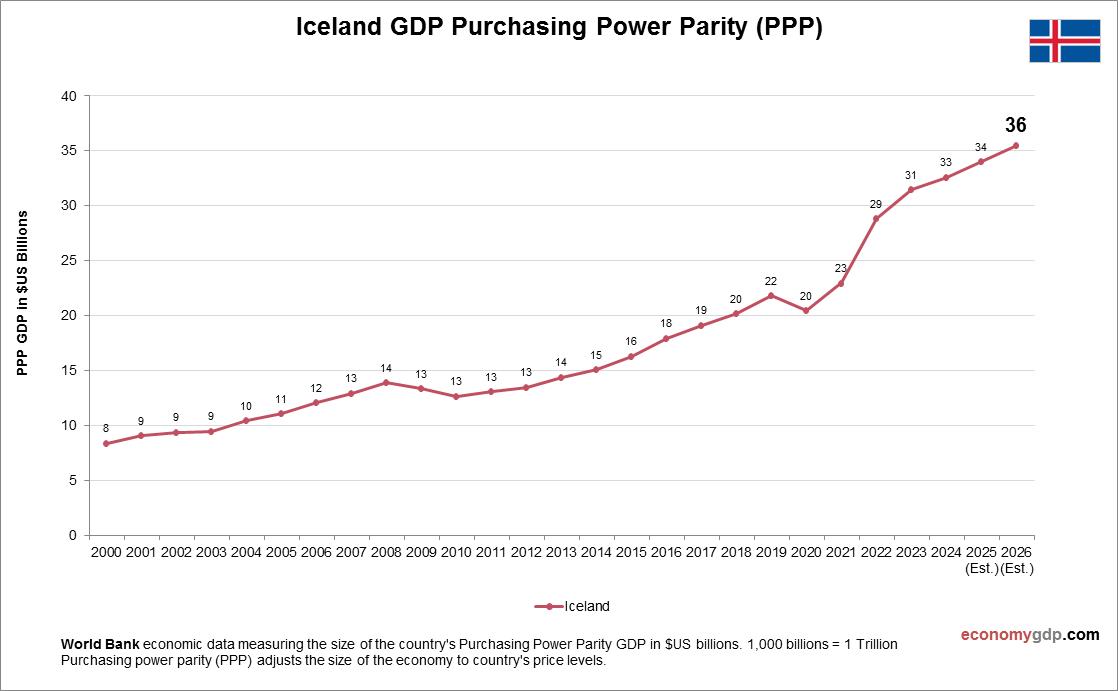
Iceland’s economy, valued at $25 billion, is small but affluent, with tourism and fisheries driving its GDP, bolstered by renewable energy. See Iceland GDP.
Iceland Purchasing Power Parity (PPP)
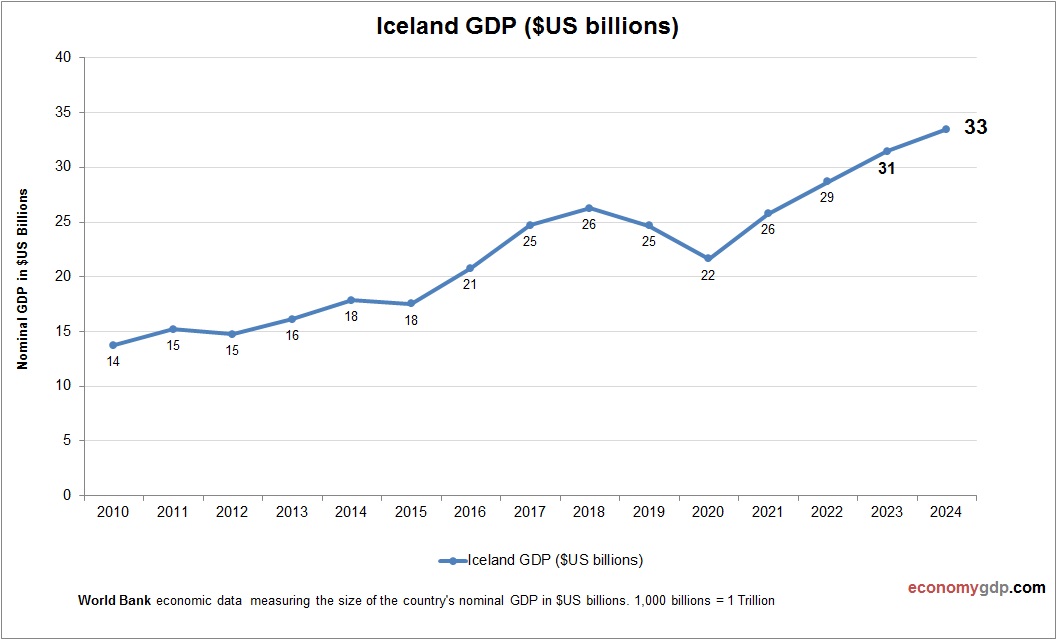
Iceland’s economy has a PPP GDP of $30 billion, slightly above its $25 billion nominal GDP, reflecting high costs offset by tourism and fisheries. PPP per capita is about $80,000, among the highest globally, indicating exceptional purchasing power. PPP underscores Iceland’s affluent domestic market, with trade driving growth.
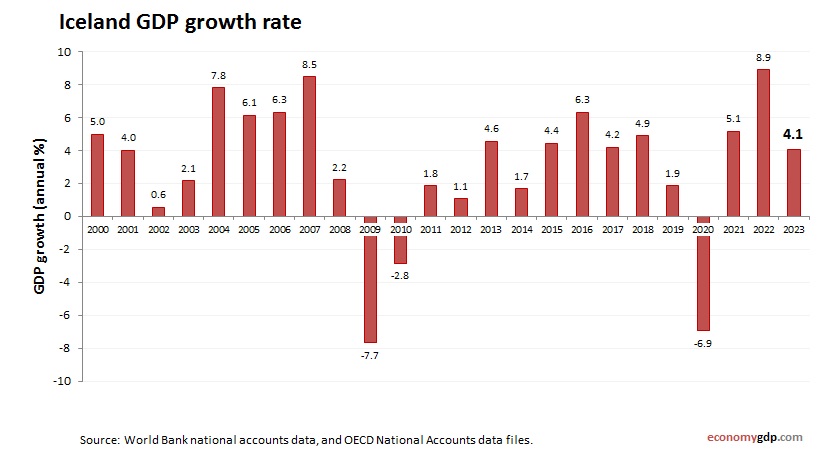
Iceland Growth Rate
The economic growth rate is 2.0% in 2024, fueled by tourism and fisheries. Renewable energy and stable governance support growth, but high costs and global slowdowns limit gains. Agriculture contributes modestly, while digital innovation drives resilience, positioning the small economy for modest expansion despite external pressures.
Iceland Inflation
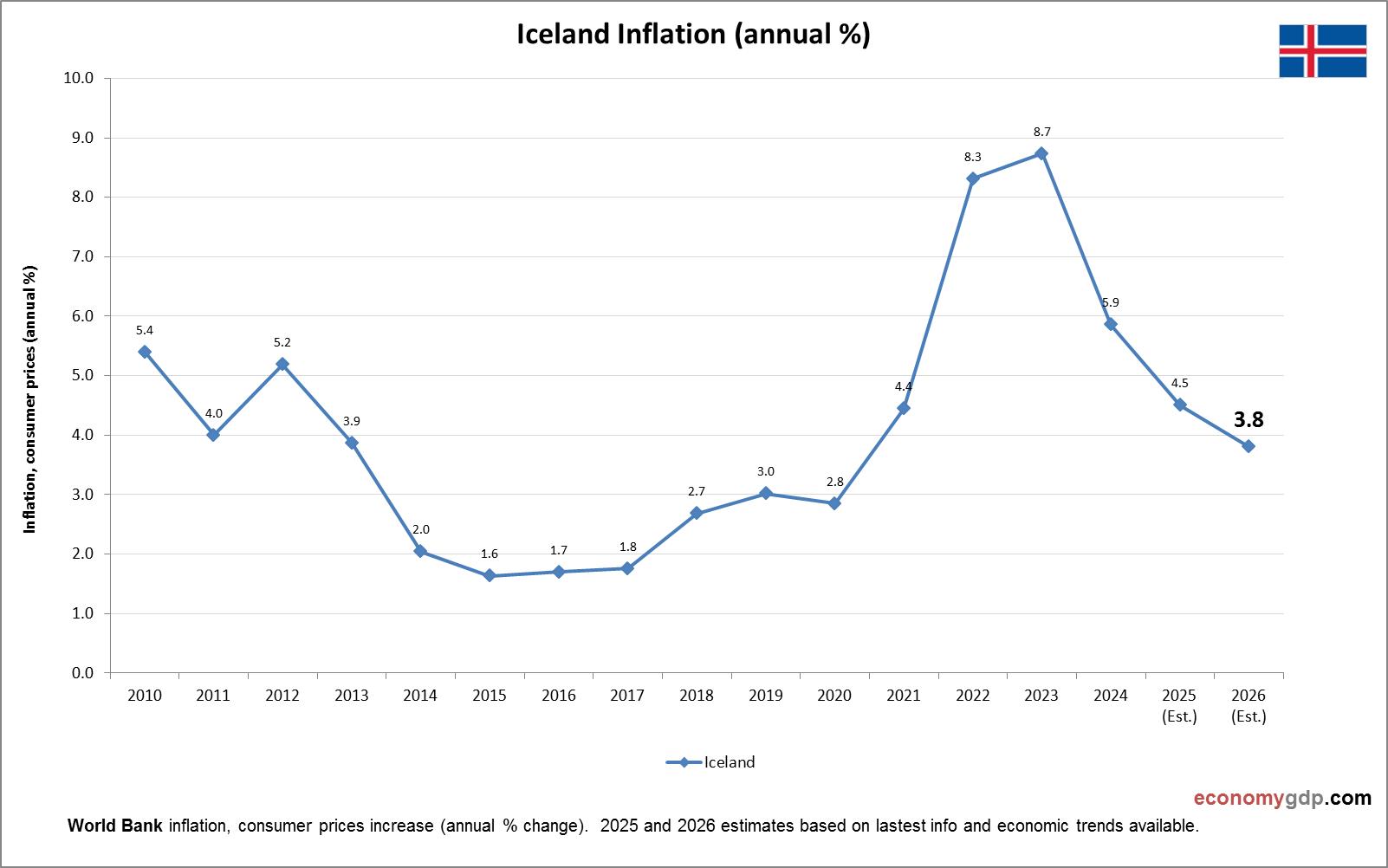
Iceland’s inflation rate is around 5% in 2024, driven by rising global food and energy prices in this import-dependent economy. Strong tourism and fisheries exports increase domestic demand, pushing service costs up. Currency stability and tight monetary policy help moderate inflation, though high costs sustain moderate price increases.