The Georgia economy relies on agriculture, tourism, and hydropower. Wine, citrus, and hazelnuts are key exports, while the Black Sea coast and historical sites attract visitors. Energy exports from hydropower support regional trade. Reforms have improved the business climate, but poverty, unemployment, and reliance on imports persist. Efforts to diversify into technology and strengthen EU ties aim to boost growth, though geopolitical tensions with Russia pose risks.
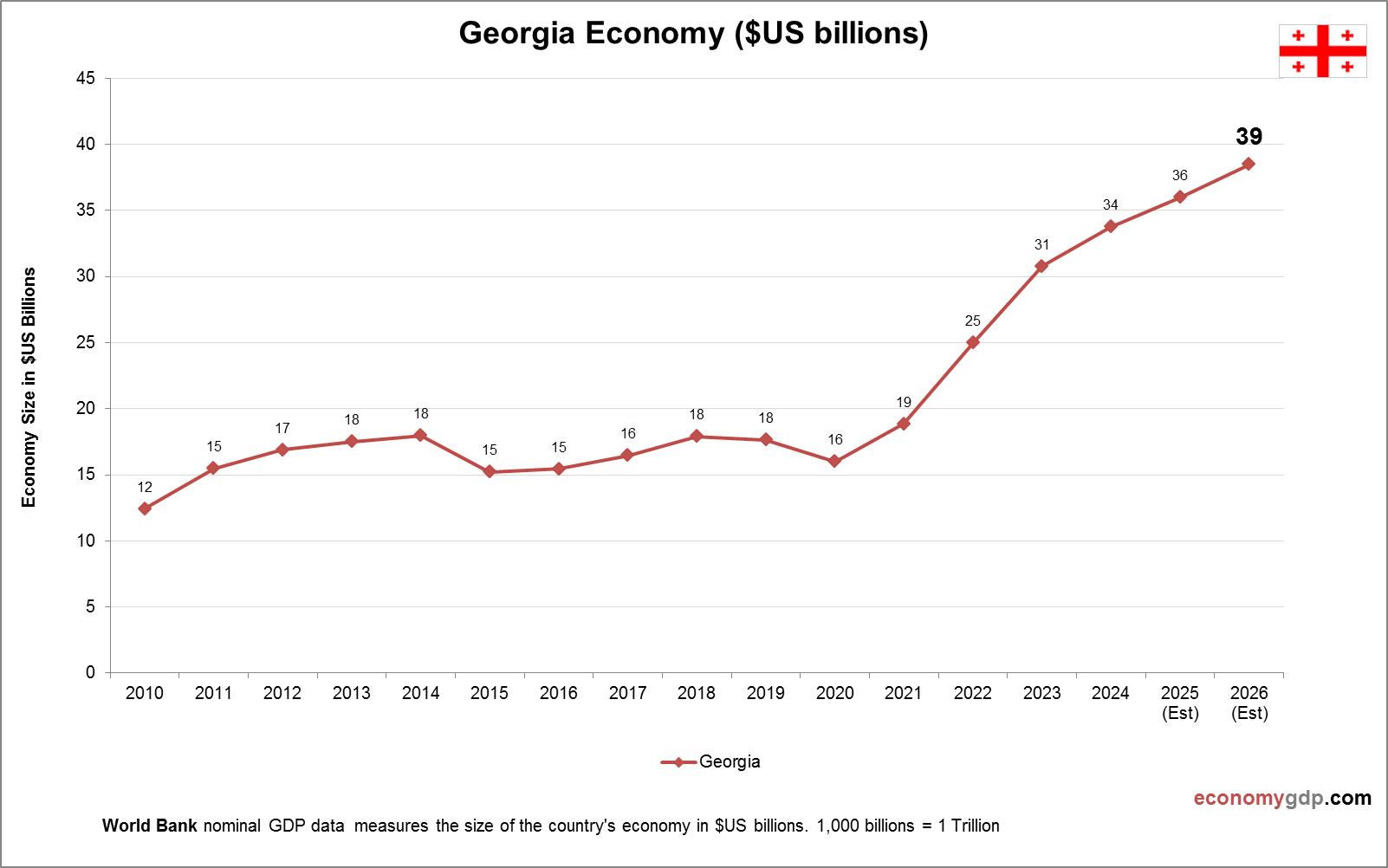
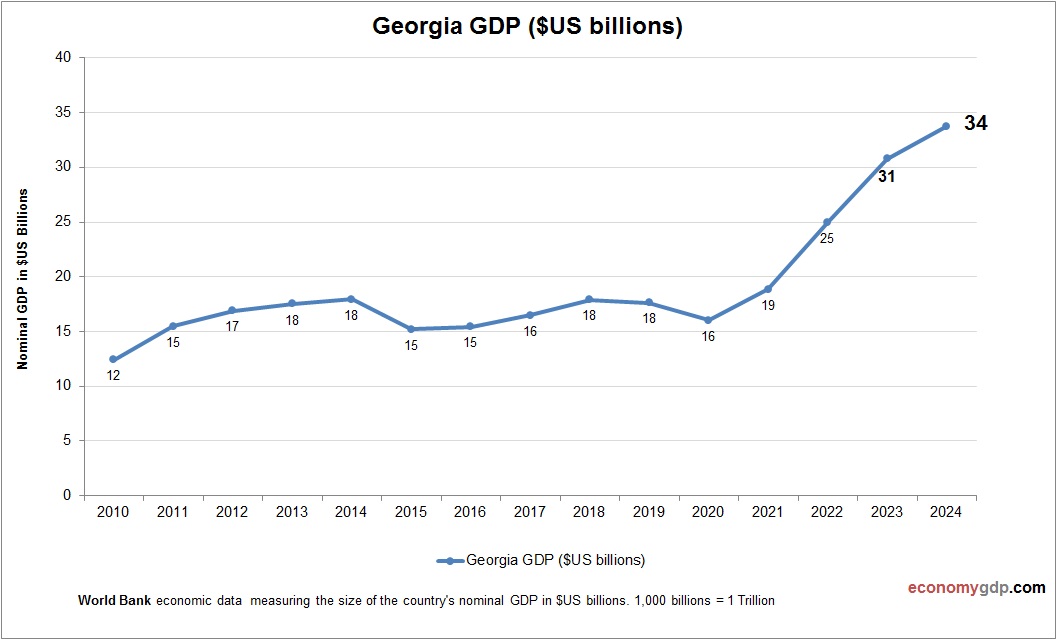
Georgia Economy Size
Georgia’s economy, worth $20 billion, is small but growing, with tourism and agriculture driving its GDP. Reforms support expansion despite geopolitical challenges. See Georgia GDP.
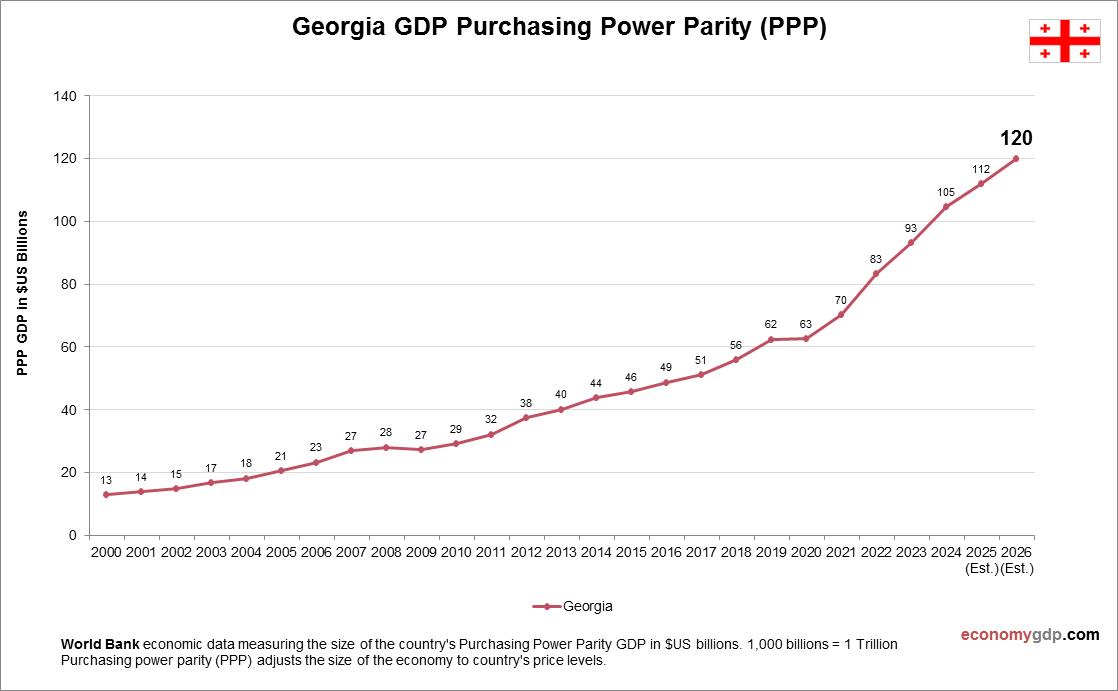
Georgia Purchasing Power Parity (PPP)
Georgia’s economy has a PPP GDP of $80 billion, four times its $20 billion nominal GDP, due to low costs for tourism and agriculture. PPP per capita is about $22,000, reflecting solid purchasing power. Reforms and trade boost domestic markets, but geopolitical tensions limit broader PPP benefits and economic expansion.
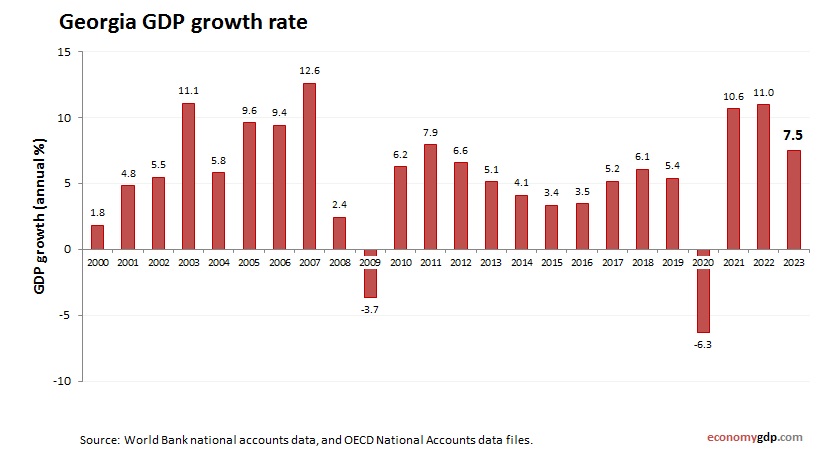
Georgia Growth Rate
The economic growth rate is 4.5% in 2024, driven by tourism and agriculture. Wine exports and infrastructure investments support growth, but geopolitical tensions with Russia pose risks. Remittances and foreign investment drive resilience, while EU candidacy enhances momentum, positioning the economy for robust expansion in the region.
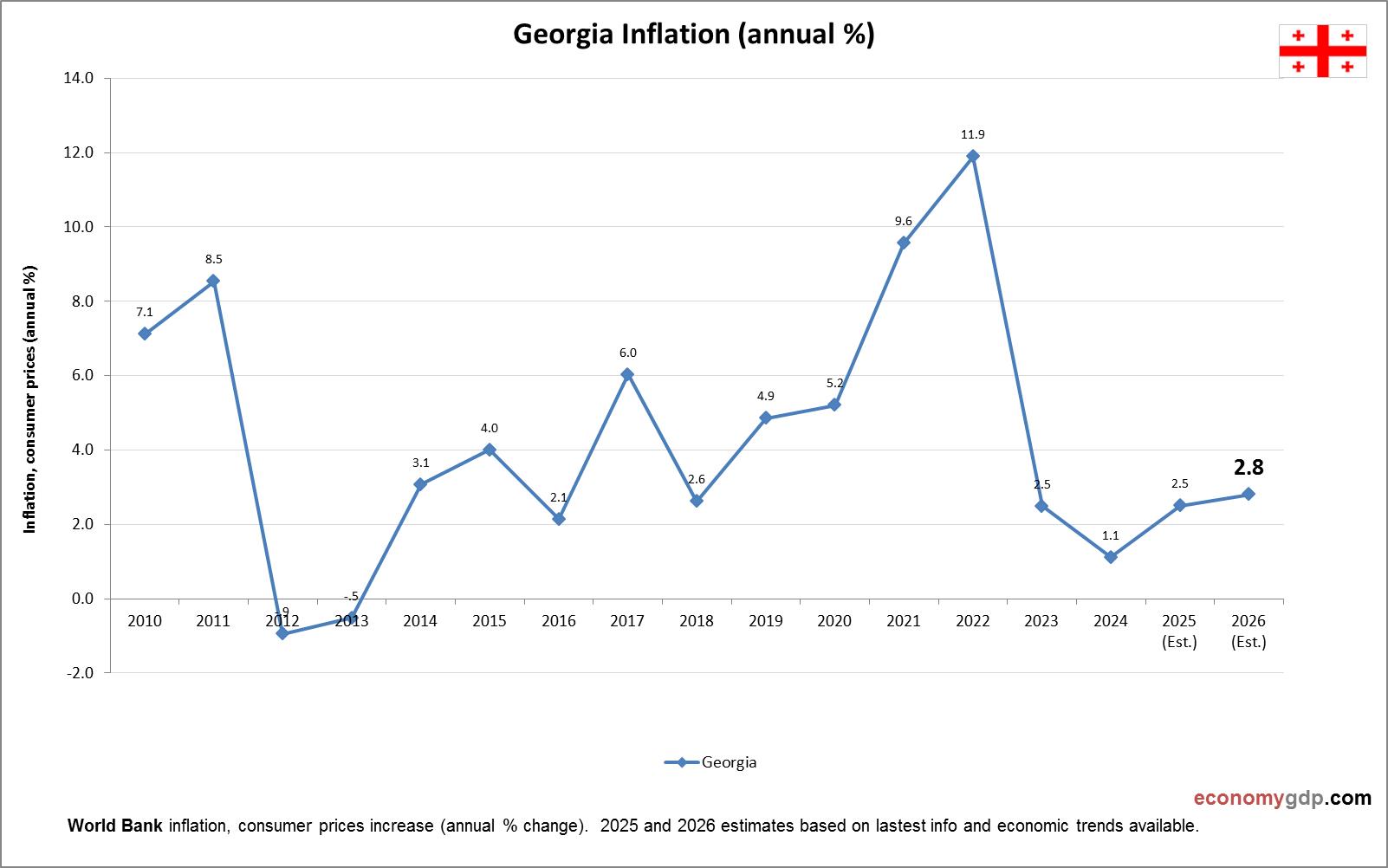
Georgia Inflation
Georgia’s inflation rate is approximately 3% in 2024, driven by rising global food and energy prices. Currency stability and tourism recovery increase domestic demand, while trade disruptions with Russia add pressure. Tight monetary policy and reforms help contain inflation, positioning the economy for stability despite geopolitical challenges.