The Estonia economy is a digital leader, driven by technology, services, and manufacturing. E-government and startups like Skype fuel innovation, while timber and electronics support exports. EU membership enhances trade, particularly with Nordic countries. Low public debt and a business-friendly environment attract investment, though an aging population and skills shortages pose challenges. Investments in renewable energy and cybersecurity aim to sustain Estonias competitive edge in a digital-driven economy.
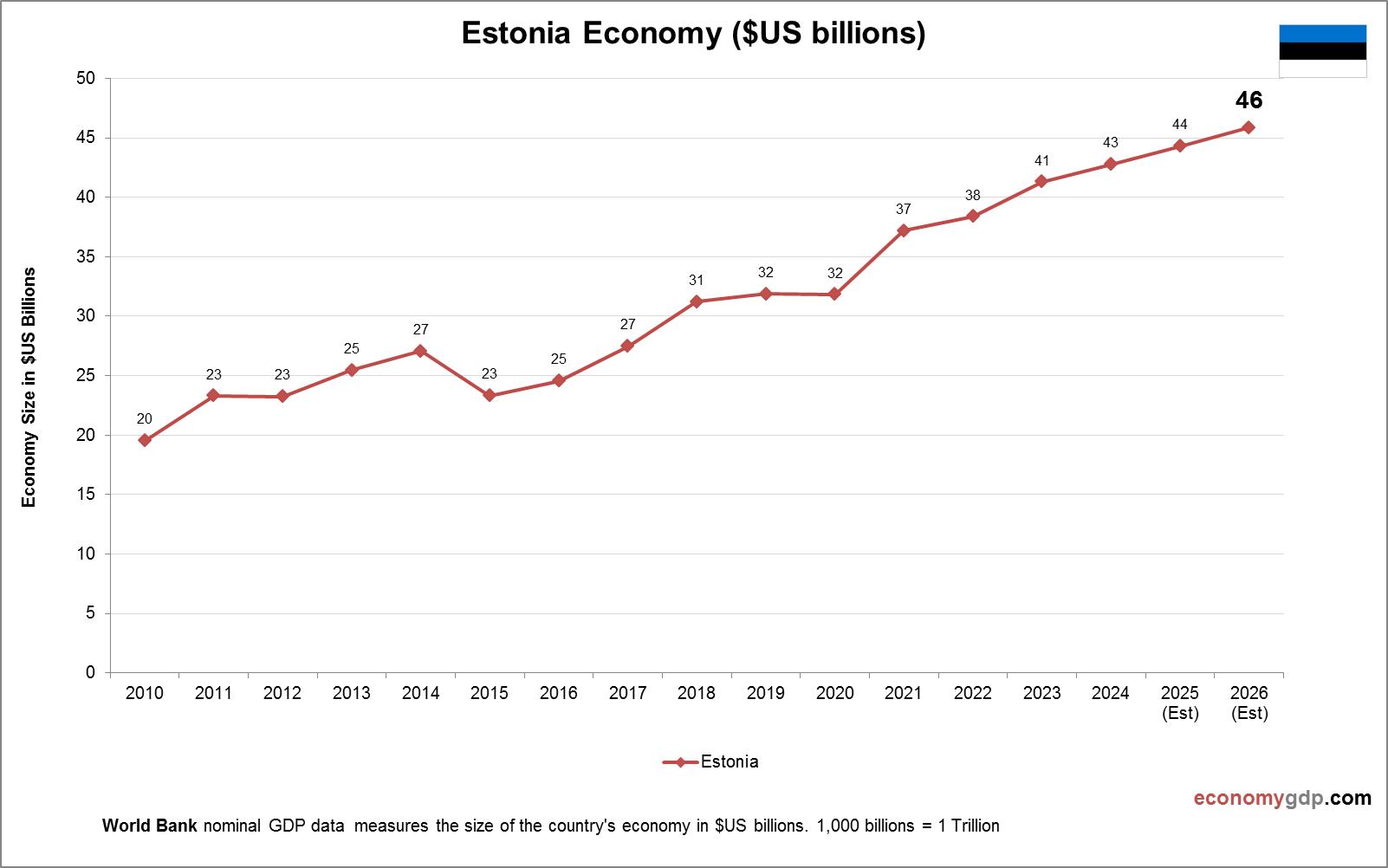
Estonia Economy Size
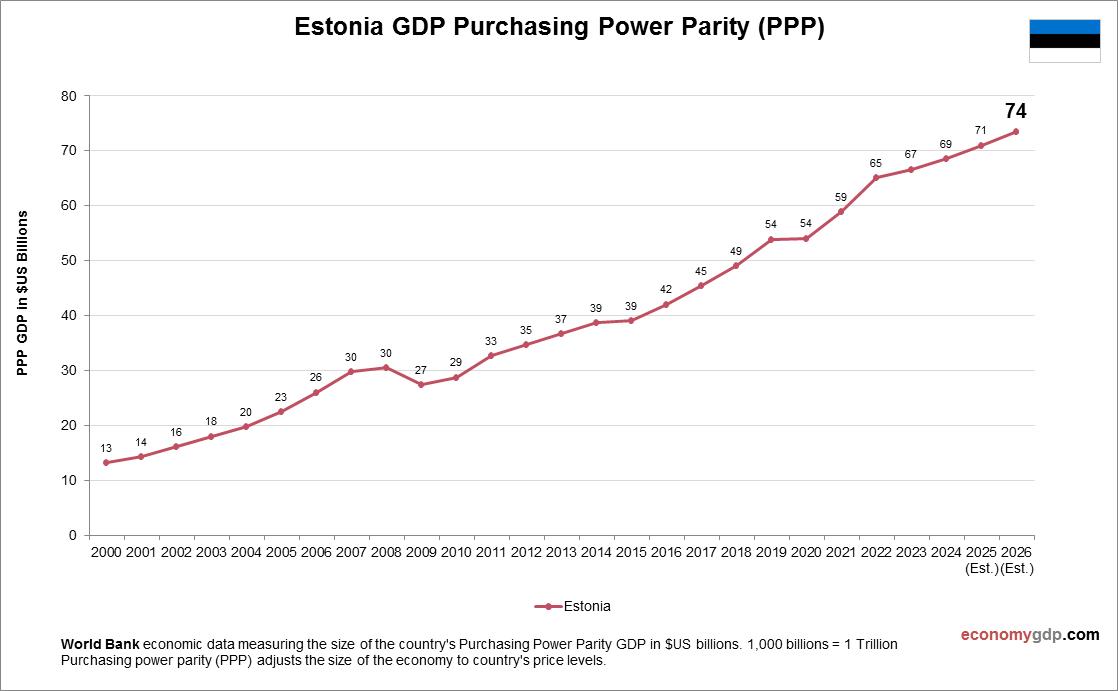
Estonia’s economy, worth $40 billion, is small but innovative, with tech and services driving its GDP. EU integration supports its high per capita income. See Estonia GDP.
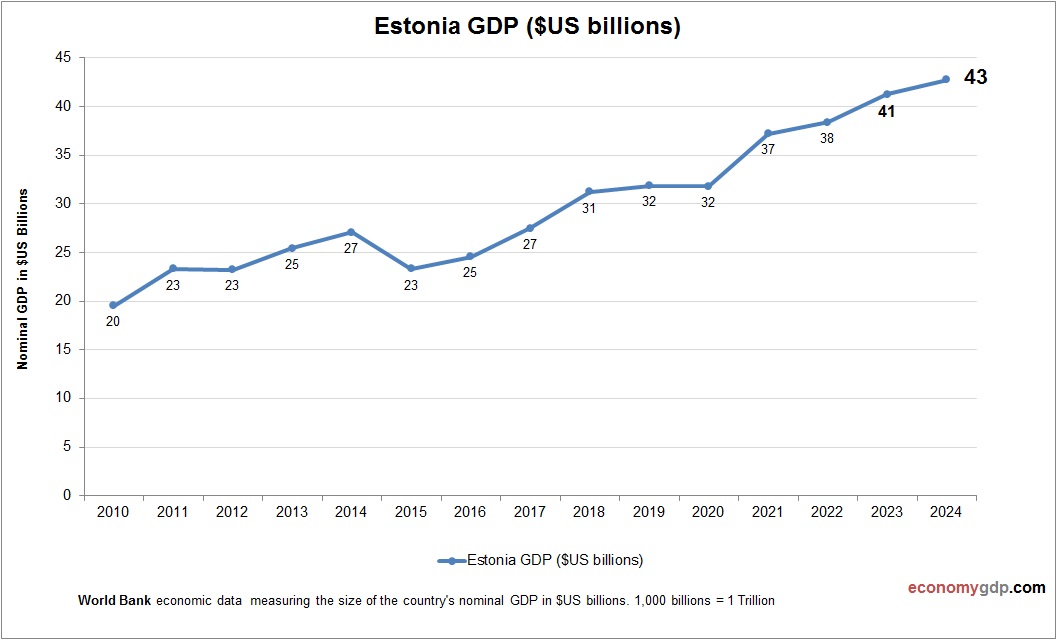
Estonia Purchasing Power Parity (PPP)
Estonia’s economy has a PPP GDP of $65 billion, over 1.5 times its $40 billion nominal GDP, due to lower costs for tech and services. PPP per capita is about $50,000, reflecting high living standards. EU integration and innovation amplify PPP advantages, supporting a robust domestic market with export-driven growth.
Estonia Growth Rate
The economic growth rate is 3.0% in 2024, fueled by tech exports and services. EU integration and digital innovation drive growth, but reliance on exports and high costs limit gains. Agriculture contributes modestly, while renewable energy investments enhance resilience, positioning the economy for steady progress within the EU.

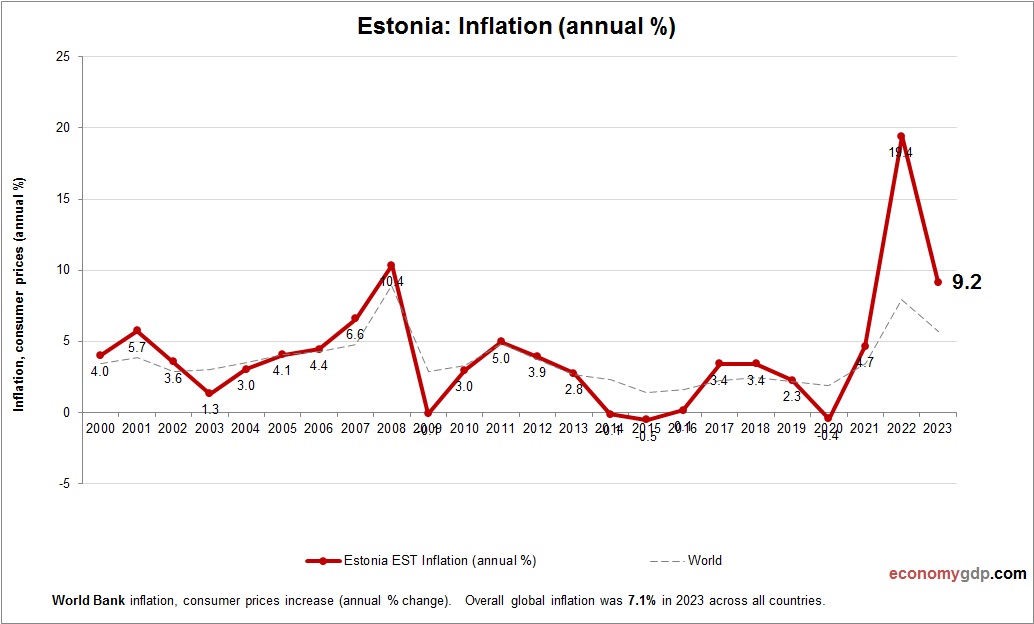
Estonia Inflation
Estonia’s inflation rate is around 3% in 2024, driven by rising energy and food import costs within the EU. Strong tech exports and wage growth add demand-side pressure, while global supply chain issues persist. Eurozone monetary tightening and digital economy resilience help keep inflation moderate, though import reliance poses risks.