The Ecuador economy relies on oil, agriculture, and remittances. Crude oil exports dominate, while bananas, shrimp, and flowers are key agricultural outputs. Dollarization stabilizes currency but limits monetary policy. Tourism, including the Galapagos Islands, grows steadily. High debt, poverty, and political instability hinder progress, with efforts to diversify into mining and renewable energy underway. Infrastructure investment and trade agreements aim to boost competitiveness in global markets.
Ecuador Economy Size
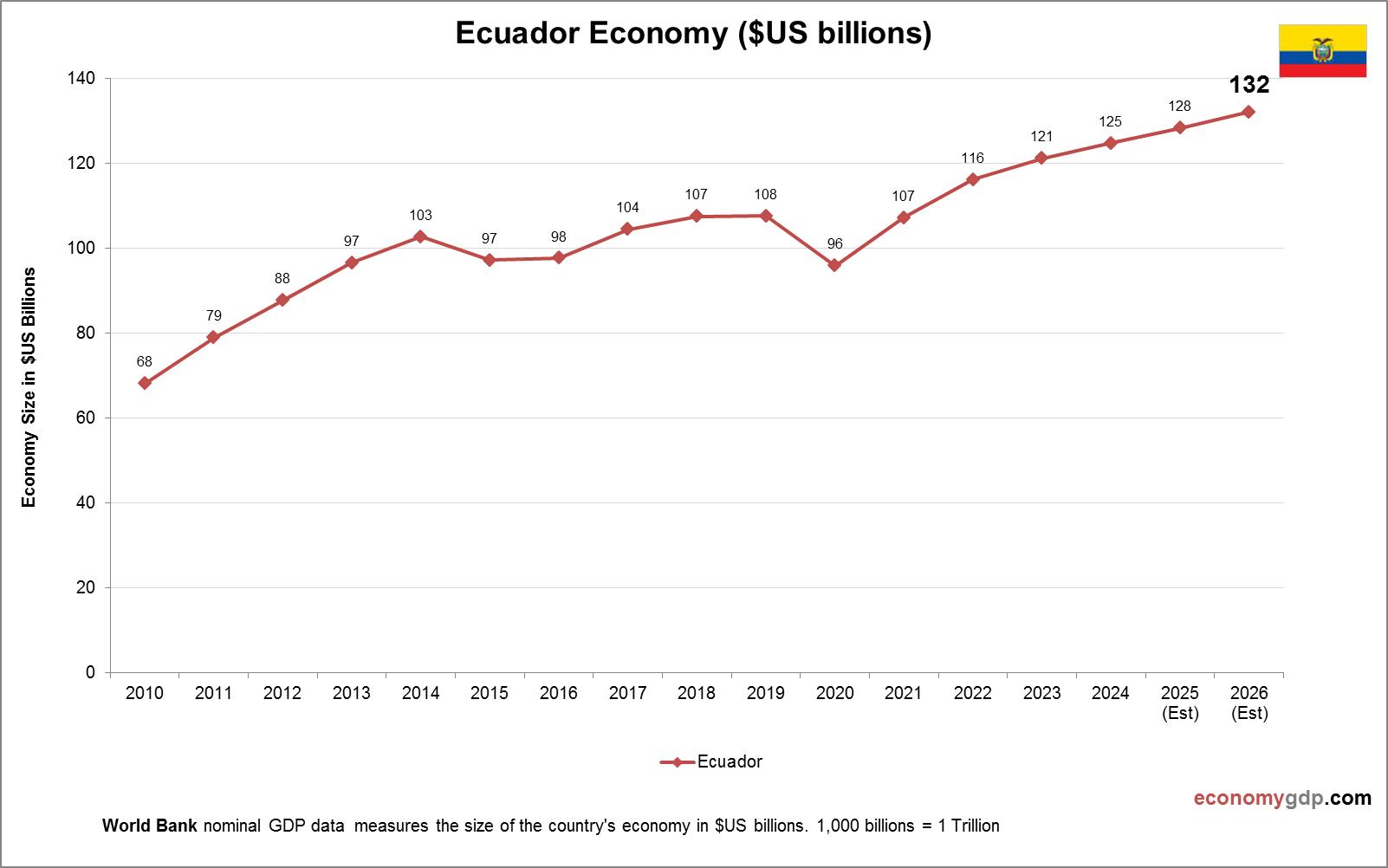
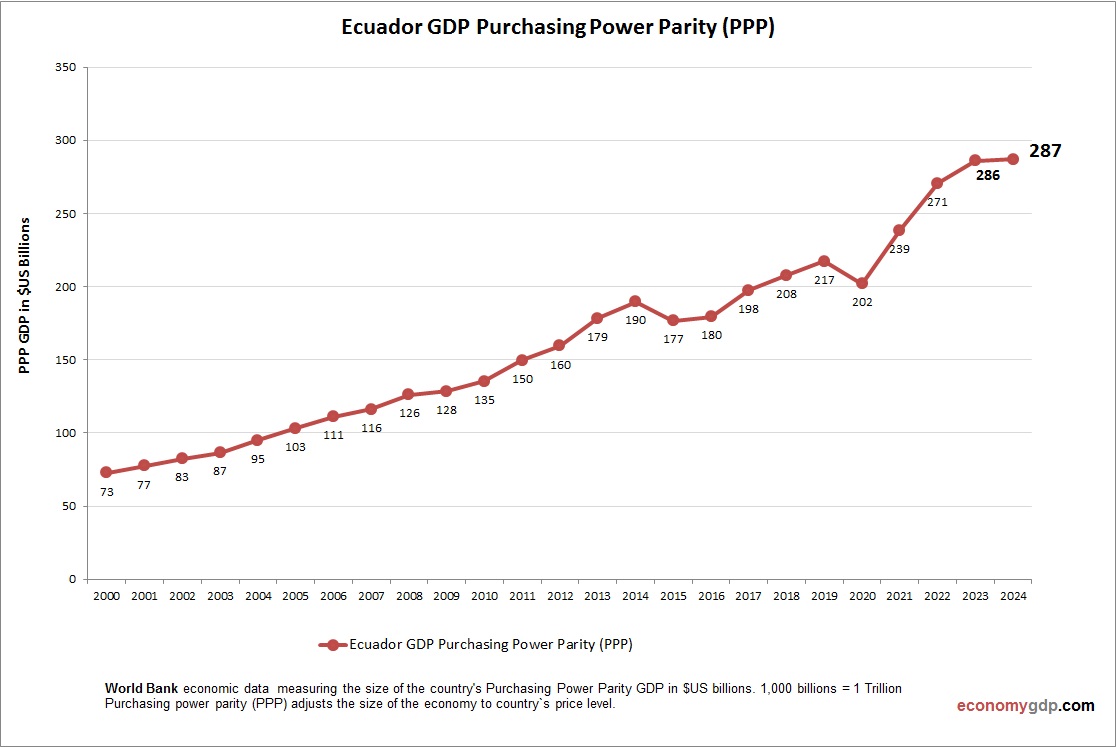
Ecuador’s economy, worth $115 billion, is mid-sized, with oil and agriculture as key drivers. Its GDP faces challenges from debt and commodity price fluctuations. See Ecuador GDP.
Ecuador Purchasing Power Parity (PPP)
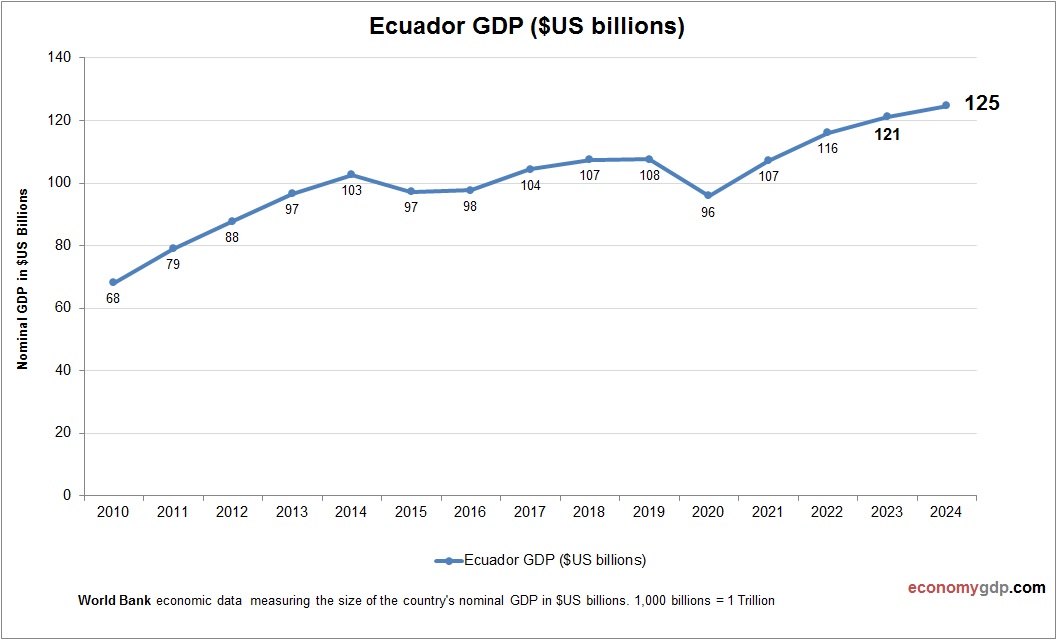
Ecuador’s economy has a PPP GDP of $250 billion, over double its $115 billion nominal GDP, due to low costs for oil and agriculture. PPP per capita is around $14,000, reflecting moderate purchasing power. Domestic pricing boosts local markets, but debt and commodity volatility limit broader PPP benefits and growth.
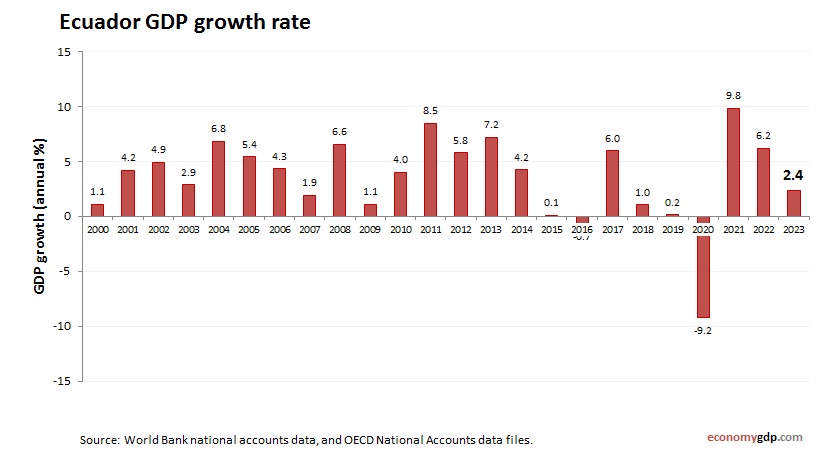
Ecuador Growth Rate
The economic growth rate is 2.5% in 2024, supported by oil exports and agriculture. Banana and shrimp exports drive growth, but debt and commodity price volatility restrain expansion. Tourism contributes modestly, while fiscal reforms aim to stabilize, positioning the economy for moderate progress despite external economic pressures.
Ecuador Inflation
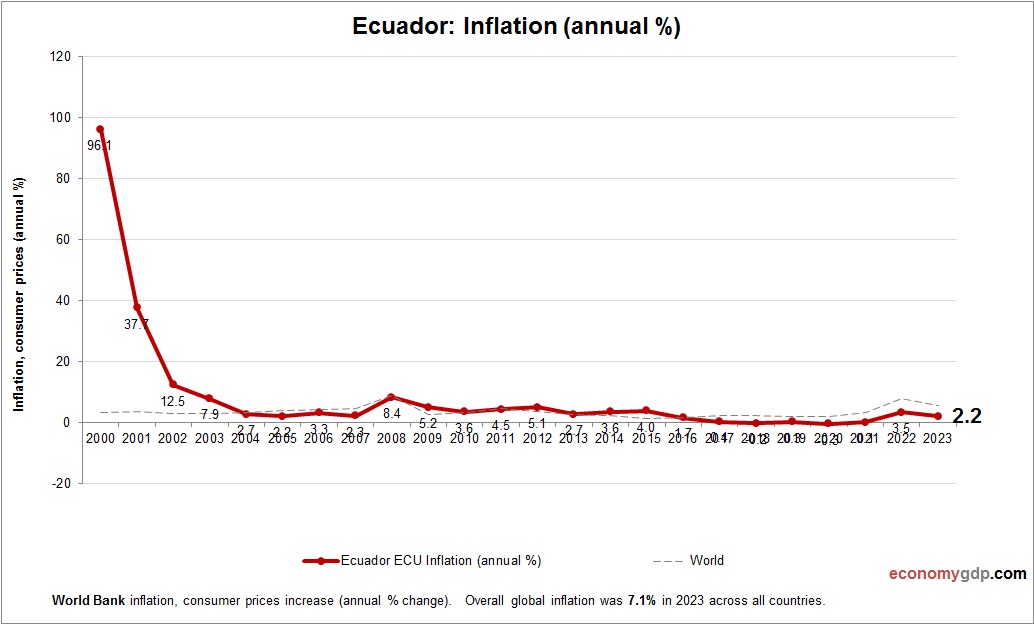
Ecuador’s inflation rate is about 3% in 2024, driven by rising global food and fuel prices in this dollarized economy. Oil exports increase domestic demand, while agricultural disruptions from weather add pressure. Stable monetary policy limits volatility, but reliance on commodity exports and debt sustains moderate inflation.