The Bangladesh economy has achieved robust growth through garment exports, remittances, and agriculture. The textile industry dominates global markets, employing millions, while remittances bolster foreign reserves. Infrastructure development and foreign investment are rising, but poverty, overpopulation, and climate vulnerability persist. Efforts to diversify exports, improve education, and enhance digital infrastructure aim to sustain growth, though challenges like flooding and labor conditions remain significant hurdles.
Bangladesh Economy Size
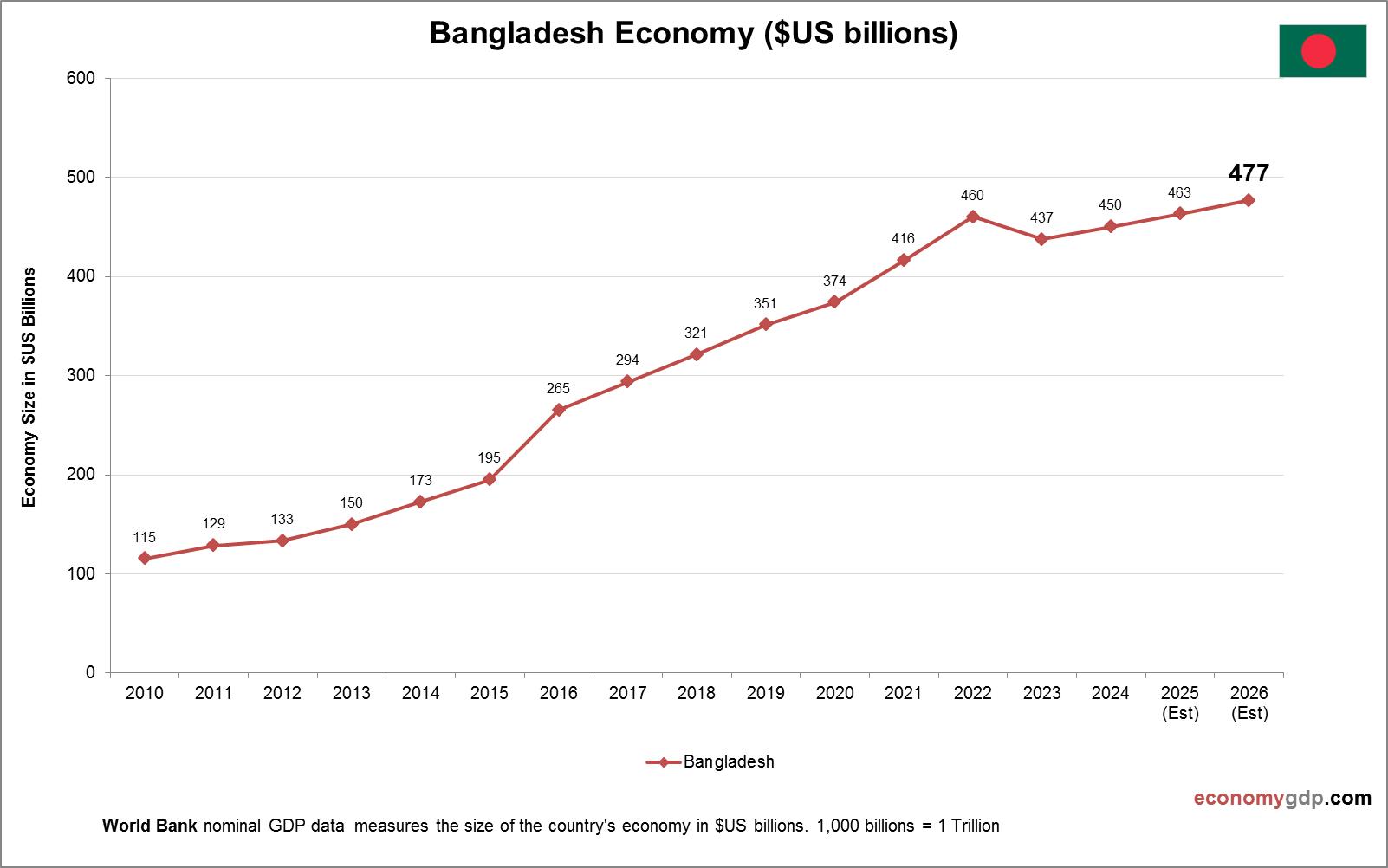
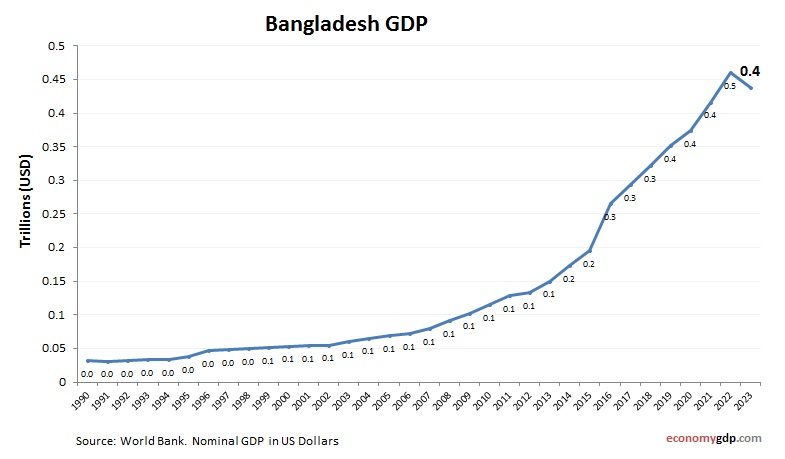
Bangladesh’s economy, at $460 billion, is large and rapidly growing, ranking among Asia’s emerging giants. Its size is bolstered by textiles, remittances, and manufacturing, with a vast labor force fueling expansion. See Bangladesh GDP.
Bangladesh Purchasing Power Parity (PPP)
Bangladesh’s economy has a PPP GDP of $1.4 trillion, triple its $460 billion nominal GDP, driven by low costs for textiles and agriculture. PPP per capita is about $8,500, indicating modest but improving purchasing power. A large workforce amplifies domestic market size, but poverty and infrastructure gaps persist. PPP highlights Bangladesh’s potential as an emerging economic powerhouse with significant cost-driven advantages.

Bangladesh Growth Rate
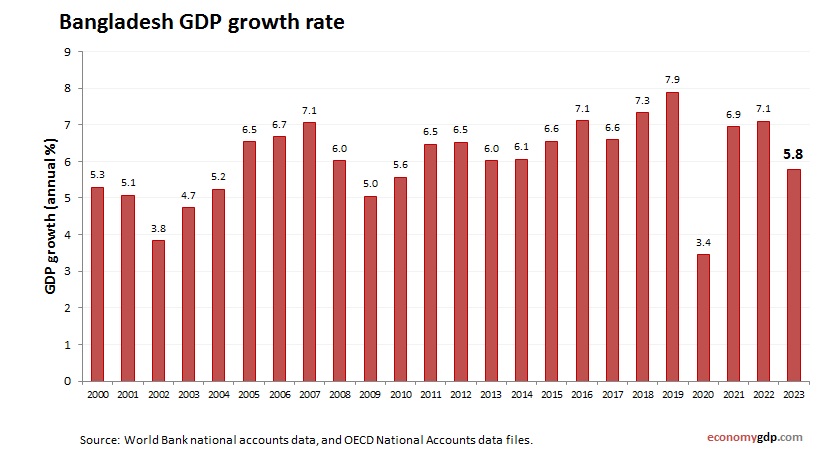
The economic growth rate is 6.5% in 2024, driven by textile exports and remittances. Robust manufacturing and infrastructure investments sustain growth despite global trade slowdowns. Energy shortages and inflation pose challenges, but a young workforce and trade agreements amplify momentum, positioning the economy as a regional leader.
Bangladesh Inflation
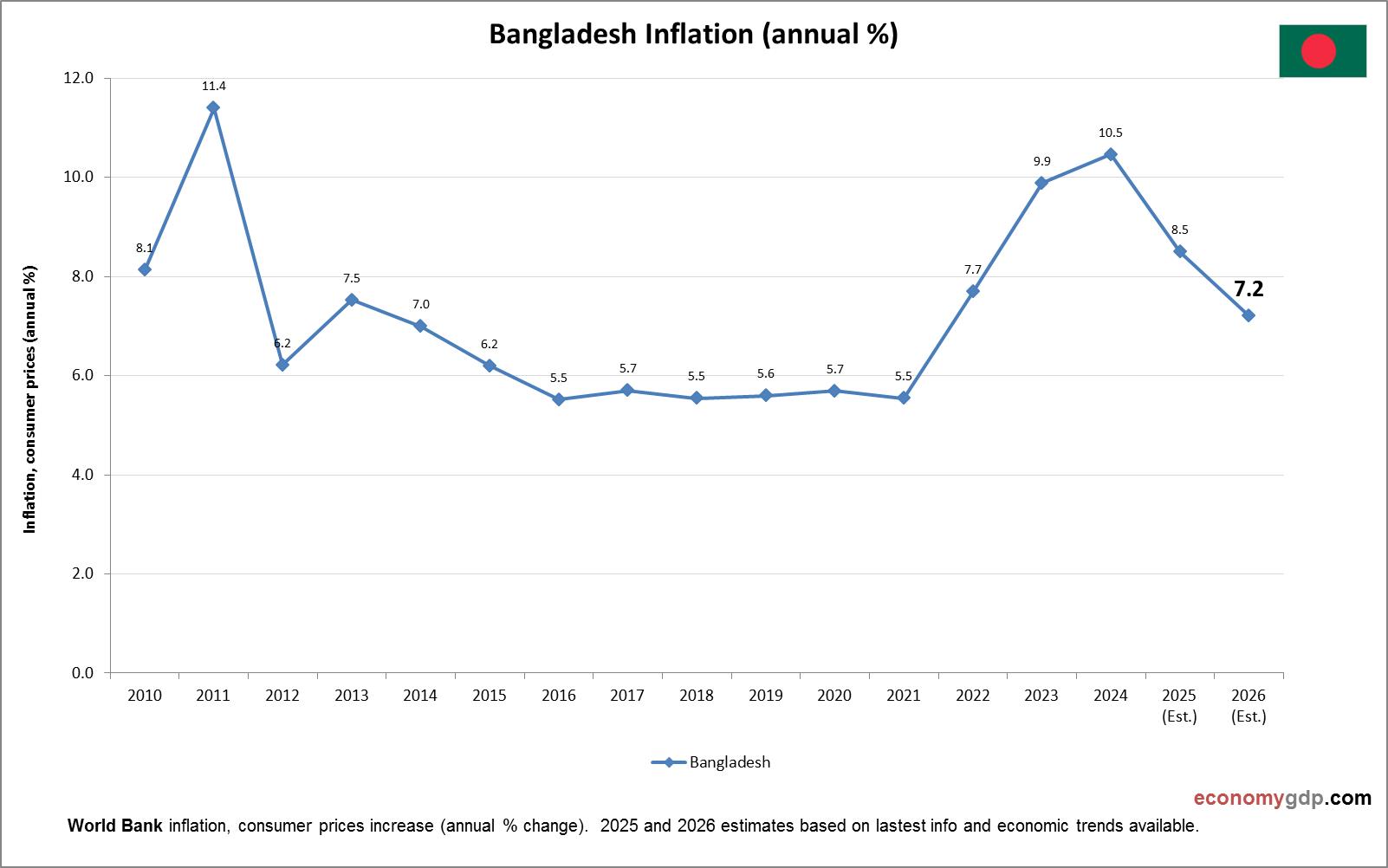
Bangladesh’s inflation rate is about 9% in 2024, fueled by rising global food and energy prices. Currency depreciation increases import costs, while strong domestic demand from textile exports adds pressure. Floods disrupt agriculture, raising food prices. Monetary tightening aims to stabilize, but rapid growth sustains moderate inflation.