
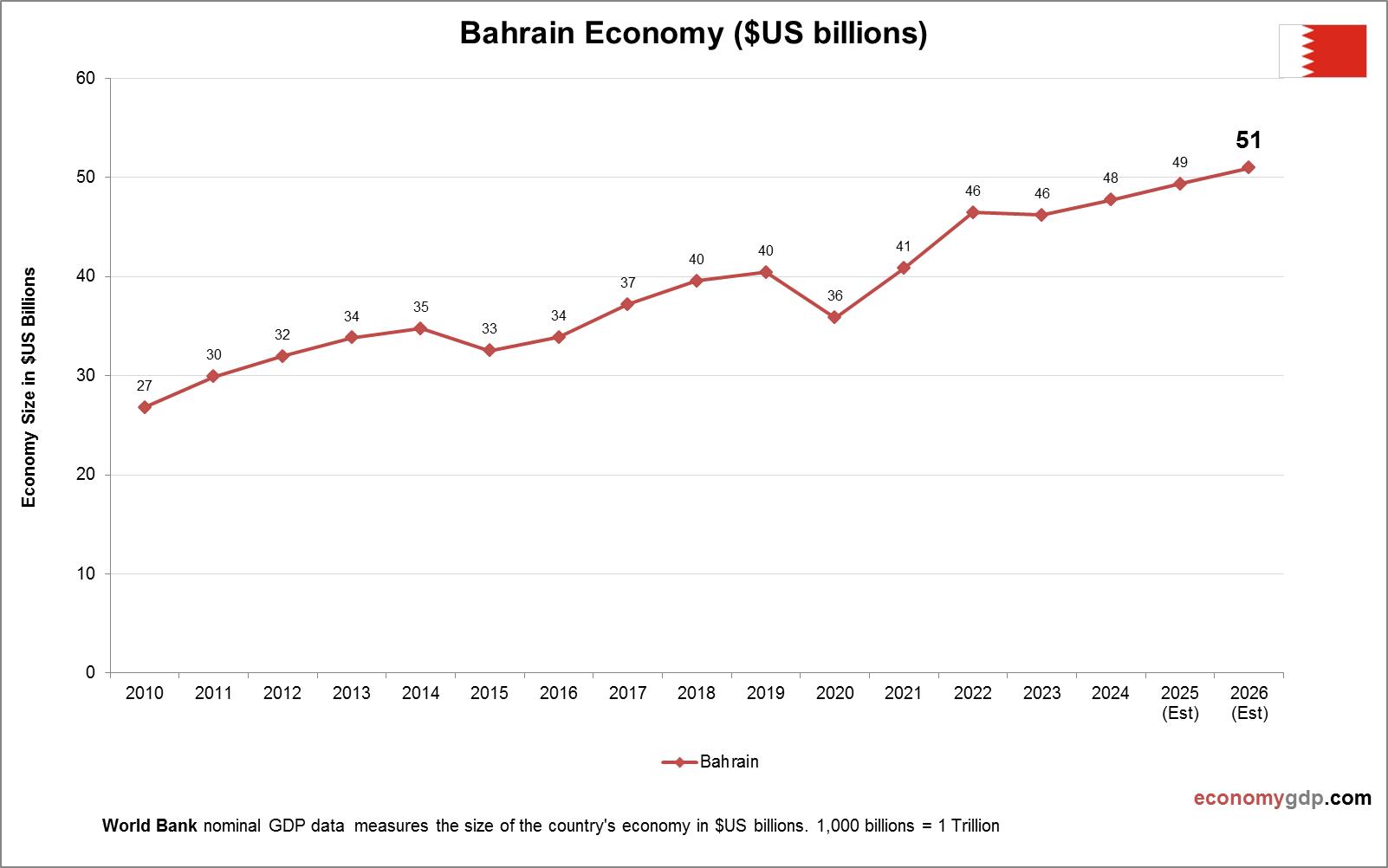
Bahrain economy is driven by oil and gas, though diversification efforts have boosted financial services, tourism, and manufacturing. As a regional banking hub, it attracts global institutions with business-friendly policies. Aluminum production and petrochemicals are key contributors. High debt levels and youth unemployment pose challenges, despite reforms. Infrastructure investments and tourism, including the Formula 1 Grand Prix, support stability, though oil reliance remains a vulnerability.
Bahrain Economy Size
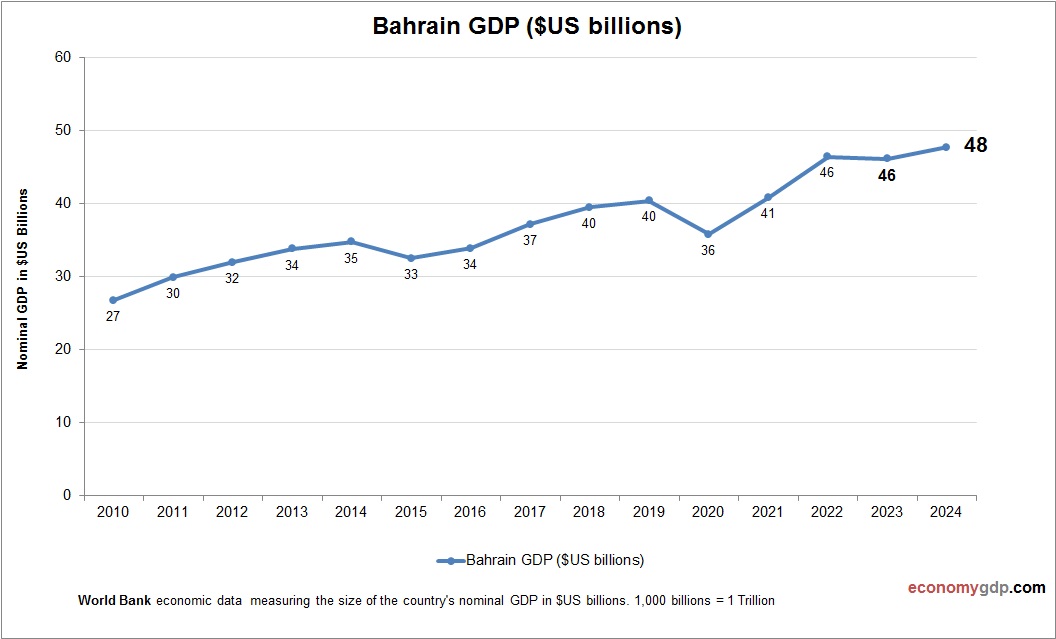
Bahrain’s economy, worth $40 billion, is compact yet robust, driven by finance and oil. Its size supports a high-income model, with diversification into services and logistics its GDP. See Bahrain GDP.
Bahrain Purchasing Power Parity (PPP)
Bahrain’s economy has a PPP GDP of $95 billion, over double its $40 billion nominal GDP, due to lower prices for services and goods. PPP per capita is around $50,000, reflecting high living standards. Finance and oil benefit from cost advantages, with diversification into tourism and logistics boosting potential. PPP underscores Bahrain’s affluent domestic market, though its small size limits global economic influence.

Bahrain Growth Rate
The economic growth rate is 2.5% in 2024, fueled by finance and oil sectors. Diversification into tourism and logistics under Vision 2030 drives modest expansion. High oil prices aid fiscal recovery, but regional competition and debt constrain growth. Infrastructure and digital service investments enhance resilience.

Bahrain Inflation
Bahrain’s inflation rate is around 2% in 2024, among the lowest regionally, due to a strong financial sector and U.S. dollar peg. Rising global food and housing costs drive modest price increases, while import reliance adds pressure. Prudent fiscal policy and currency stability maintain low inflation, despite global challenges.
