Afghanistan’s economy, ranked 124th globally, relies heavily on agriculture, employing 40% of the workforce and driving its $14.58 billion GDP (2021). Key crops include wheat, fruits, and nuts, with exports like dried fruits and carpets growing. Mining, with untapped lithium, copper, and rare earth reserves, is an emerging sector but limited by instability. Trade with Pakistan and Iran supports $2 billion in annual exports. Hydropower is a nascent energy sector. Political uncertainty and poor infrastructure hinder diversification, though remittances and informal trade provide some resilience.
Afghanistan Economy Size
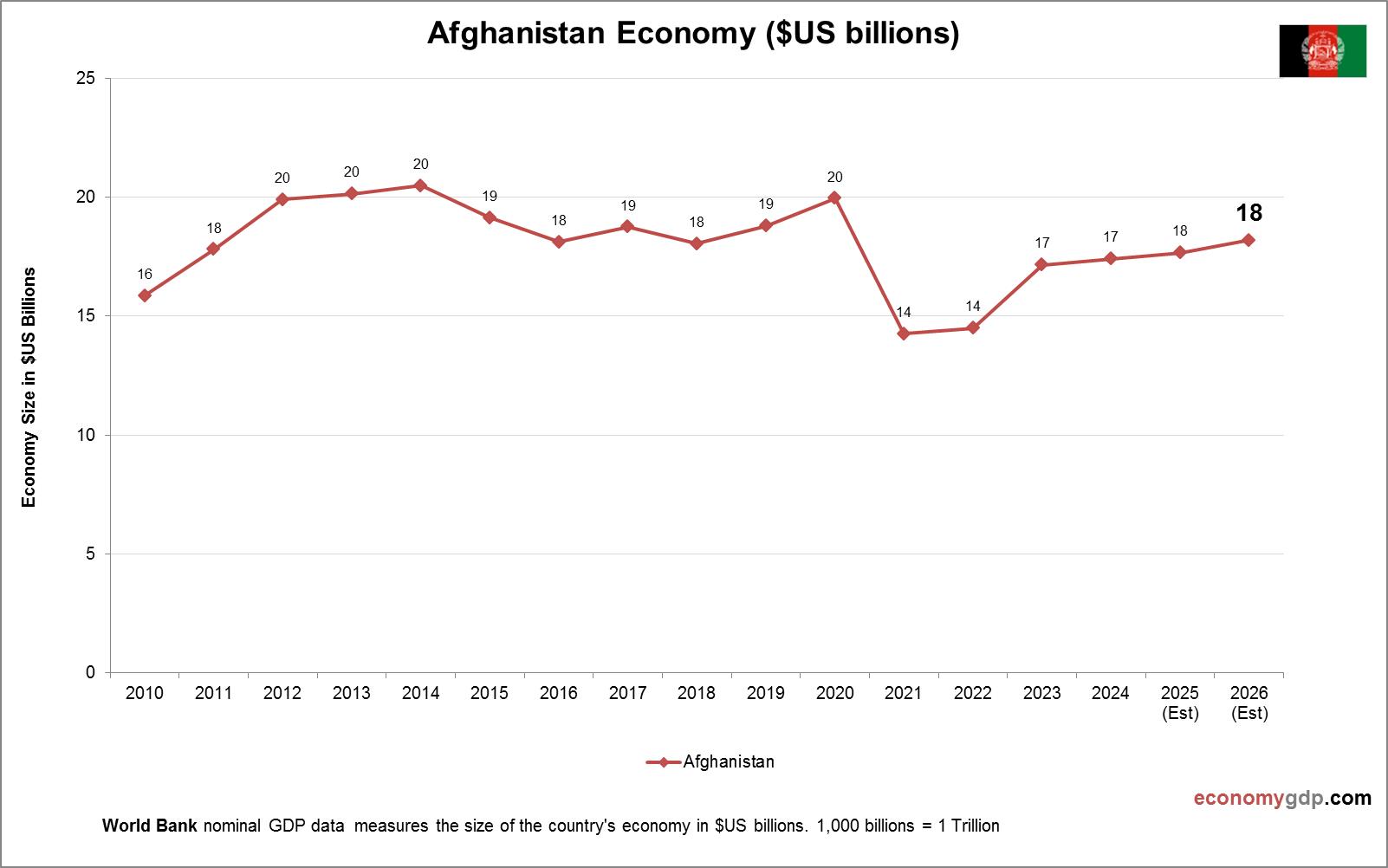
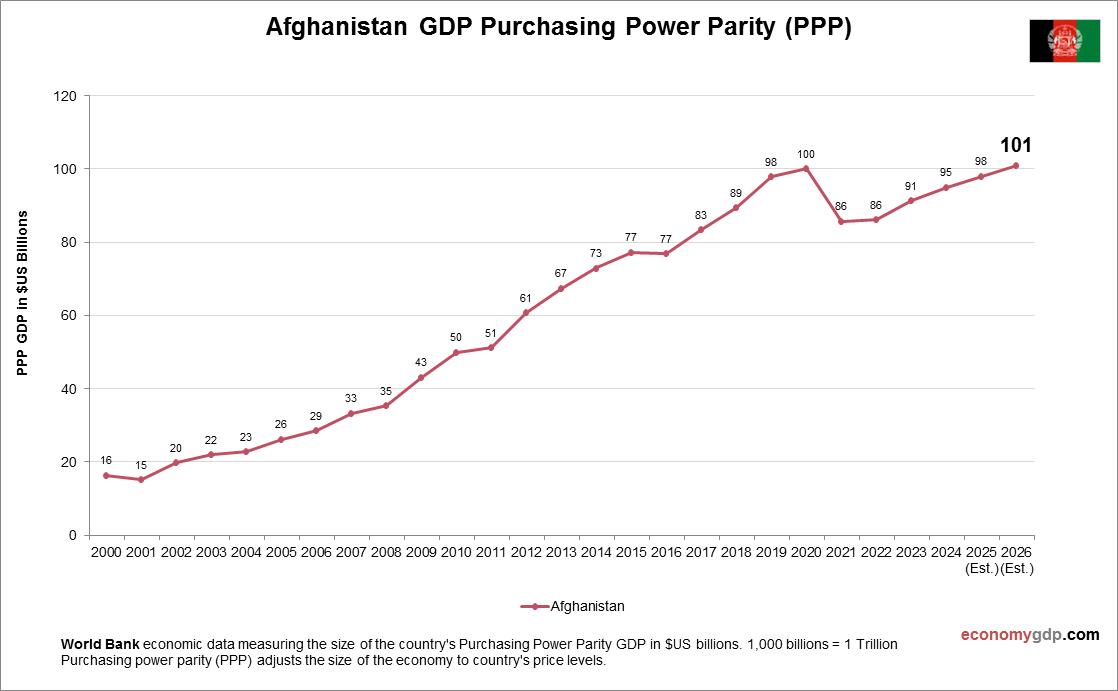
Afghanistan’s economy is valued at approximately $14.58 billion (2021), making it one of the smallest globally, ranked 124th. Economic activity is constrained by ongoing instability, with limited industrial output and heavy reliance on agriculture and international aid. See Afghanistan GDP.
Afghanistan Purchasing Power Parity (PPP)
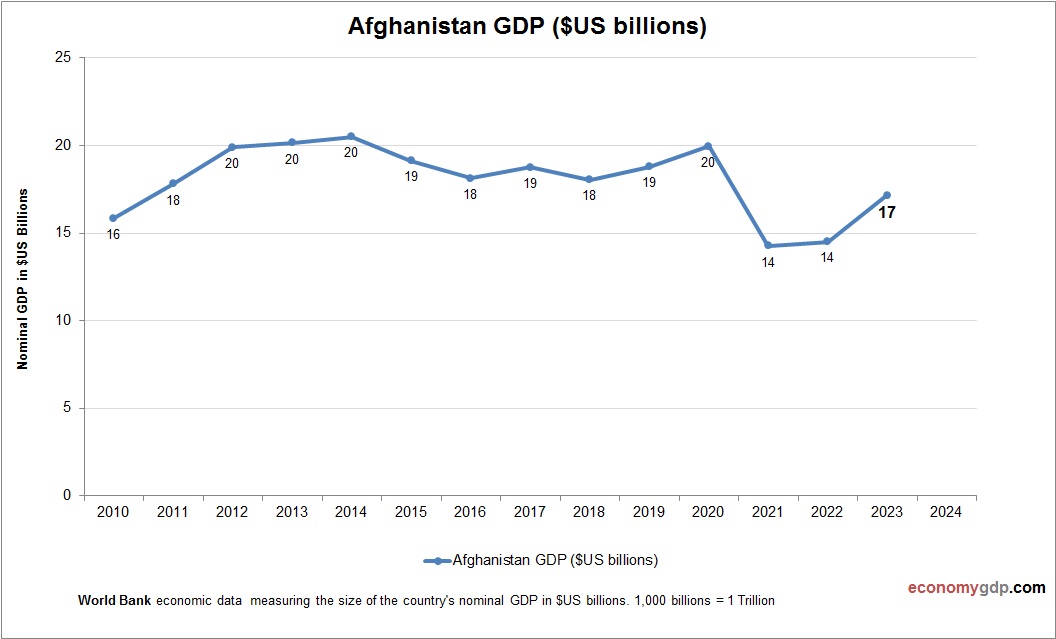
Afghanistan’s economy has a PPP GDP of approximately $81 billion, far above its $14.58 billion nominal GDP, due to low local costs for agriculture and services. PPP per capita is around $2,000, among the world’s lowest, reflecting widespread poverty. Cheap labor and local goods boost domestic purchasing power, particularly in agriculture, but instability and poor infrastructure limit output. PPP highlights modest domestic market strength, yet reliance on aid and informal trade underscores the gap between nominal and real economic capacity, with limited potential for broader growth.
Afghanistan Growth Rate
The economic growth rate is estimated at 1.5% in 2024, driven by recovery from conflict and drought, with agriculture and informal trade as key contributors. Political instability, sanctions, and limited foreign investment constrain expansion. Humanitarian aid and remittances provide stability, but infrastructure deficits and restricted global market access hinder significant progress.

Afghanistan Inflation
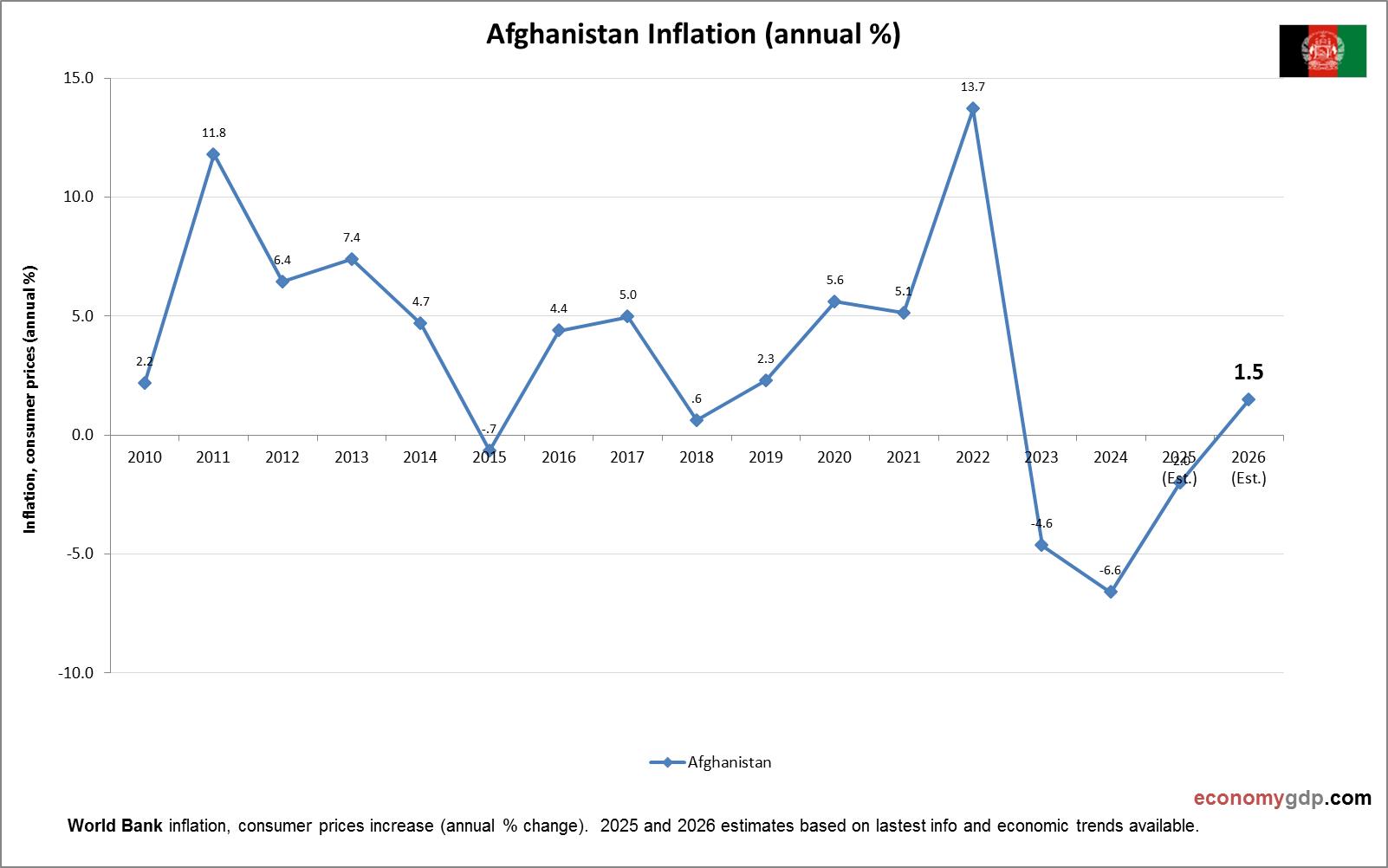
Afghanistan’s inflation rate is around 10% in 2024, driven by conflict-related disruptions and reliance on imported food and fuel. Sanctions and currency depreciation exacerbate supply chain issues, increasing prices. Limited agricultural output and weak governance fuel price volatility, while humanitarian aid mitigates some shortages, though insufficiently to curb persistent inflation impacting basic goods.