
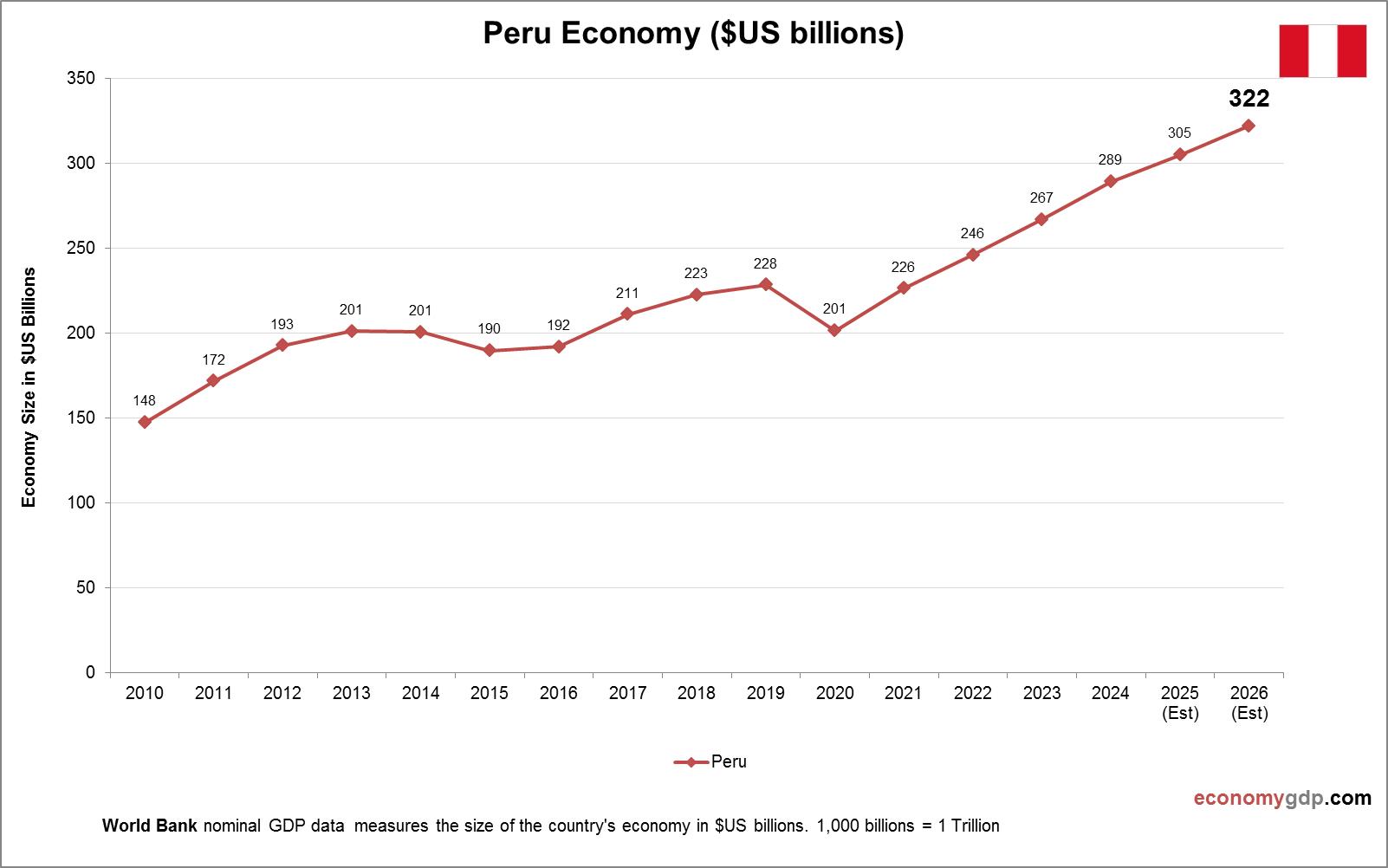
Peru’s economy, valued at $225 billion, is driven by mining, which supplies 60% of exports, including copper, gold, and zinc. Agriculture, producing asparagus and blueberries, employs 25% of the workforce. Fisheries, particularly anchovy for fishmeal, are key. Tourism, centered on Machu Picchu, and textiles are growing. Emerging sectors include tech, with Lima as a startup hub, and renewable energy (solar, wind). Political instability and inequality challenge progress, but trade agreements and resource wealth support long-term potential, provided governance improves.
Peru Economy Size
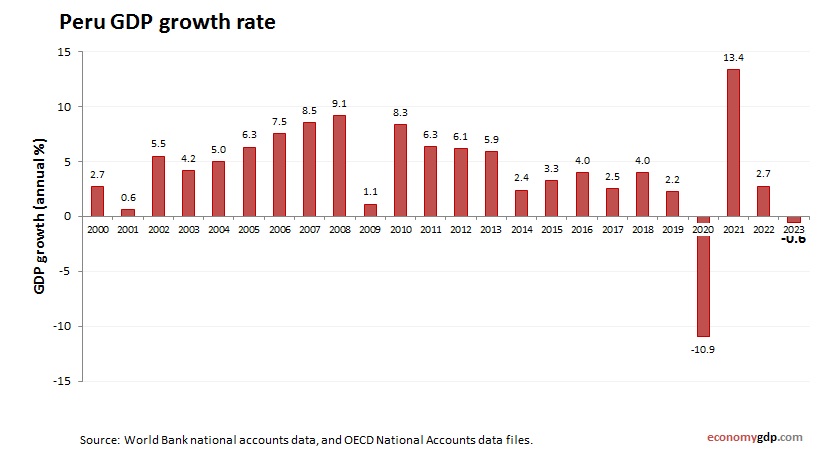
Peru’s economy, at $225 billion, is sizable, with mining and agriculture driving its GDP, bolstered by trade agreements. See Peru GDP.
Peru Purchasing Power Parity (PPP)
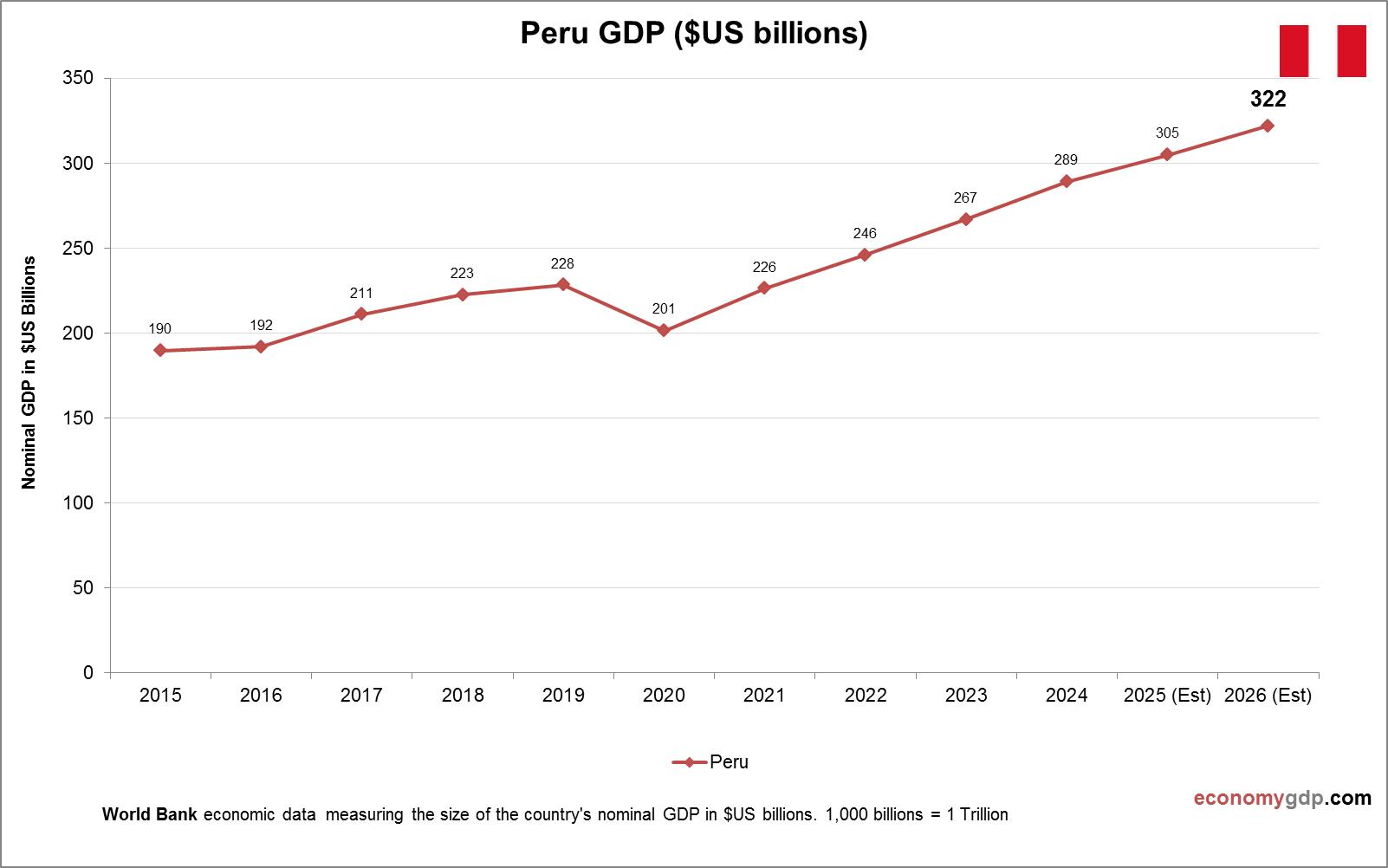
Peru’s economy has a PPP GDP of $550 billion, over double its $225 billion nominal GDP, due to low costs for mining and agriculture. PPP per capita is around $16,000, reflecting moderate purchasing power. Domestic pricing supports local markets, with trade agreements amplifying PPP-driven economic growth.
Peru Growth Rate
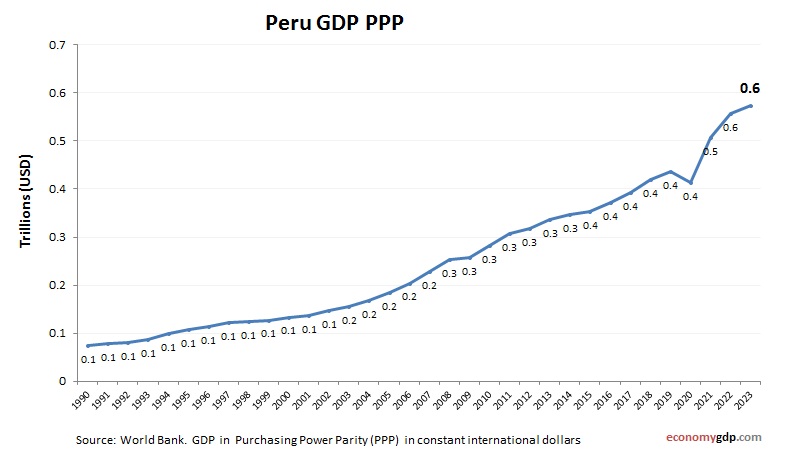
The economic growth rate is 3.0% in 2024, fueled by mining exports. Copper production and trade agreements support growth, but political instability and commodity volatility pose risks. Agriculture and tourism contribute, while infrastructure investments drive resilience, positioning the economy for steady progress in South America.
Peru Inflation
Peru’s inflation rate is about 3% in 2024, driven by rising global food and energy prices. Strong mining exports increase domestic demand, while agricultural disruptions from weather add pressure. Currency stability and monetary tightening help keep inflation low, though reliance on commodity exports sustains moderate price volatility.
