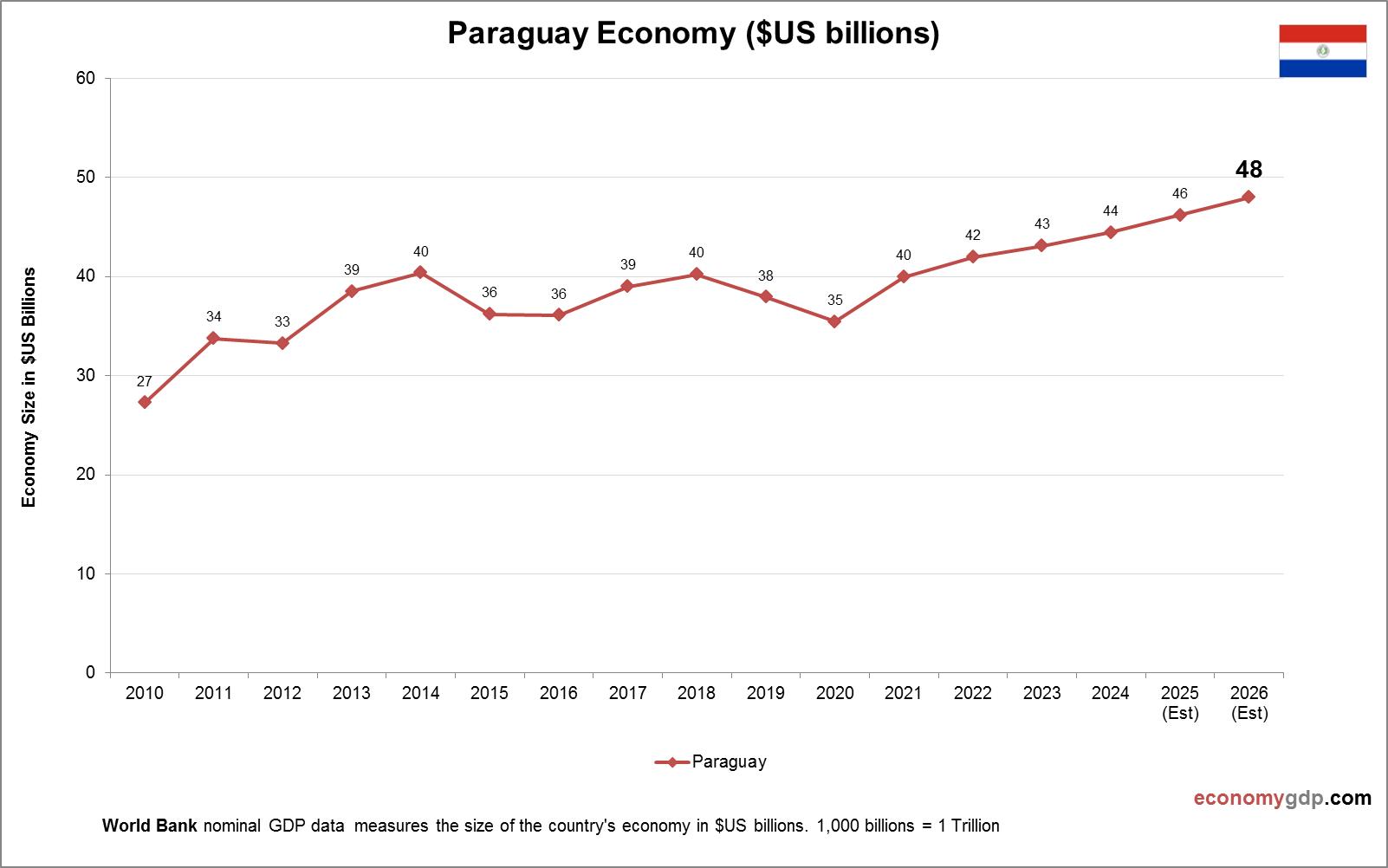
Paraguay’s economy, worth $40 billion, is led by agriculture, which accounts for 20% of GDP and exports soybeans, beef, and corn. Hydropower, from Itaipú Dam, makes Paraguay a major electricity exporter. Manufacturing, including food processing, and trade via the Paraguay River are significant. Emerging sectors include tech, with Asunción attracting startups, and renewable energy beyond hydropower. Informal trade and remittances support growth. Landlocked geography and infrastructure gaps limit connectivity, but low taxes and agricultural strength position Paraguay for steady, if modest, expansion.
Paraguay Economy Size
Paraguay’s economy, valued at $40 billion, is small, with agriculture and hydropower driving its GDP, supported by regional trade. See Paraguay GDP.

Paraguay Purchasing Power Parity (PPP)
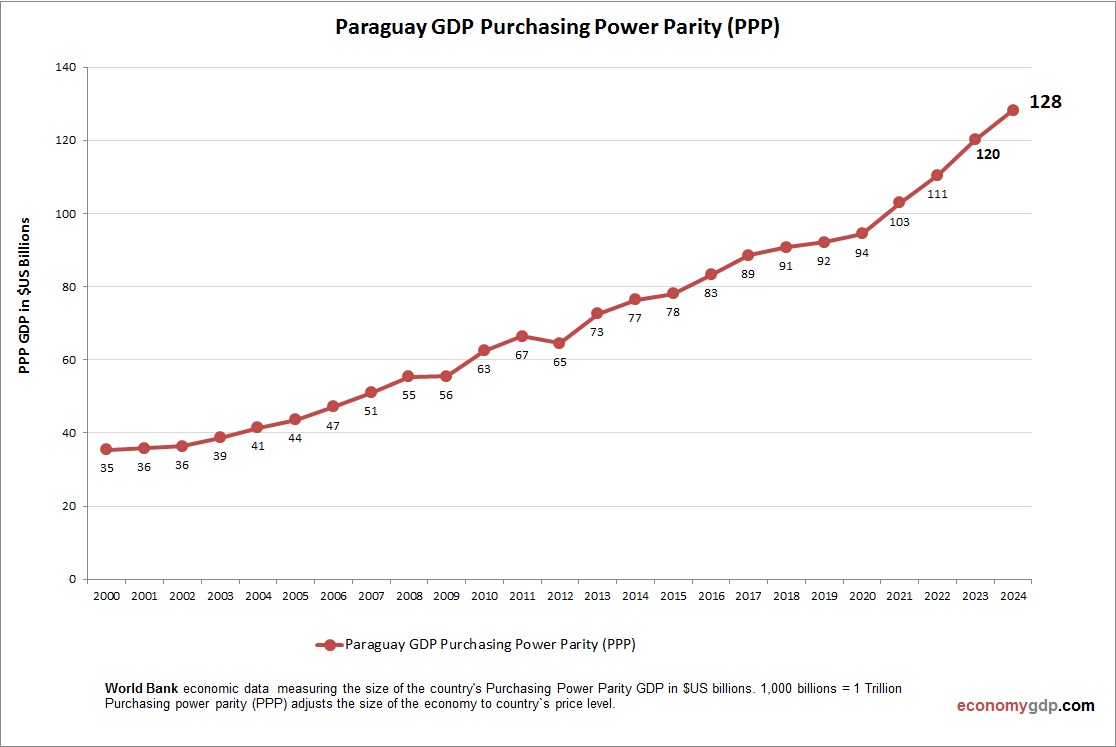
Paraguay’s economy has a PPP GDP of $110 billion, nearly three times its $40 billion nominal GDP, driven by low costs for agriculture and hydropower. PPP per capita is around $15,000, indicating moderate purchasing power. Domestic pricing boosts markets, but landlocked geography limits broader PPP-driven growth.
Paraguay Growth Rate
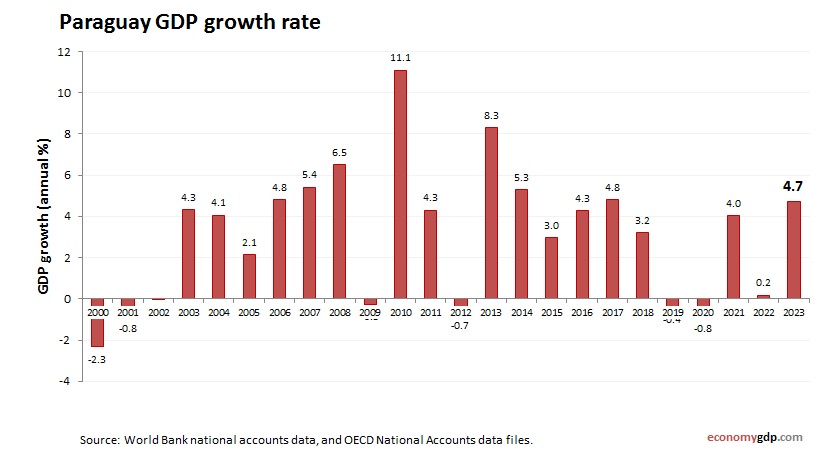
The economic growth rate is 4.0% in 2024, propelled by agriculture and hydropower. Soybean exports and electricity sales drive growth, but landlocked geography and infrastructure deficits pose risks. Manufacturing contributes, while regional trade drives resilience, positioning the small economy for robust progress in South America.
Paraguay Inflation
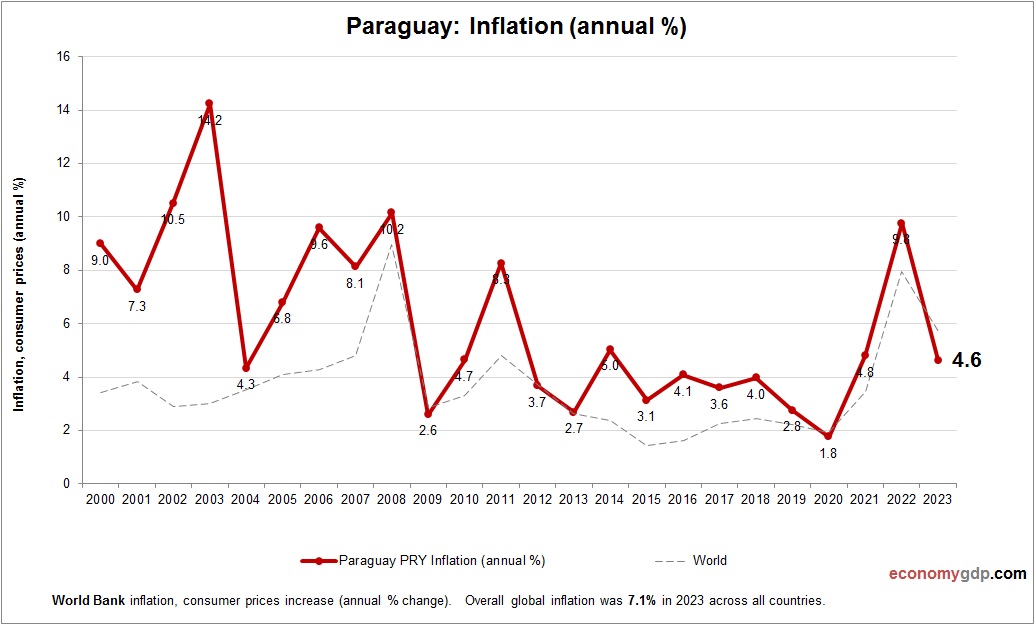
Paraguay’s inflation rate is approximately 4% in 2024, driven by rising global food and energy prices. Strong agricultural exports and hydropower sales increase demand, while currency stability limits imported inflation. Weather-related crop disruptions add pressure, but tight monetary policy helps moderate inflation in this small economy.