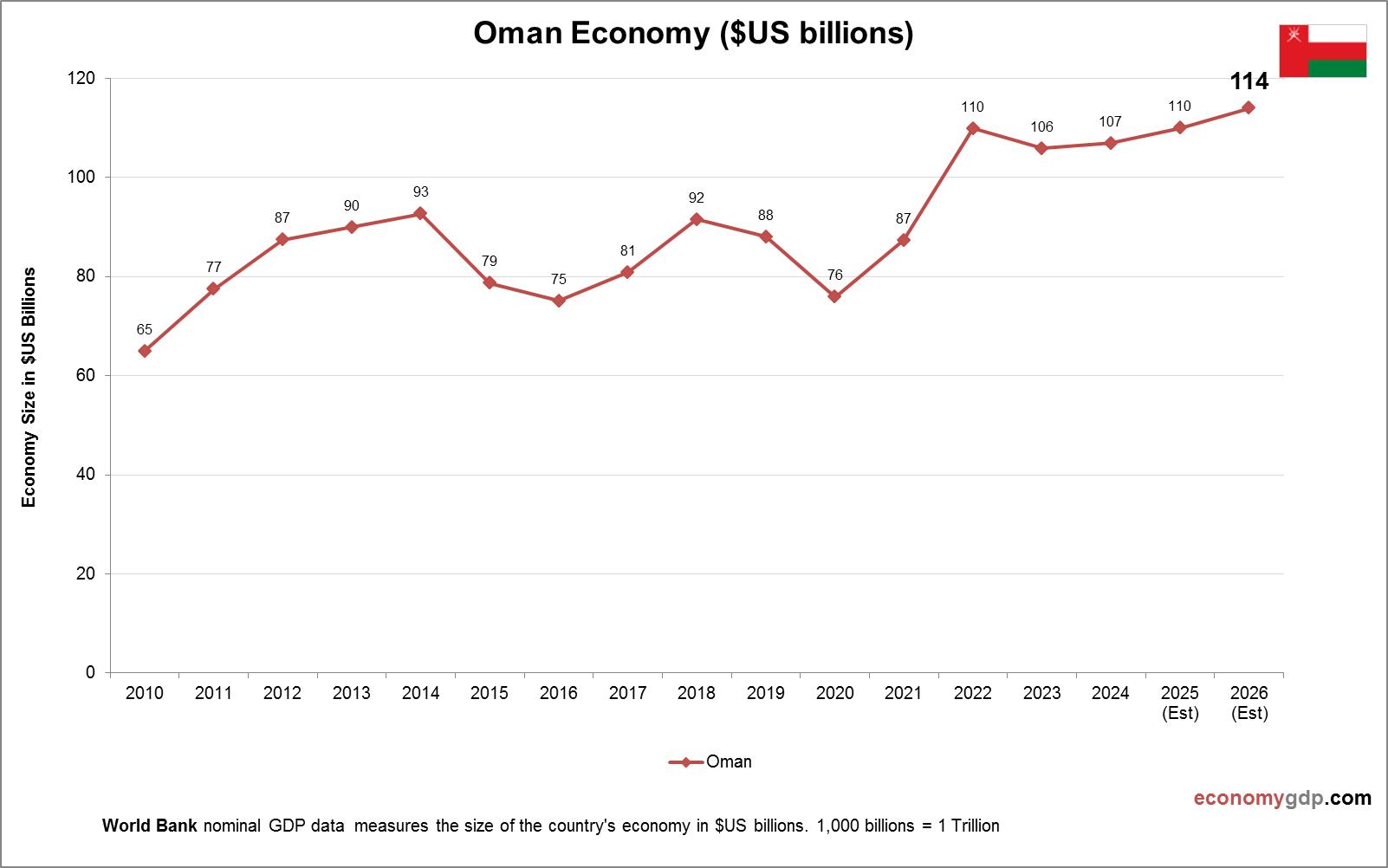
Oman’s economy, valued at $85 billion, is dominated by oil and gas, which account for 70% of export revenues. Diversification efforts under Vision 2040 emphasize tourism, logistics, and manufacturing. The port of Duqm is a growing trade hub, while tourism leverages cultural and natural sites. Fisheries and agriculture, including dates, are significant. Renewable energy, particularly solar, is emerging, alongside mining (limestone, gypsum). A skilled workforce supports services growth. High public spending and oil dependency pose risks, but reforms aim to enhance private-sector development.
Oman Economy Size
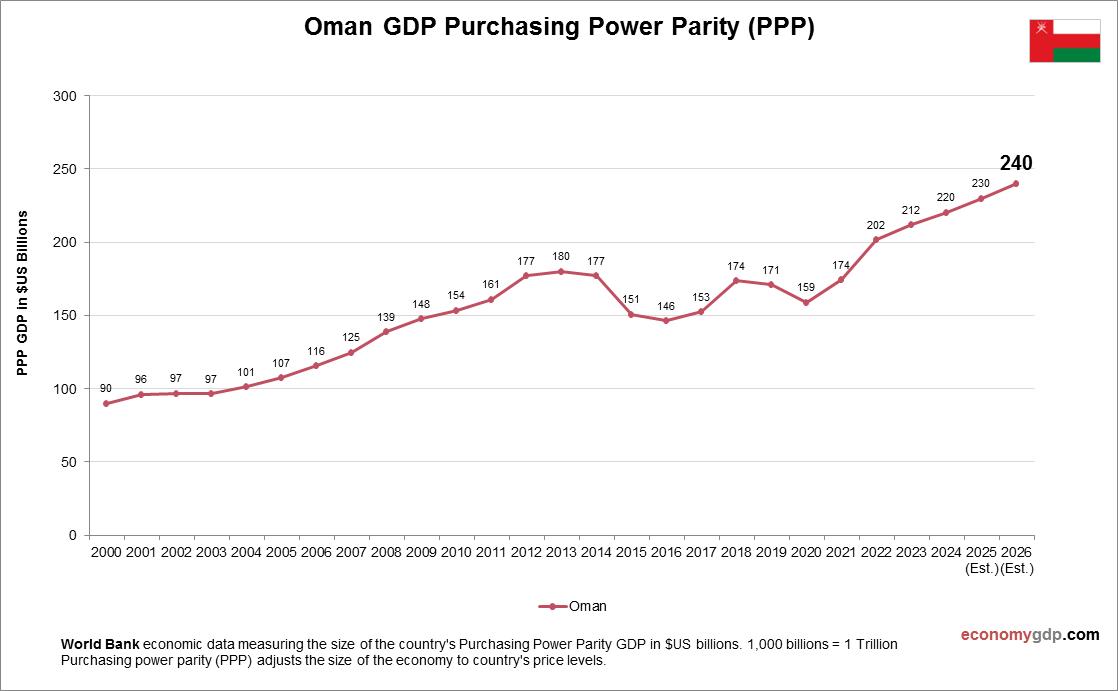
Oman’s economy, valued at $85 billion, is mid-sized, with oil and services driving its GDP, supported by diversification efforts. See Oman GDP.
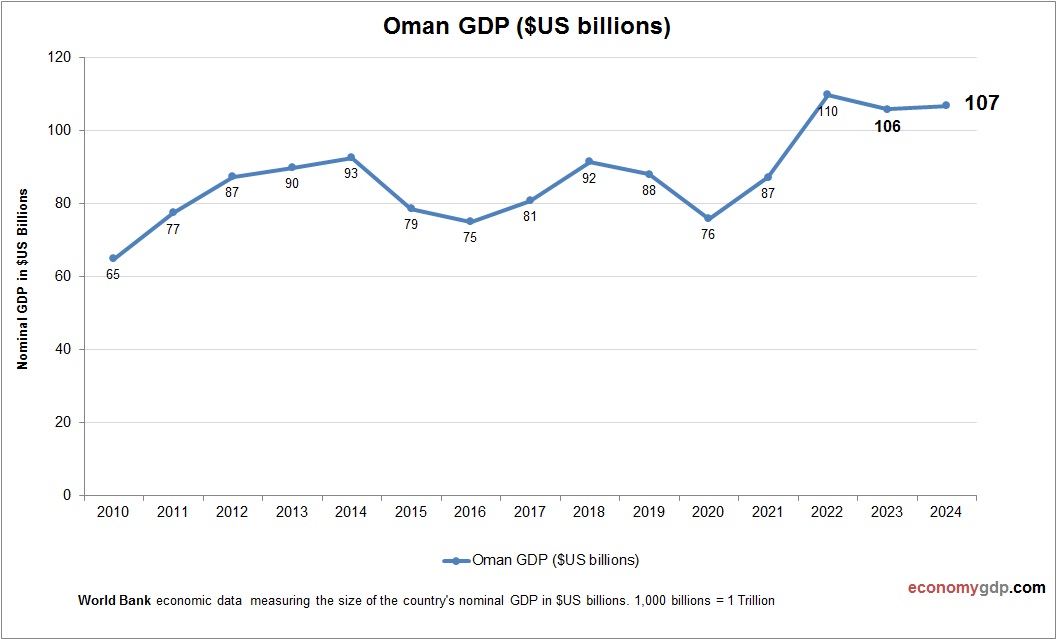
Oman Purchasing Power Parity (PPP)
Oman’s economy has a PPP GDP of $200 billion, over double its $85 billion nominal GDP, due to lower costs for oil and services. PPP per capita is around $40,000, reflecting strong purchasing power. Domestic pricing supports affluent markets, but oil reliance limits broader PPP-driven diversification and growth.
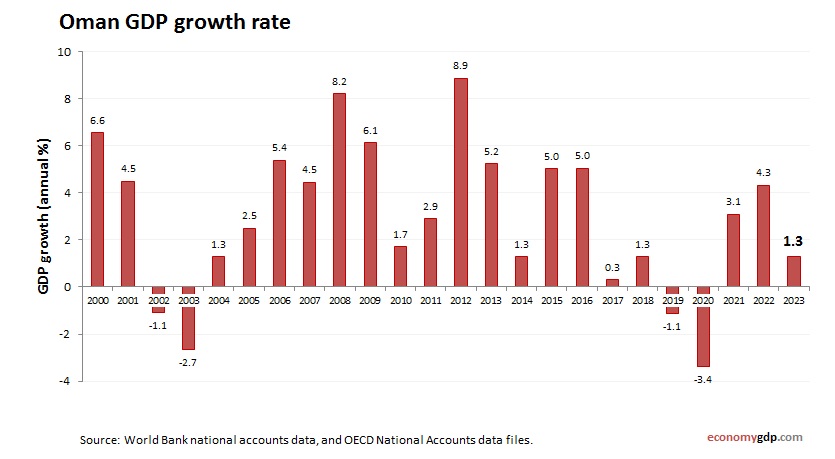
Oman Growth Rate
The economic growth rate is 3.0% in 2024, driven by oil exports and tourism. High global oil prices and diversification into logistics support growth, but hydrocarbon reliance poses risks. Fisheries contribute, while infrastructure investments drive resilience, positioning the economy for steady progress under Vision 2040.
Oman Inflation
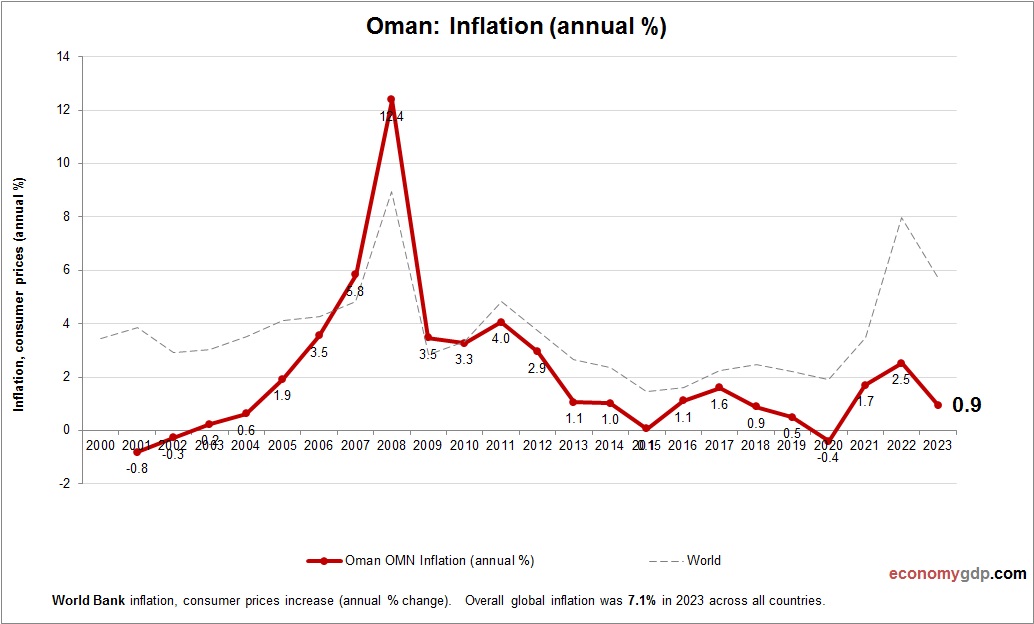
Oman’s inflation rate is around 2% in 2024, driven by rising global food and housing costs. Strong oil exports fuel domestic demand, while the U.S. dollar peg limits currency volatility. Import reliance adds pressure, but fiscal discipline and subsidies keep inflation low, despite global uncertainties impacting this oil-rich economy.