The Libya economy is dominated by oil and gas, which account for nearly all exports and revenue. Conflict and political fragmentation have disrupted production, while agriculture and services remain underdeveloped. Reconstruction efforts are hampered by instability, with high unemployment and inflation persisting. Foreign investment in energy is critical, but security risks deter progress. Diversification and infrastructure rebuilding are priorities, though ongoing conflict severely limits economic recovery prospects.
Libya Economy Size
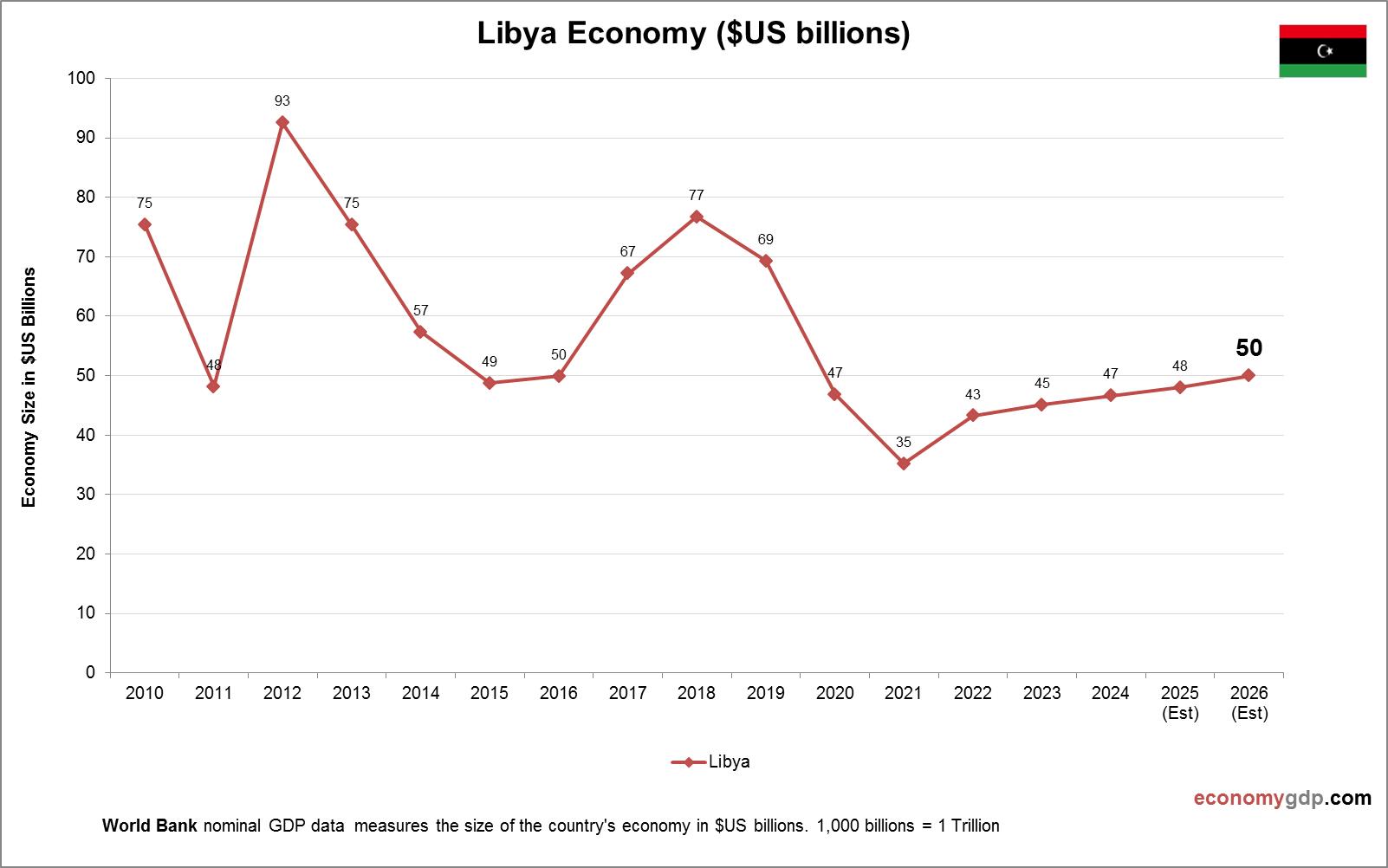
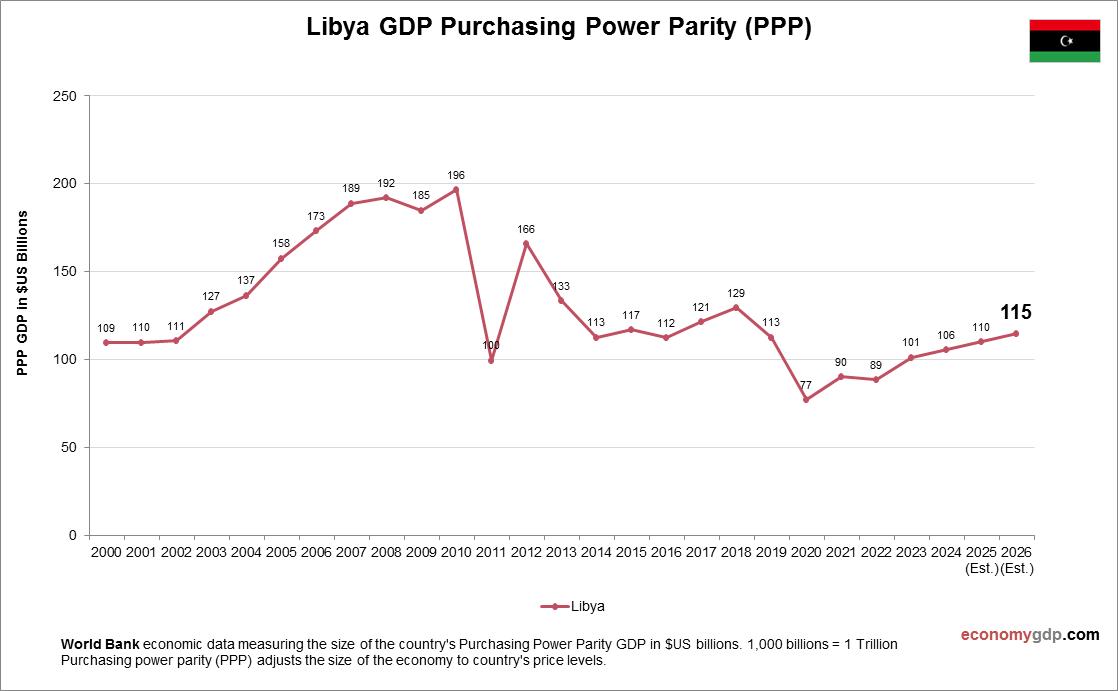
Libya’s economy, valued at $50 billion, is mid-sized, driven by oil exports. Its GDP is volatile due to conflict and disrupted production. See Libya GDP.
Libya Purchasing Power Parity (PPP)
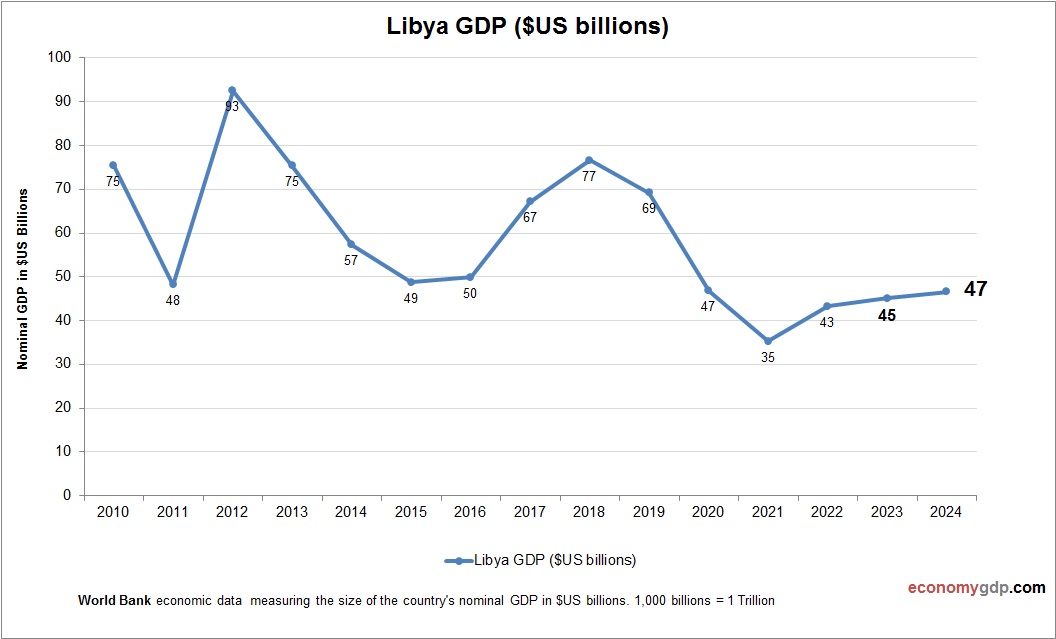
Libya’s economy has a PPP GDP of $170 billion, over three times its $50 billion nominal GDP, due to low costs for oil and services. PPP per capita is around $24,000, reflecting moderate purchasing power. Conflict disrupts markets, but PPP highlights potential for domestic growth if stability improves.
Libya Growth Rate
The economic growth rate is 4.0% in 2024, propelled by oil exports. High global oil prices and reconstruction efforts drive growth, but conflict and infrastructure deficits pose risks. Agriculture contributes modestly, while foreign investment in energy drives resilience, positioning the economy for recovery despite ongoing security challenges.

Libya Inflation
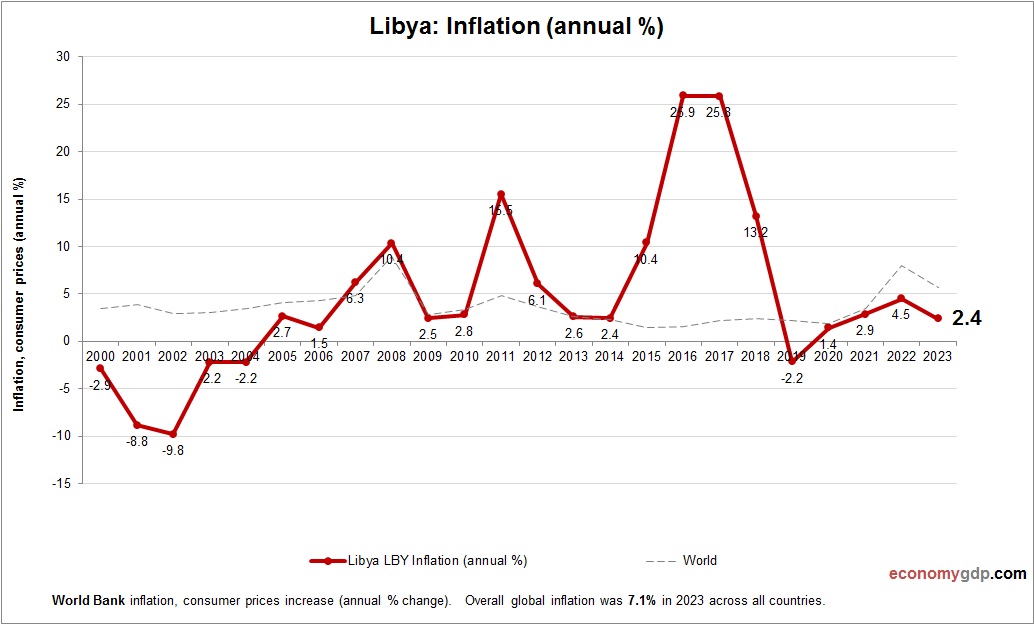
Libya’s inflation rate is approximately 5% in 2024, driven by rising global food and fuel prices. Conflict-related supply disruptions and currency depreciation increase costs, while oil exports fuel demand. Weak governance sustains volatility, but monetary controls and high oil revenues help moderate inflation, though instability poses ongoing risks.