The Colombia economy is fueled by oil, coal, coffee, and emeralds. Services, including finance and tourism, are growing, while agriculture remains vital for rural areas. Peace agreements have spurred investment, but drug trafficking and inequality challenge stability. Infrastructure improvements and trade agreements boost exports, though corruption and unemployment persist. Efforts to diversify into technology and renewable energy aim to reduce commodity dependence, with urban centers driving economic modernization.
Colombia Economy Size
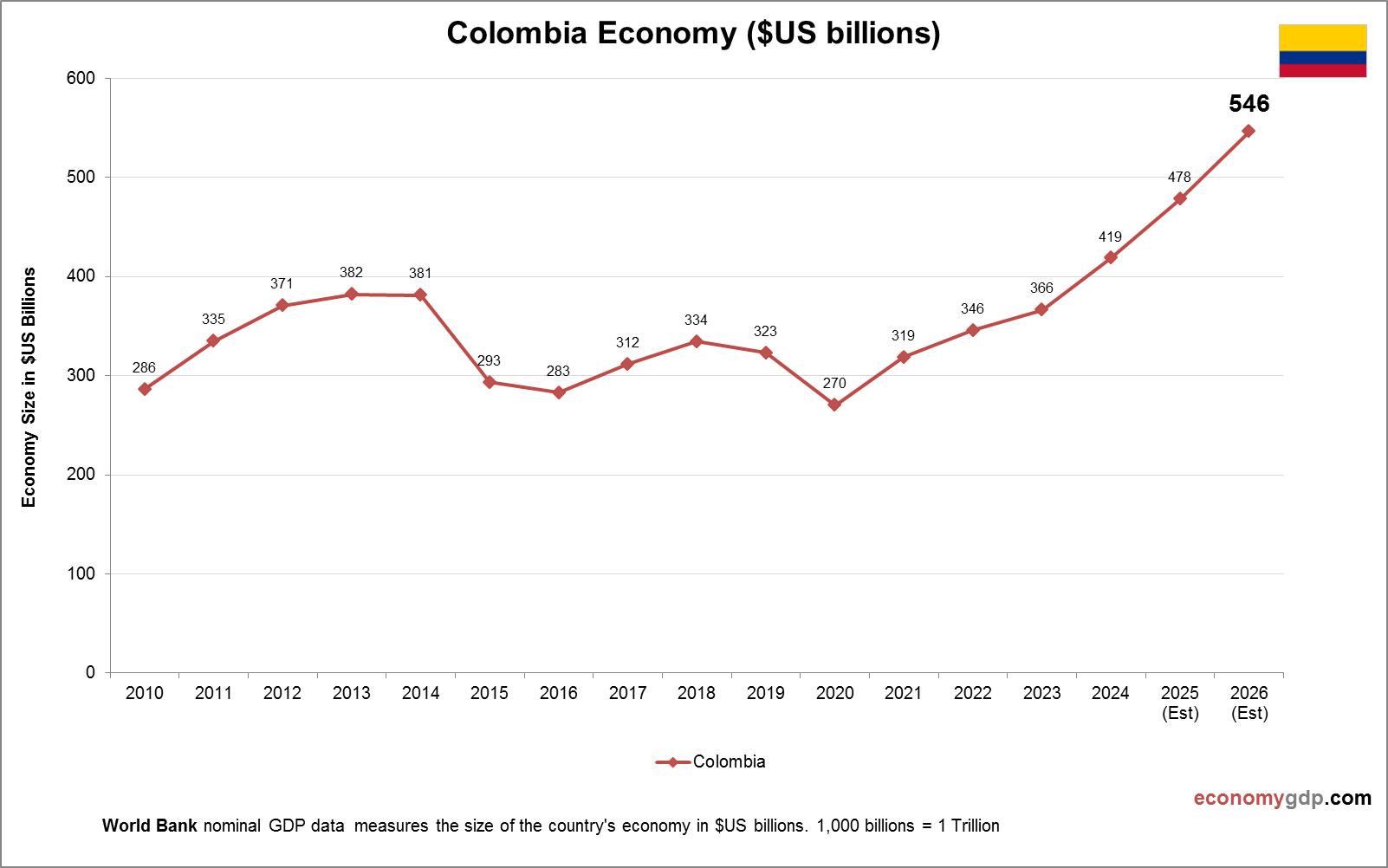
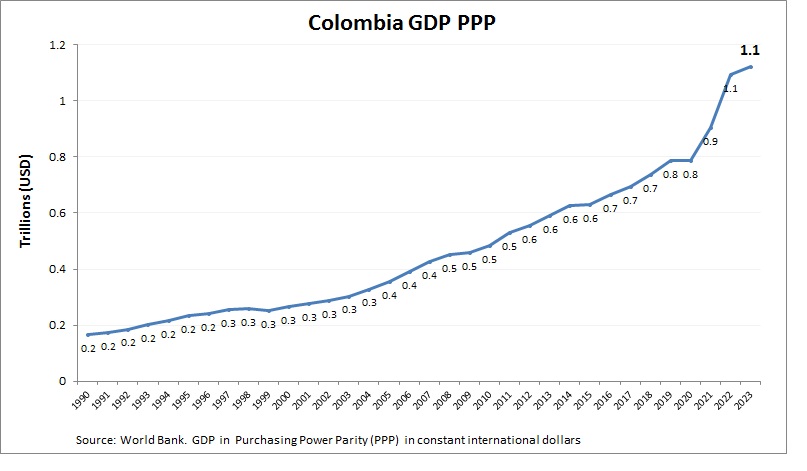
Colombia’s economy, worth $350 billion, is a major Latin American market. Oil, agriculture, and services fuel its GDP, with steady growth despite security challenges. See Colombia GDP.
Colombia Purchasing Power Parity (PPP)
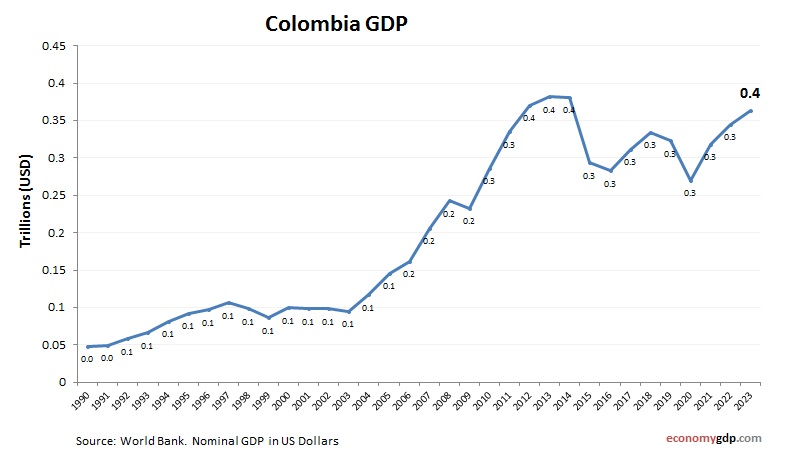
Colombia’s economy has a PPP GDP of $1 trillion, nearly triple its $350 billion nominal GDP, due to low costs for oil and agriculture. PPP per capita is about $20,000, reflecting moderate purchasing power. Services and industry gain from domestic pricing, but security issues limit PPP benefits, with trade driving growth.
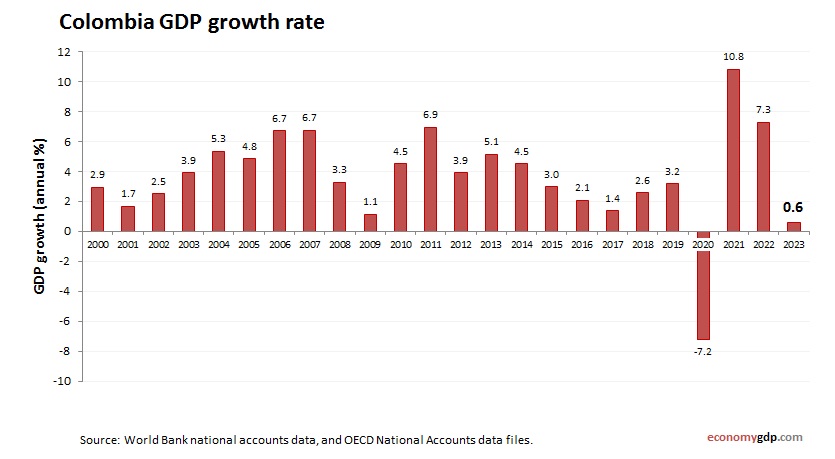
Colombia Growth Rate
The economic growth rate is 3.5% in 2024, driven by oil exports and agriculture. Coffee and manufacturing growth support expansion, but security concerns and inequality limit gains. Infrastructure investments and regional trade bolster activity, while fiscal reforms aim to stabilize debt, positioning the economy for moderate growth amidst challenges.
Colombia Inflation
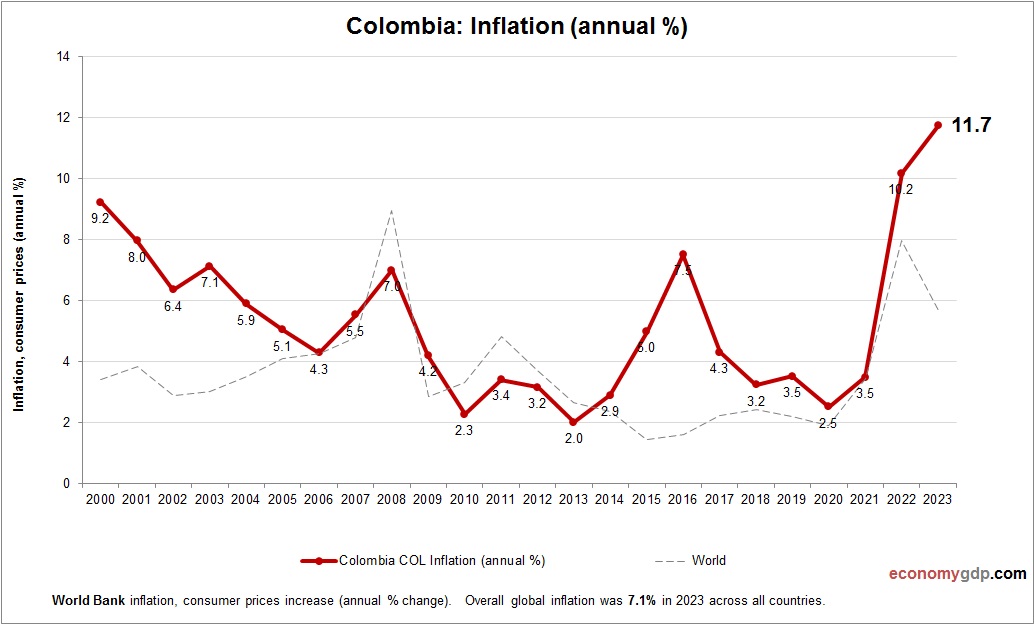
Colombia’s inflation rate is about 6% in 2024, fueled by rising global food and energy prices. Currency depreciation increases import costs, while strong oil and coffee exports drive demand. Supply chain disruptions and weather-related agricultural setbacks add pressure. Monetary tightening aims to stabilize, but sustained demand keeps inflation elevated.