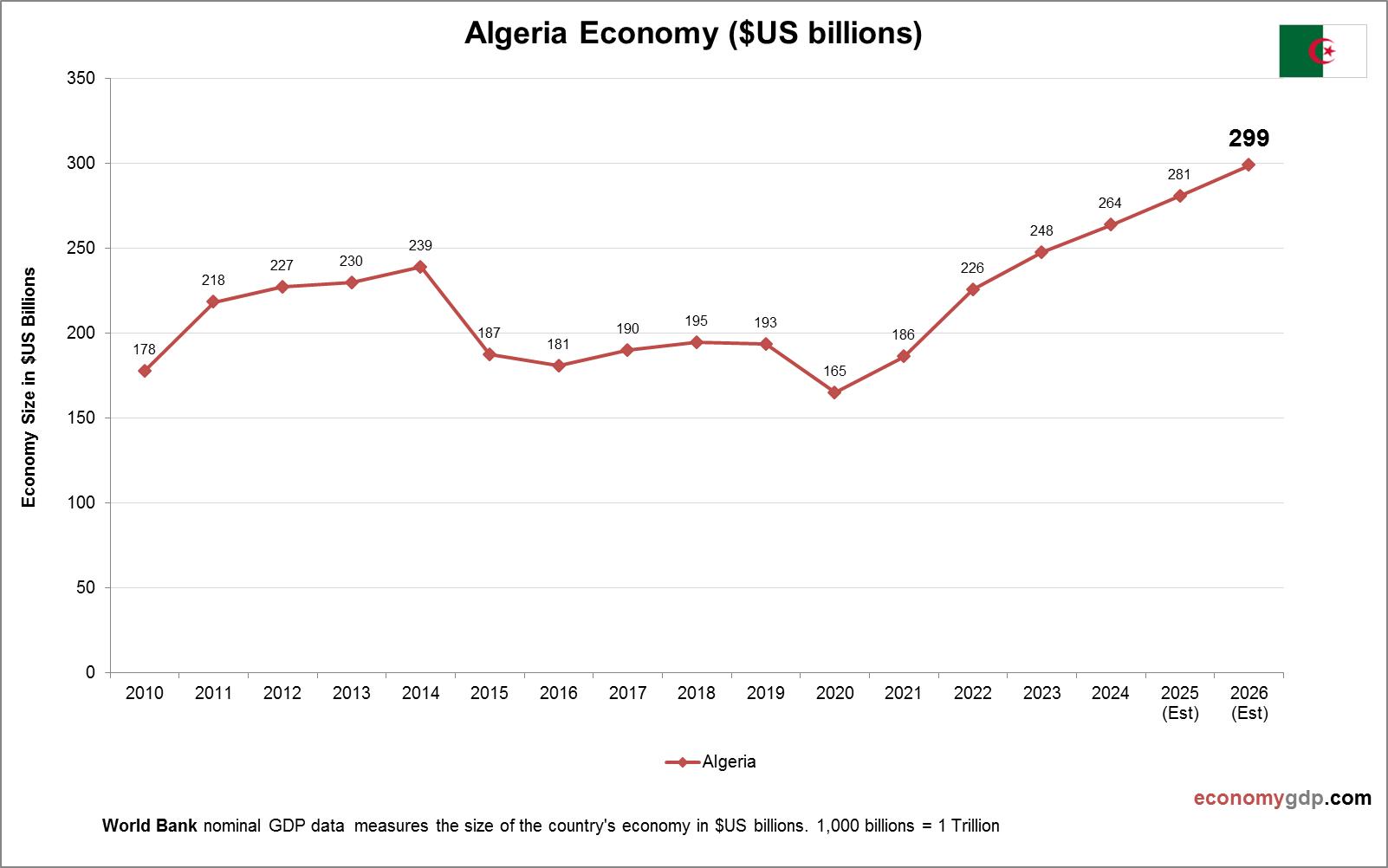
Algeria’s economy hinges on hydrocarbons, which generate 95% of export revenues and 60% of government income, supporting a $190 billion GDP. Oil and gas exports to Europe are central. Agriculture, employing 10%, grows cereals and fruits but faces water scarcity. Emerging sectors include solar energy, with projects like Tafouk 1, and manufacturing, notably pharmaceuticals and automotive. Diversification is sluggish due to bureaucracy and over-reliance on energy. Investments in infrastructure and green energy aim to reduce oil dependency, but progress remains limited.
Algeria Economy Size
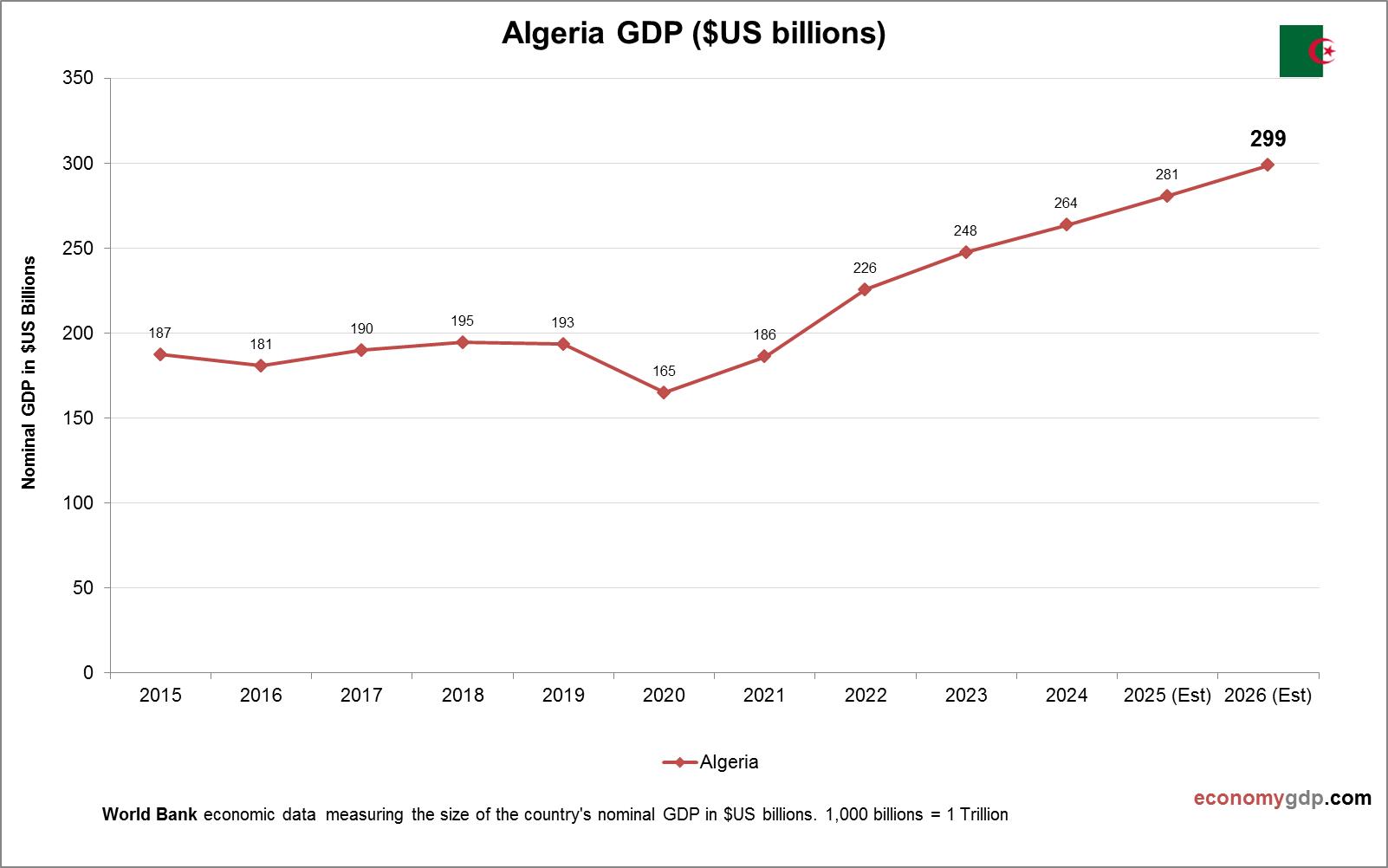
Algeria’s economy, with a nominal GDP of $190 billion, ranks among Africa’s largest. Its size is heavily tied to hydrocarbon exports, though efforts to diversify into other sectors aim to stabilize and expand its economic base. See Algeria GDP.
Algeria Purchasing Power Parity (PPP)
Algeria’s economy has a PPP GDP of $630 billion, over three times its $190 billion nominal GDP, due to lower domestic prices for goods and services. PPP per capita is about $13,000, indicating moderate living standards. Hydrocarbons benefit from cost advantages, as do agriculture and manufacturing. PPP underscores potential for domestic market growth, but reliance on oil exports and bureaucratic hurdles limit broader benefits. Investments in diversification could leverage favorable local pricing to enhance economic output.

Algeria Growth Rate
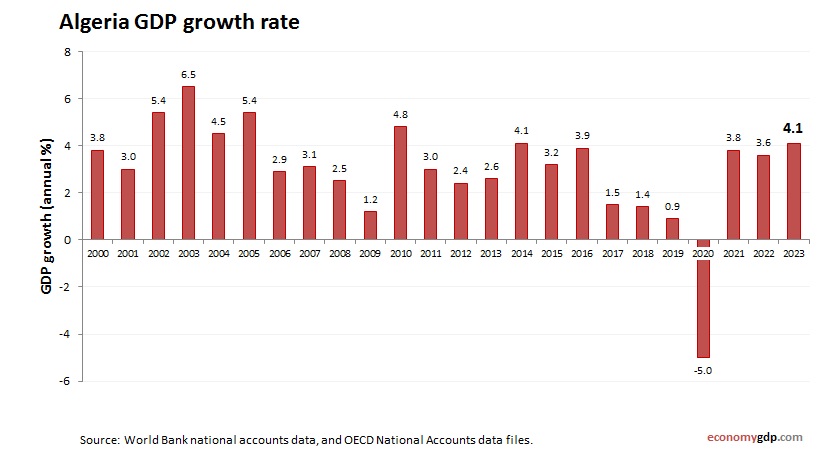
The economic growth rate is 4.1% in 2024, propelled by high hydrocarbon prices and increased oil and gas exports to Europe. Energy infrastructure investments and post-pandemic recovery boost activity, but hydrocarbon reliance and inflation pose risks. Slow diversification into agriculture and manufacturing limits broader economic resilience.
Algeria Inflation
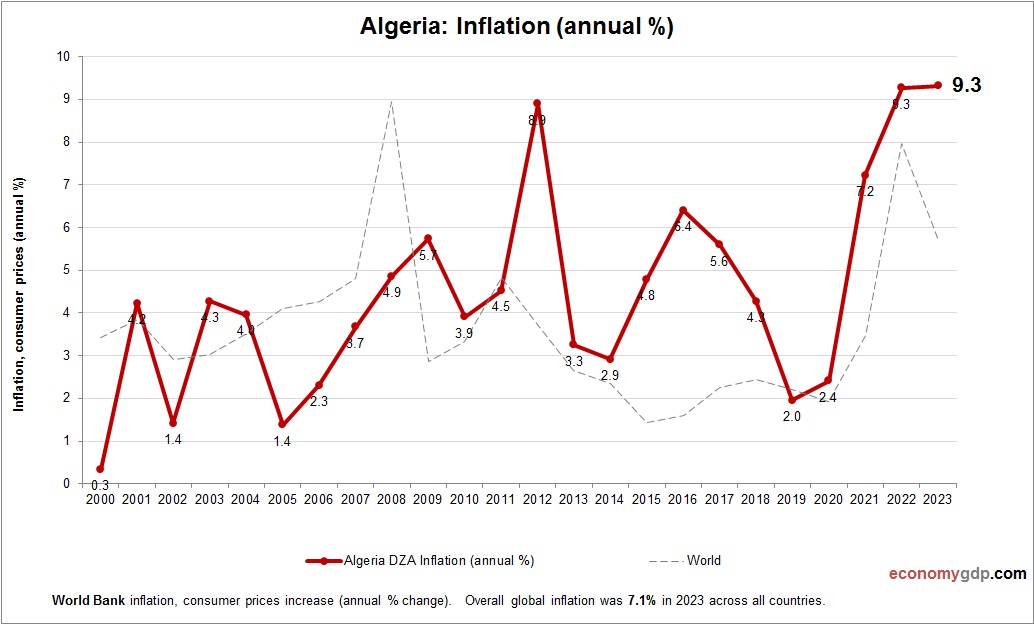
Algeria’s inflation rate is approximately 7.5% in 2024, down from 9.2% in 2022. High global energy prices and currency depreciation increase import costs for food and fuel. Loose monetary policy and wage hikes contribute, while drought affects agricultural output. Tighter monetary controls help, but hydrocarbon reliance keeps inflation elevated.