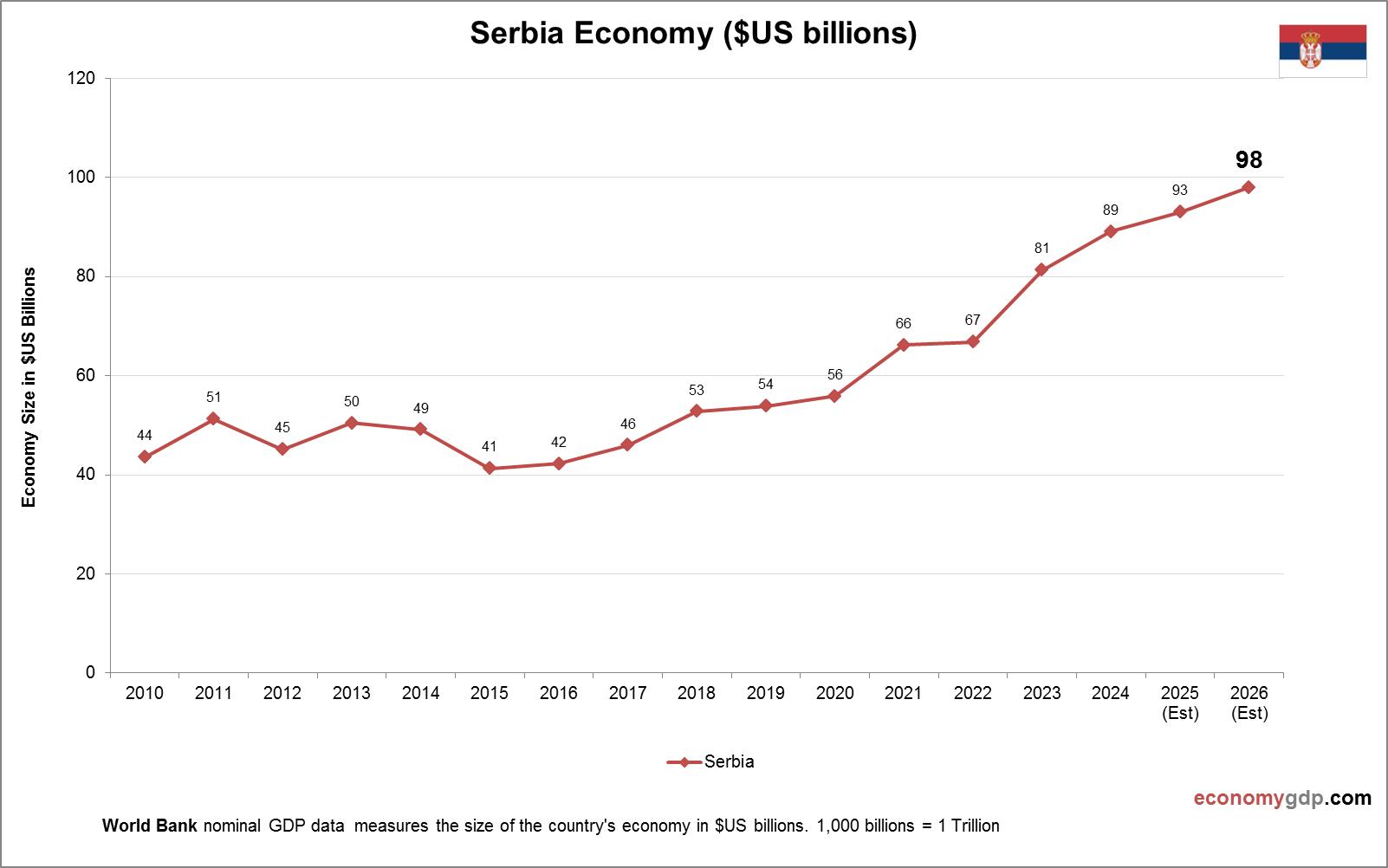
Serbia’s economy, worth $65 billion, is driven by industry, including automotive and electronics, with Fiat as a key player. Agriculture, producing fruits and grains, employs 15% of the workforce. Services, particularly IT, are booming, with Belgrade as a tech hub. Renewable energy (wind, solar) and mining (copper, lithium) are emerging. EU candidacy supports trade, but corruption and brain drain pose challenges. Infrastructure investments and regional connectivity via the Balkans enhance growth potential, with diversification into green tech a priority.
Serbia Economy Size
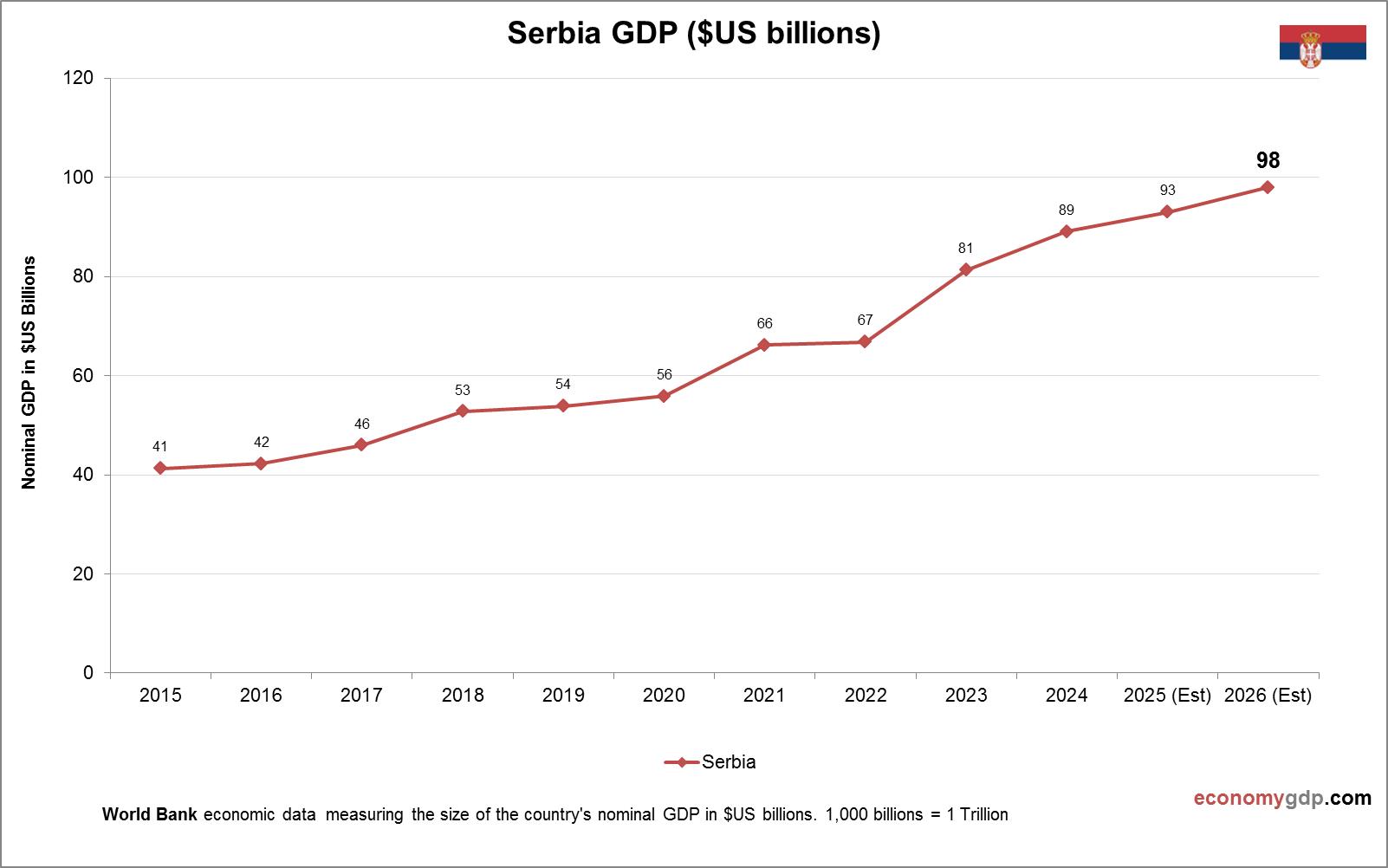
Serbia’s economy, valued at $65 billion, is mid-sized, with industry and services driving its GDP, supported by EU candidacy. See Serbia GDP.
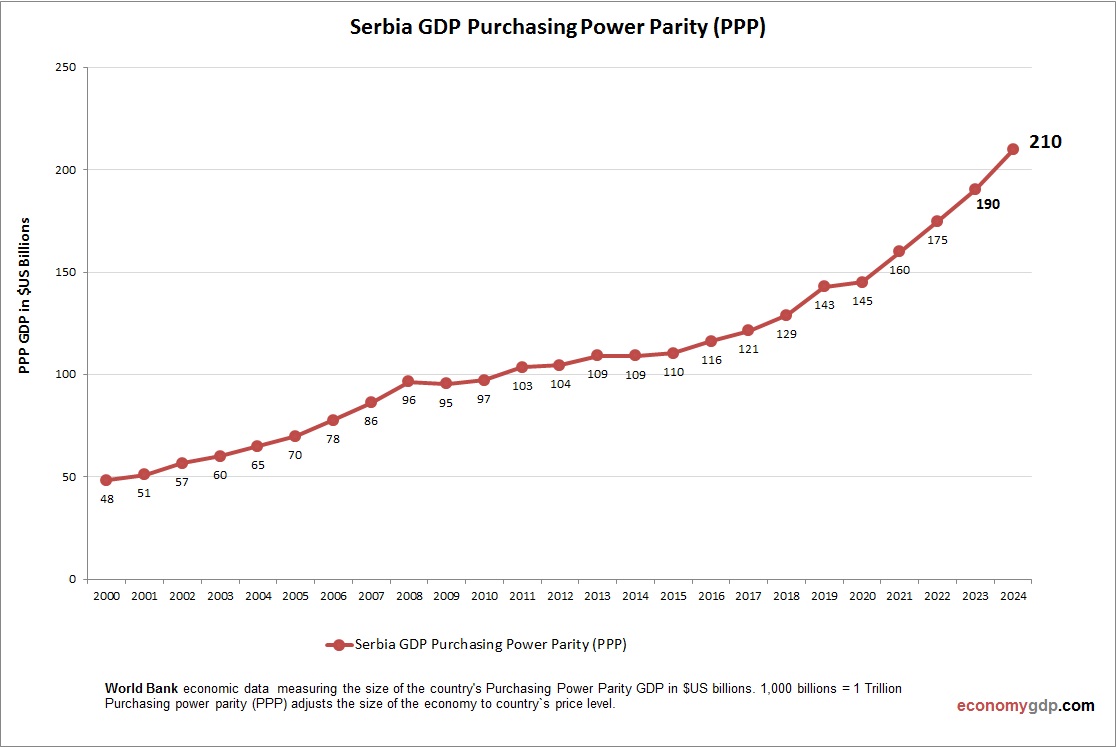
Serbia Purchasing Power Parity (PPP)
Serbia’s economy has a PPP GDP of $170 billion, over double its $65 billion nominal GDP, due to lower costs for industry and services. PPP per capita is around $25,000, reflecting moderate purchasing power. Domestic pricing and EU candidacy boost markets, supporting PPP-driven economic growth.
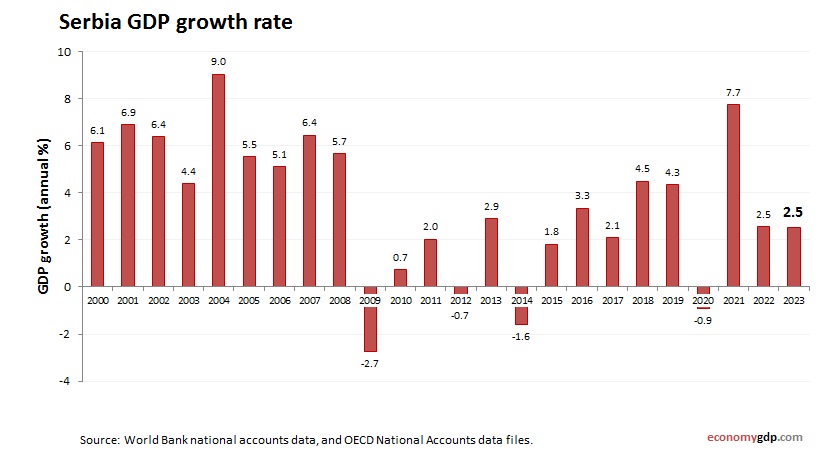
Serbia Growth Rate
The economic growth rate is 3.0% in 2024, driven by manufacturing and services. Automotive exports and EU candidacy support growth, but corruption and brain drain pose risks. Agriculture contributes, while infrastructure investments drive resilience, positioning the economy for steady progress in the Balkans.
Serbia Inflation
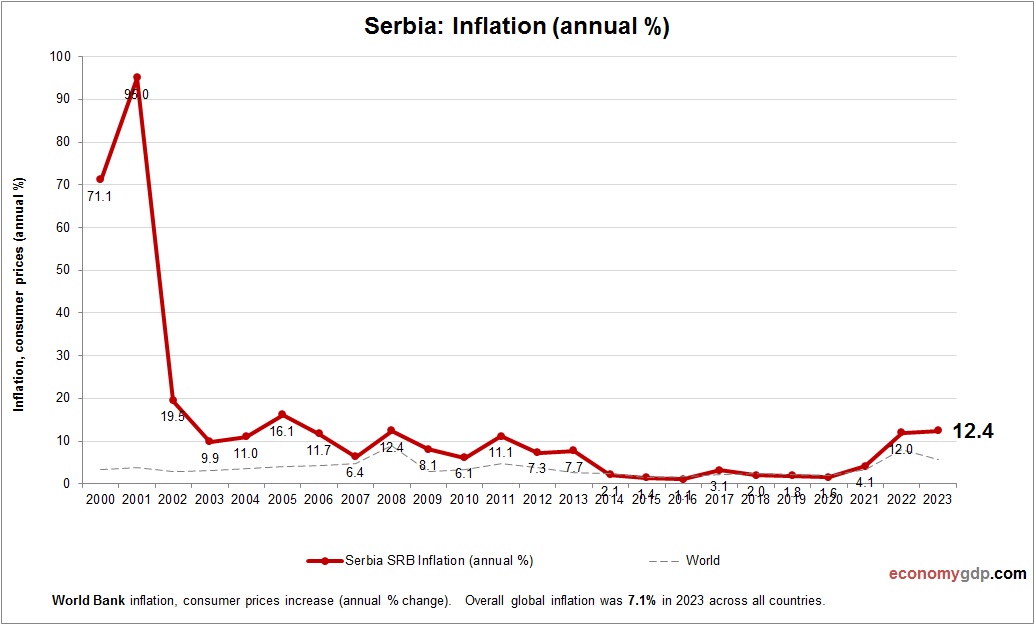
Serbia’s inflation rate is about 4% in 2024, driven by rising global food and energy prices. Strong manufacturing exports and wage growth add demand-side pressure, while currency depreciation increases import costs. Monetary tightening and EU candidacy help moderate inflation, though reliance on imports sustains price volatility.