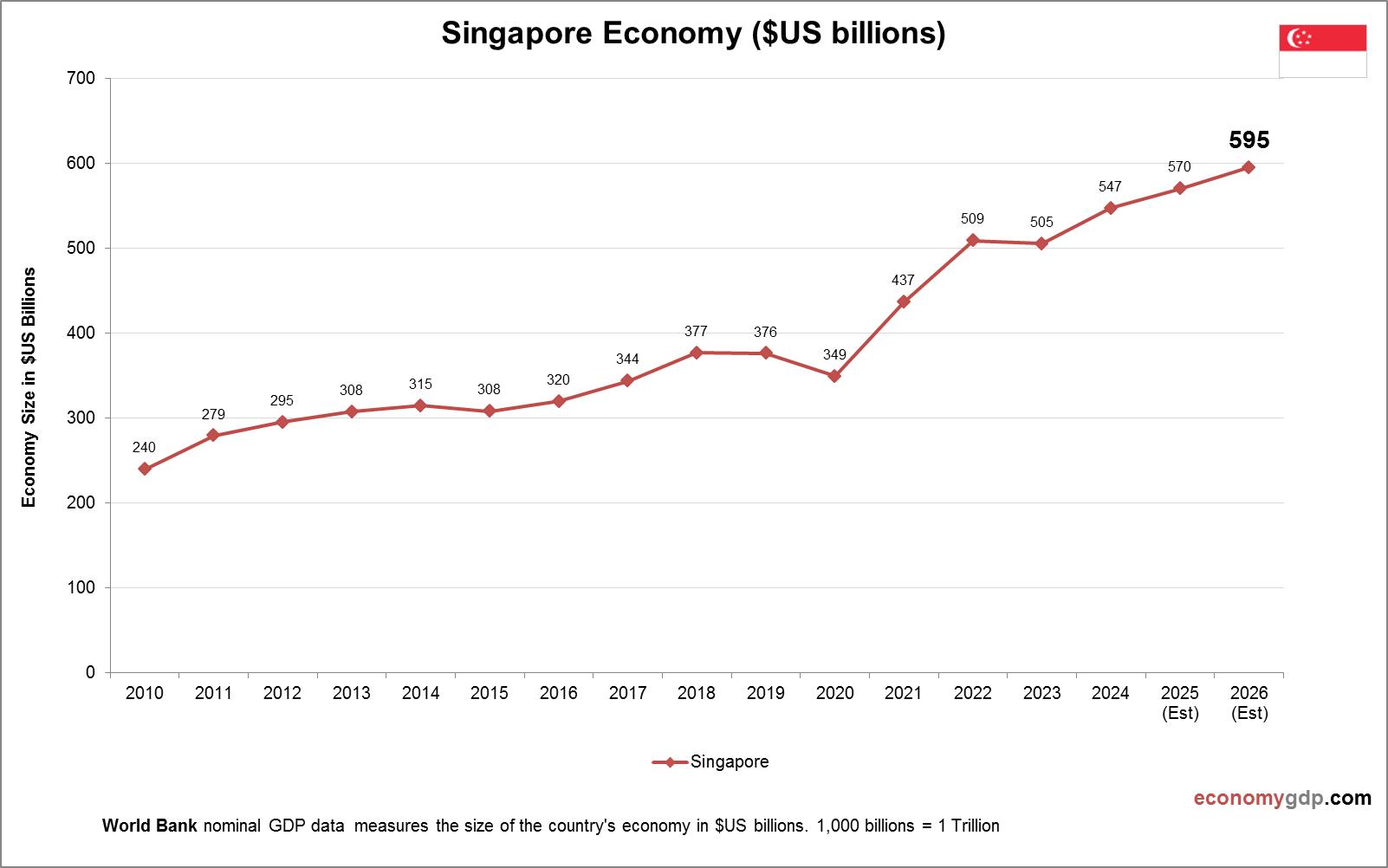
Singapore’s economy, valued at $400 billion, is a global hub for finance, trade, and logistics, with its port handling 10% of world cargo. Manufacturing, including electronics and pharmaceuticals, drives 20% of GDP. Tech, particularly fintech and AI, is booming, with Singapore as a startup hub. Green energy and sustainable urban projects are emerging. A skilled workforce and pro-business policies ensure competitiveness. High costs and regional competition pose risks, but strategic trade agreements and innovation cement Singapore’s role as an economic powerhouse.
Singapore Economy Size
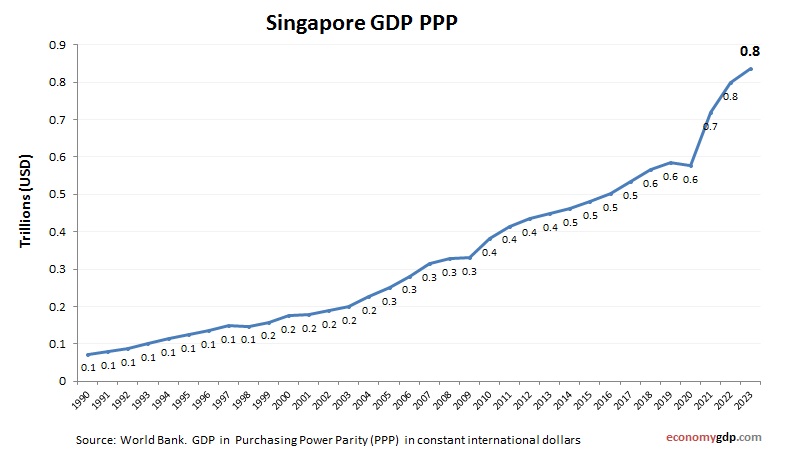
Singapore’s economy, at $400 billion, is sizable, with finance and trade driving its GDP, reflecting global hub status. See Singapore GDP.
Singapore Purchasing Power Parity (PPP)
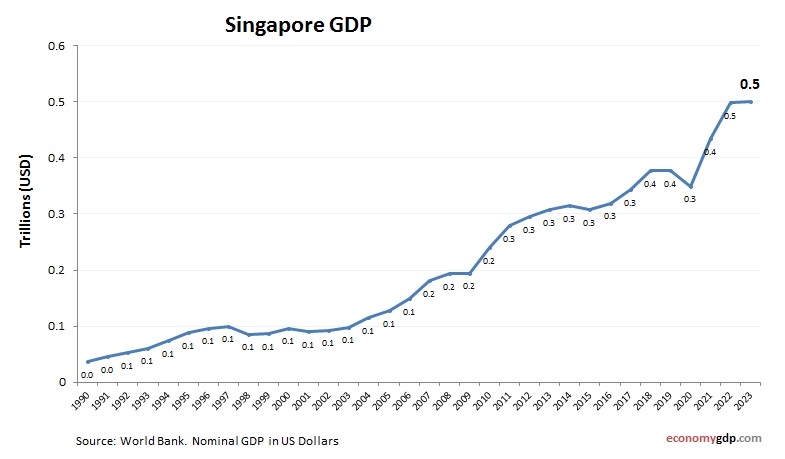
Singapore’s economy has a PPP GDP of $780 billion, nearly double its $400 billion nominal GDP, reflecting high costs offset by finance and trade. PPP per capita is around $130,000, among the highest globally, showcasing exceptional purchasing power. PPP underscores Singapore’s affluent market and global trade hub status.
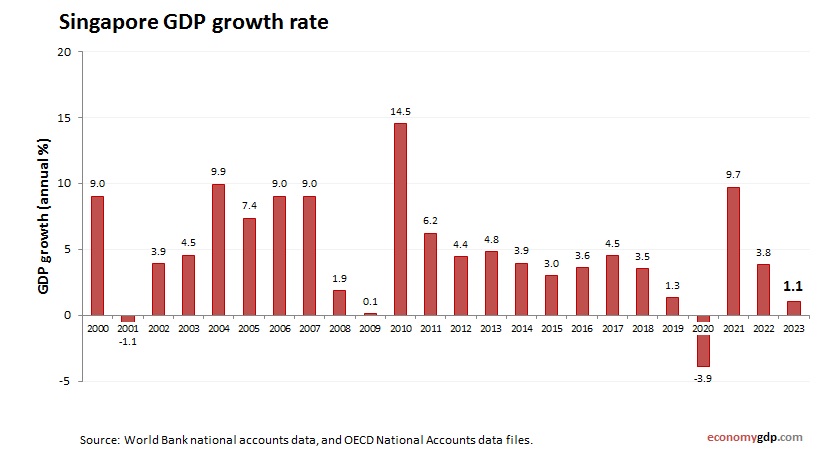
Singapore Growth Rate
The economic growth rate is 3.5% in 2024, fueled by finance and trade. Stable global demand and tech innovation support growth, but regional competition and high costs pose risks. Logistics and green energy contribute, while infrastructure investments drive resilience, positioning the economy as a global hub.
Singapore Inflation
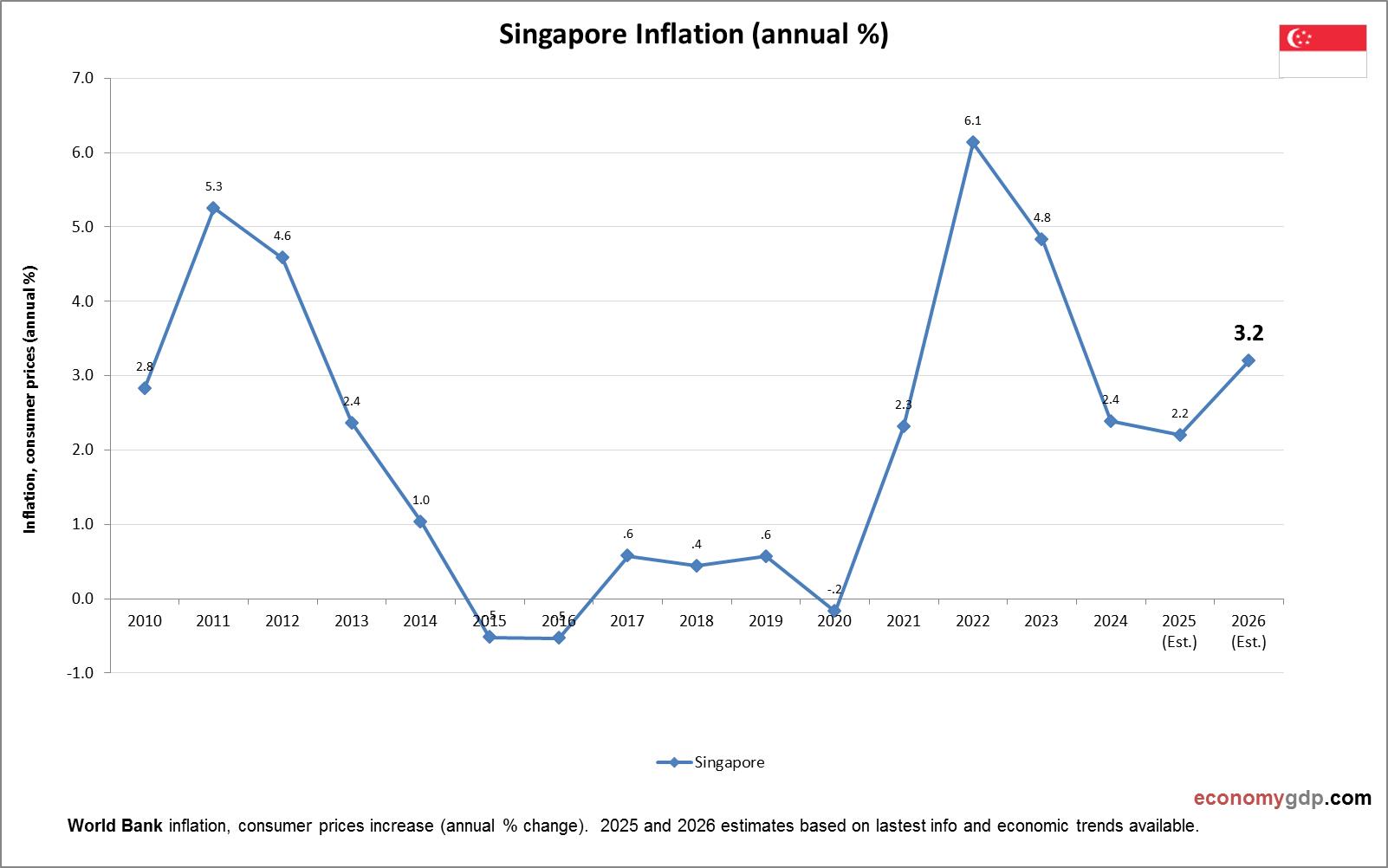
Singapore’s inflation rate is around 2.5% in 2024, driven by rising global food and housing costs. Strong financial services and trade demand add pressure, while currency stability limits imported inflation. Tight monetary policy and high-income resilience keep inflation low, despite global uncertainties impacting this trade hub.