
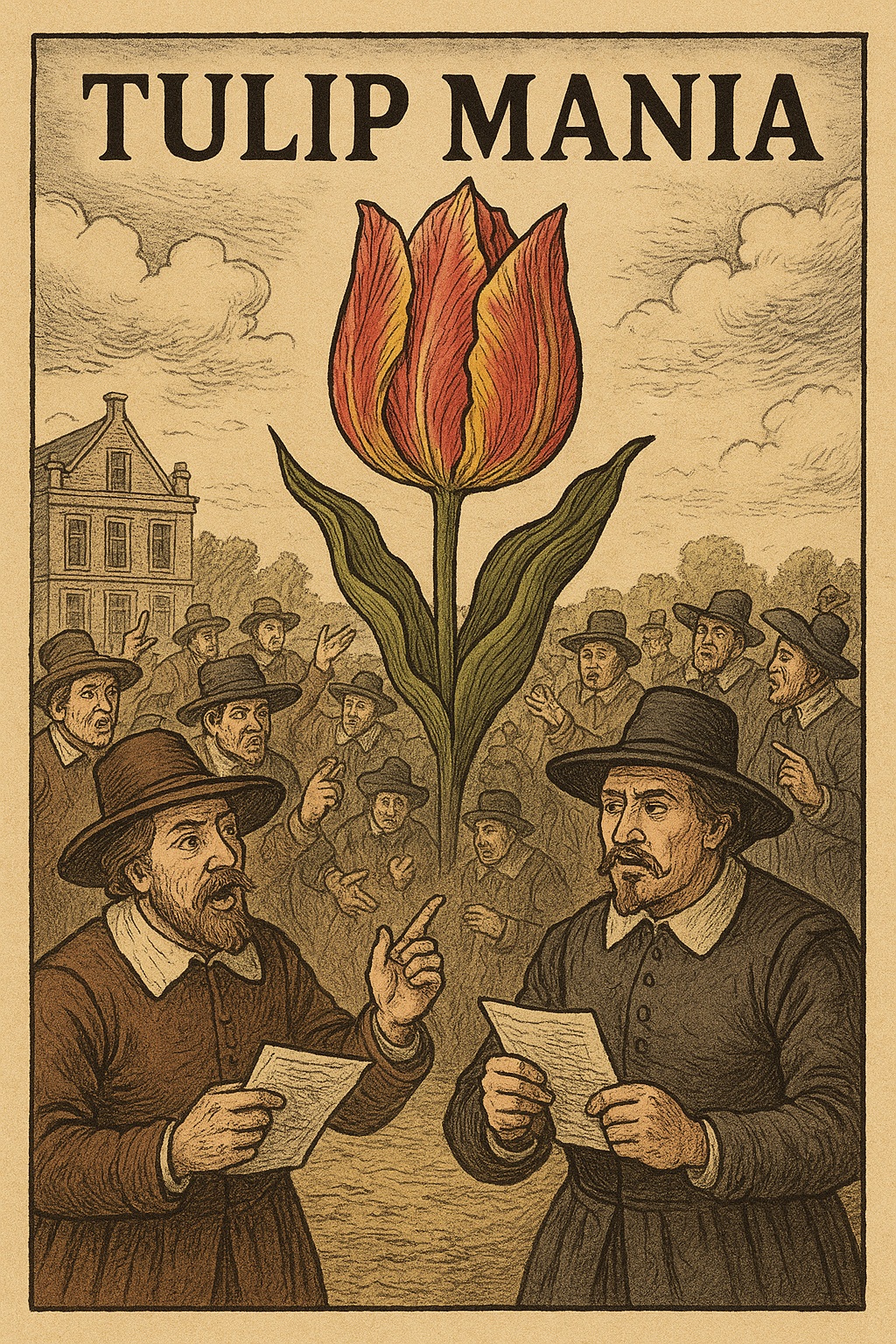
The Dutch Tulip Mania of the early 17th century is widely regarded as the first recorded speculative market bubble in history. What began as a fascination with exotic tulip varieties—newly introduced to Europe from the Ottoman Empire—rapidly evolved into an intense trading frenzy. Tulips, especially those with rare color patterns caused by a mosaic virus, became luxury status symbols among Dutch elites. As demand grew, prices surged to extraordinary heights, with some bulbs selling for more than the annual income of a skilled craftsman. The trade expanded from wealthy collectors to ordinary citizens hoping to profit, and a highly speculative futures market emerged in which bulbs were bought and sold for delivery months later, often without either party ever seeing the flowers themselves.
The bubble burst abruptly in February 1637 when buyers suddenly failed to show up at auctions, triggering a rapid collapse in prices. Confidence evaporated almost overnight, leaving many investors with contracts for bulbs worth only a fraction of what they had paid. Although the broader Dutch economy remained resilient—thanks to its strong global trade networks and diversified industries—the tulip crash became a lasting cautionary tale about the dangers of speculative excess. Tulip Mania remains a powerful historical example of how psychological factors, social contagion, and inflated expectations can create financial bubbles, offering enduring lessons that resonate in modern markets from stocks to cryptocurrencies.