
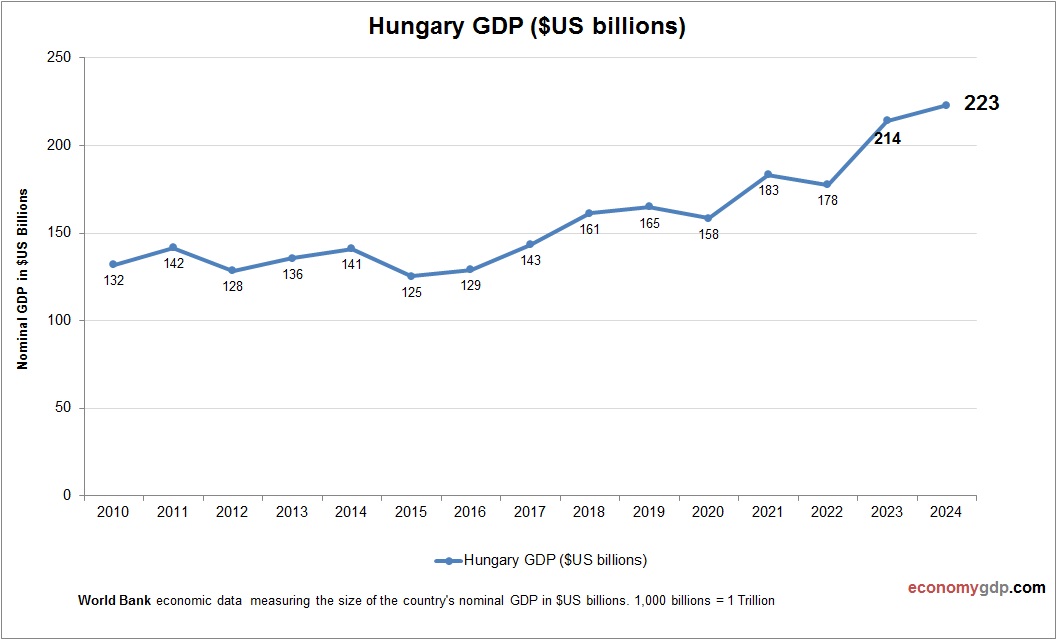
Hungary's GDP is based on manufacturing, exports, and services, with a central role in the European supply chain. Automotive production, electronics, and pharmaceuticals are key industries, supported by significant foreign direct investment. Agriculture remains important, producing grains, fruits, and livestock. Services, including tourism and finance, contribute strongly, with Budapest serving as a hub for cultural and business activities. Hungary benefits from EU membership, enhancing trade opportunities and infrastructure development. However, challenges such as labor shortages and reliance on exports make the economy sensitive to external shocks. Its strategic location in Central Europe supports long-term growth potential.
World Bank GDP economic data: 2010-2024. Last updated Apr 2026. See Hungary GDP per capita.
Hungary GDP Statistics by Year
| Year | GDP Size (in billions $) |
| 2025 (projected) | 235 |
| 2024 | 223 |
| 2023 | 214 |
| 2022 | 178 |
| 2021 | 183 |
| 2020 | 158 |
| 2019 | 165 |
| 2018 | 161 |
| 2017 | 143 |
| 2016 | 129 |
| 2015 | 125 |
| 2014 | 141 |
| 2013 | 136 |
| 2012 | 128 |
| 2011 | 142 |
| 2010 | 132 |