
Syria’s economy, estimated at $20 billion, is devastated by war, with agriculture, once 20% of GDP, now limited to wheat and olives. Oil and gas, previously key, are disrupted, though small-scale production persists. Informal trade and remittances sustain livelihoods. Reconstruction, including housing and infrastructure, is an emerging need, alongside telecoms. Sanctions, displacement, and destroyed infrastructure hinder recovery. Syria’s strategic location offers long-term trade potential, but political stability and international investment are critical to reviving industries and fostering growth in modern sectors.
Syria Economy Size
Syria’s economy, at $20 billion, is small and devastated, with agriculture and oil driving its GDP, limited by war and sanctions. See Syria GDP.

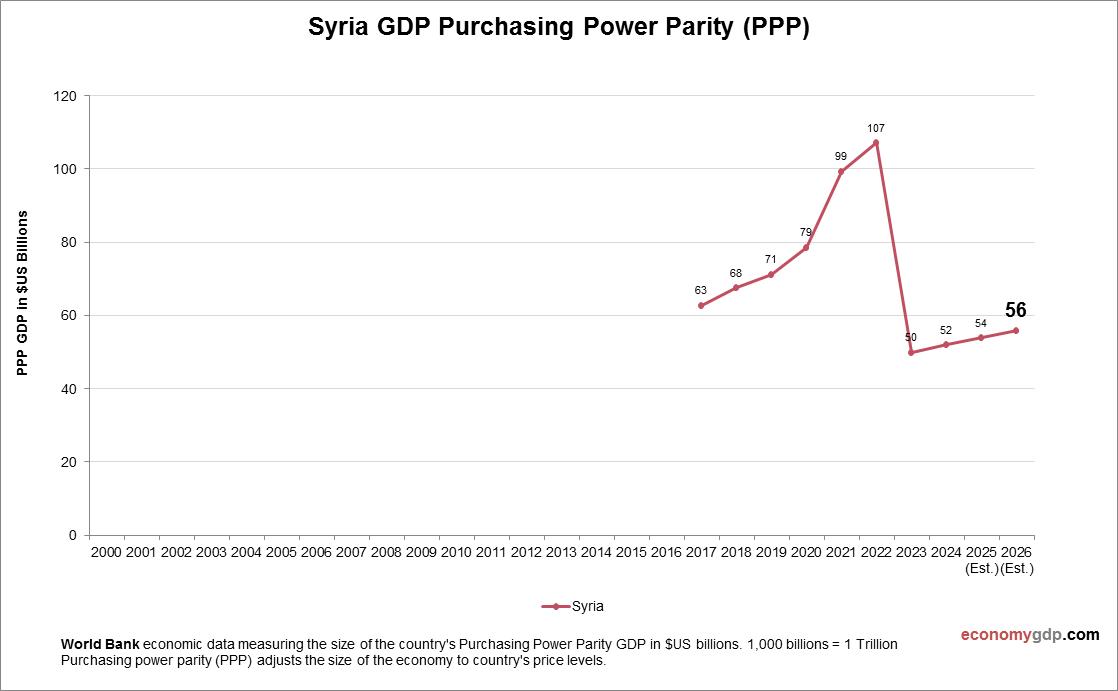
Syria Purchasing Power Parity (PPP)
Syria’s economy has an estimated PPP GDP of $60 billion, three times its $20 billion nominal GDP, reflecting low costs for agriculture and oil. PPP per capita is around $3,000, indicating severe poverty. War and sanctions limit PPP benefits, with domestic pricing supporting basic economic survival.
Syria Growth Rate
The economic growth rate is 0.0% in 2024, reflecting stagnation due to war and sanctions. Agriculture and informal trade drive minimal activity, but destroyed infrastructure and displacement limit gains. Reconstruction potential exists, while international isolation constrains resilience, positioning the economy for negligible progress without peace.

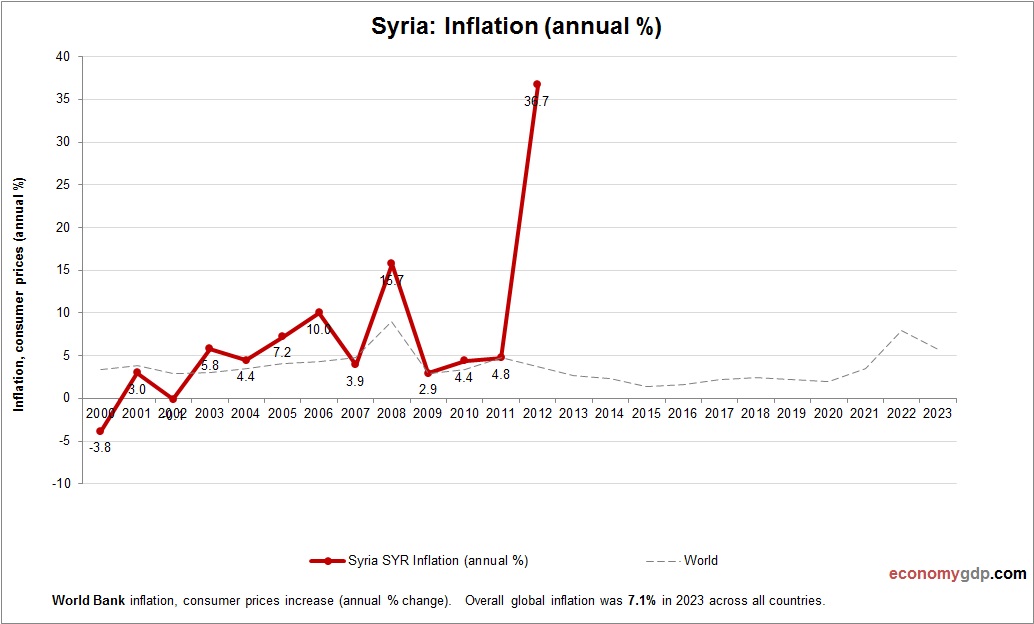
Syria Inflation
Syria’s inflation rate is estimated at 50% in 2024, driven by war-related supply disruptions and currency depreciation. Import reliance for food and fuel increases costs, while agricultural output collapses. Sanctions and weak governance fuel black-market activity, sustaining high inflation with limited prospects for stabilization in this devastated economy.