Belgium’s economy is driven by chemicals, logistics, and food processing. It’s a global leader in pharmaceuticals and petrochemicals, with firms like Pfizer. Antwerp’s port makes logistics a top industry, while chocolate and beer exports thrive. Emerging sectors include biotech, focusing on medical research, and green energy, particularly wind. Belgium’s central EU location boosts trade, and its skilled workforce supports innovation. Despite high labor costs, investments in digitalization and sustainable technologies ensure competitiveness. Belgium’s focus on circular economy practices and life sciences positions it as a key player in Europe’s high-value industrial and service sectors.
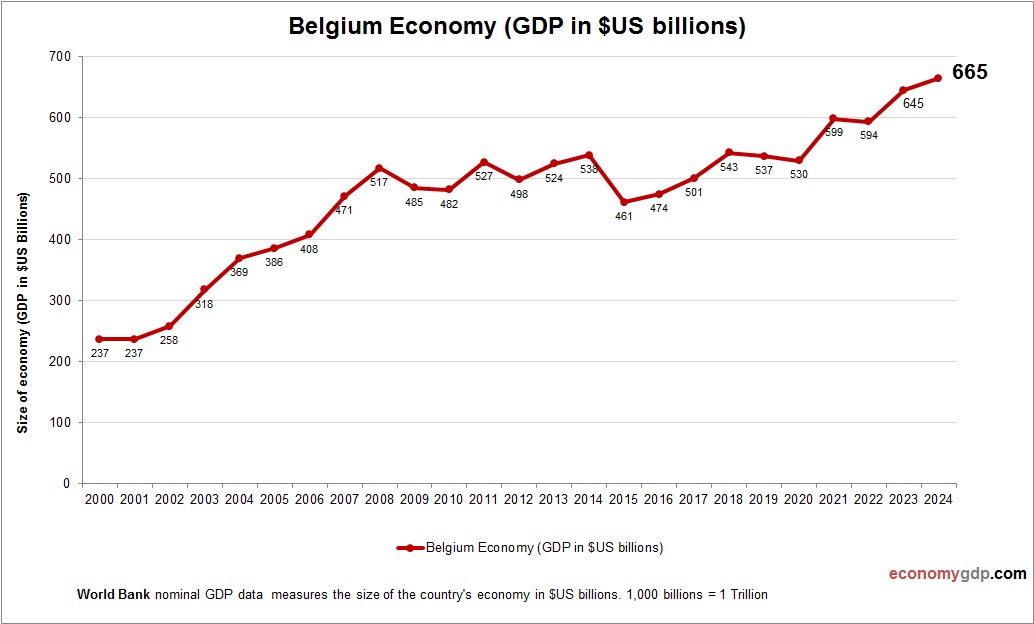
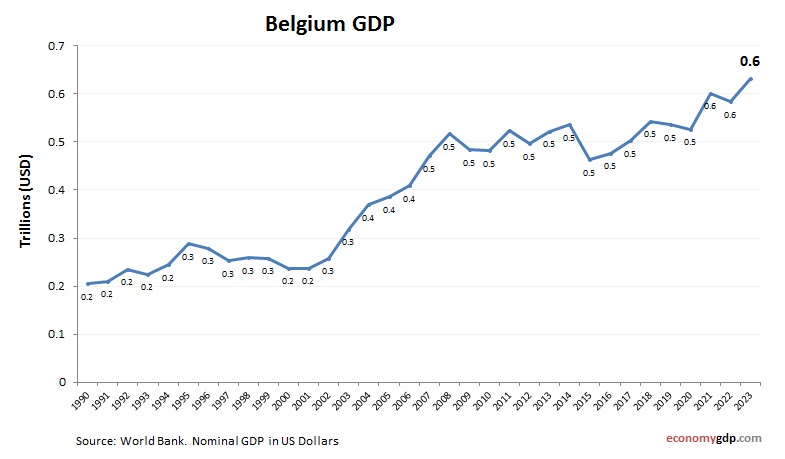
Belgium Economy Size
Belgium’s economy, with a nominal GDP of about $550 billion, is driven by chemicals, logistics, and food processing. Its strategic location boosts trade, with Antwerp’s port a key asset. Its GDP reflects a compact, open economy within the EU. Investments in biotech and green energy support growth, positioning Belgium as a significant player in Europe’s industrial and trade networks despite its small size. See Belgium GDP.
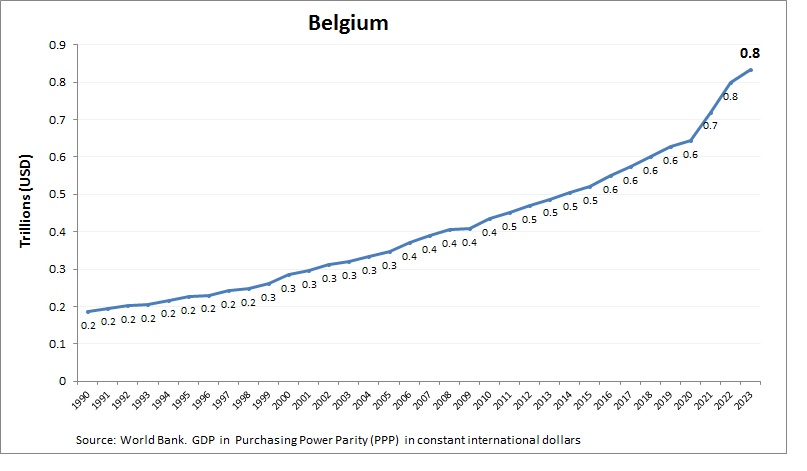
Belgium Purchasing Power Parity (PPP)
Belgium’s economy has a PPP GDP of around $700 billion. Chemicals, logistics, and food processing drive its size, with moderate costs boosting purchasing power. Its role as a trade hub amplifies its PPP GDP, supported by EU integration. Investments in biotech and green energy enhance its scale, positioning Belgium as a compact but significant EU economy with strong industrial and trade contributions.
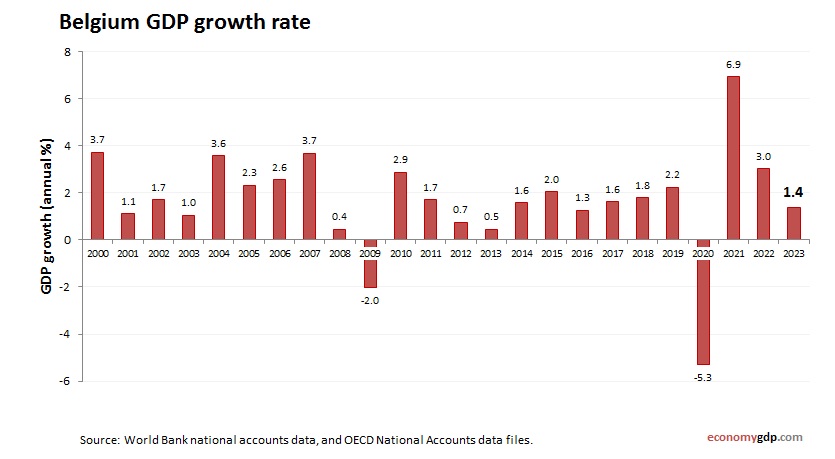
Belgium Growth Rate
Belgium’s economy is expected to grow at 1.2% in 2025. Chemicals, logistics, and food processing fuel expansion, with Antwerp’s port driving trade. Investments in biotech and green energy support growth, though high labor costs and global trade slowdowns pose challenges. Belgium’s central EU location and skilled workforce ensure modest growth, positioning it as a key player in Europe’s industrial and trade networks despite its small size.
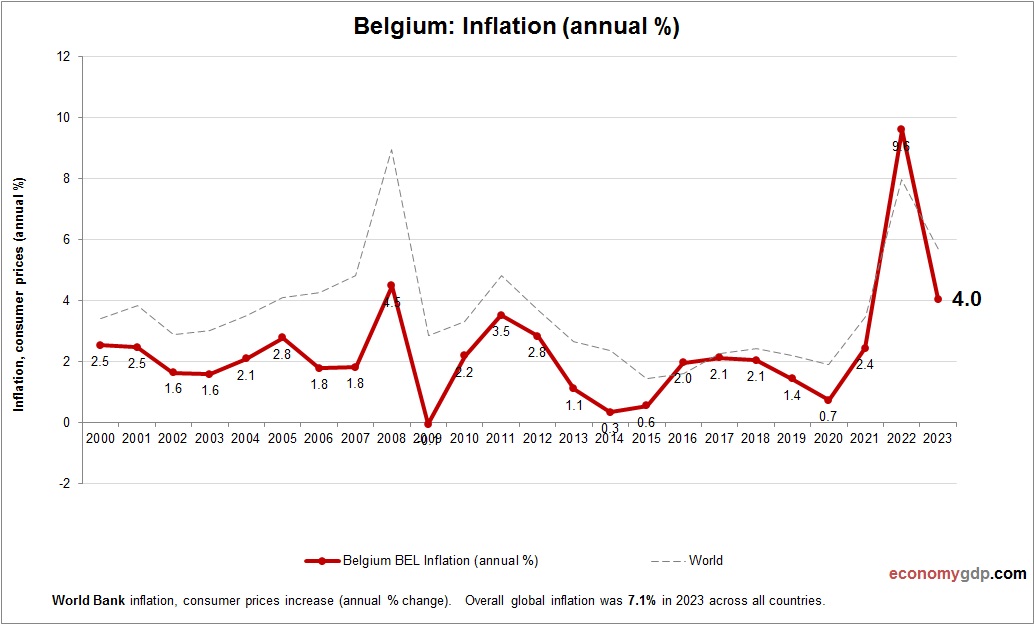
Belgium Inflation
The Belgium’s inflation is low at 1.9%, driven by energy costs and trade reliance. Stable chemical and food exports, plus EU integration, curb price growth. High labor costs add minor pressure, but tight monetary policy and global supply chain recovery keep inflation low. Investments in biotech and green energy support price stability in a compact, trade-oriented economy.