
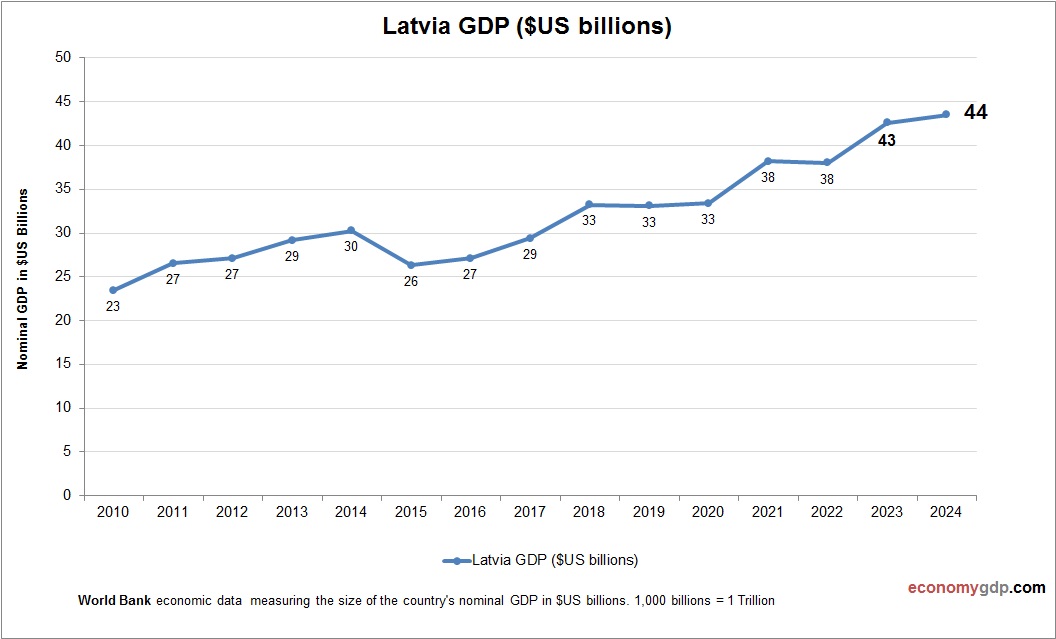
Latvia's economy is small but diverse, with services, manufacturing, and trade contributing strongly. Information technology, finance, and logistics are growing rapidly, supported by EU integration. Agriculture provides dairy, grains, and forestry products, while industry includes machinery, textiles, and food processing. Exports mainly target European markets, particularly the Baltic region and Scandinavia. Tourism also supports services, with Riga as a cultural hub. Latvia's economy has recovered from past crises with strong reforms, though emigration and demographic challenges remain. GDP benefits from digital innovation, exports, and growing trade, while sustainability and workforce issues shape future growth.
World Bank GDP economic data: 2010-2024. Last updated Apr 2026. See Latvia GDP per capita.
Latvia GDP Statistics by Year
| Year | GDP Size (in billions $) |
| 2025 (projected) | 46 |
| 2024 | 44 |
| 2023 | 43 |
| 2022 | 38 |
| 2021 | 38 |
| 2020 | 33 |
| 2019 | 33 |
| 2018 | 33 |
| 2017 | 29 |
| 2016 | 27 |
| 2015 | 26 |
| 2014 | 30 |
| 2013 | 29 |
| 2012 | 27 |
| 2011 | 27 |
| 2010 | 23 |