The Ghana economy is driven by cocoa, gold, and oil. Agriculture employs much of the population, while gold and petroleum exports boost GDP. Tourism and services are growing, but high debt, inflation, and infrastructure deficits challenge stability. Reforms to attract foreign investment and diversify into manufacturing are underway, with a focus on digitalization and renewable energy. Political stability supports growth, though unemployment and poverty remain significant hurdles.
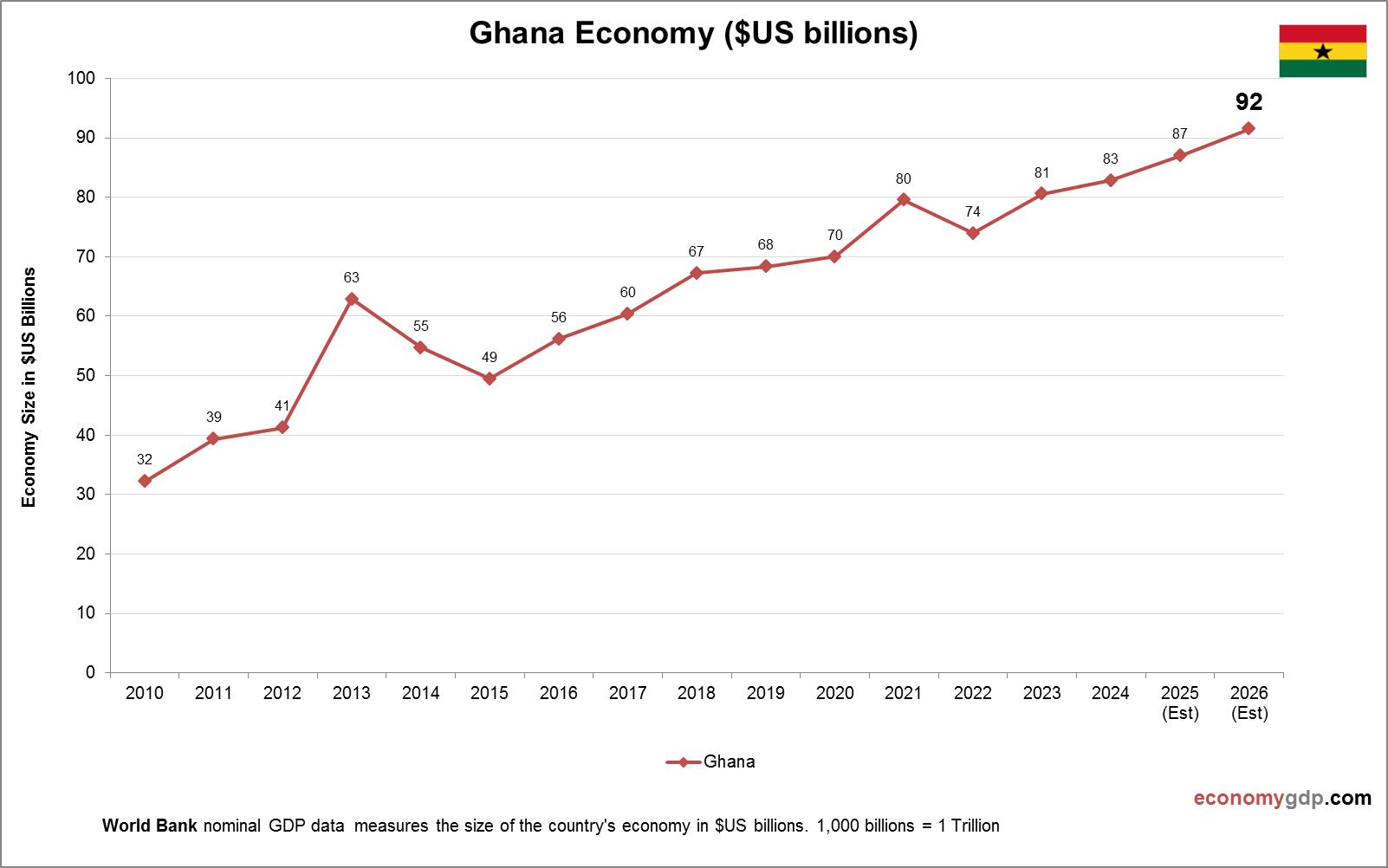
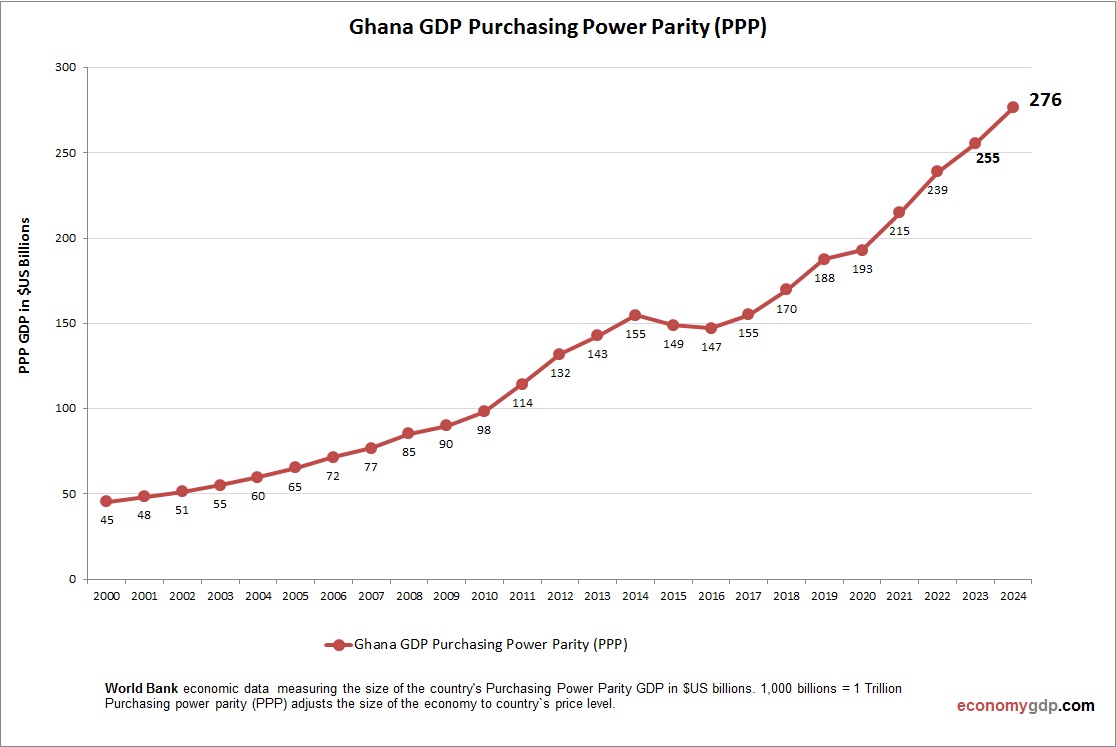
Ghana Economy Size
Ghana’s economy, valued at $75 billion, is mid-sized for West Africa, with gold, oil, and agriculture fueling its GDP and steady growth trajectory. See Ghana GDP.
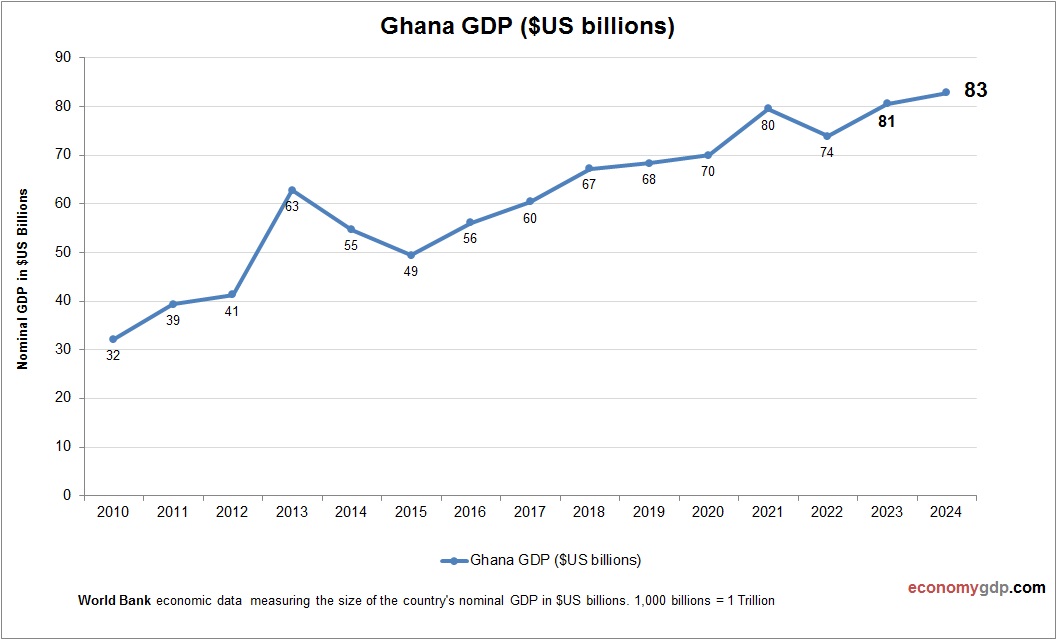
Ghana Purchasing Power Parity (PPP)
Ghana’s economy has a PPP GDP of $230 billion, over three times its $75 billion nominal GDP, driven by low costs for gold and agriculture. PPP per capita is around $7,000, indicating modest purchasing power. Domestic pricing supports local markets, but infrastructure and debt challenges constrain broader PPP-driven growth.
Ghana Growth Rate
The economic growth rate is 5.0% in 2024, propelled by gold exports and agriculture. Cocoa production and oil discoveries support growth, but debt and inflation pose risks. Infrastructure investments and regional trade drive resilience, while a young workforce enhances momentum, positioning the economy for strong progress in West Africa.

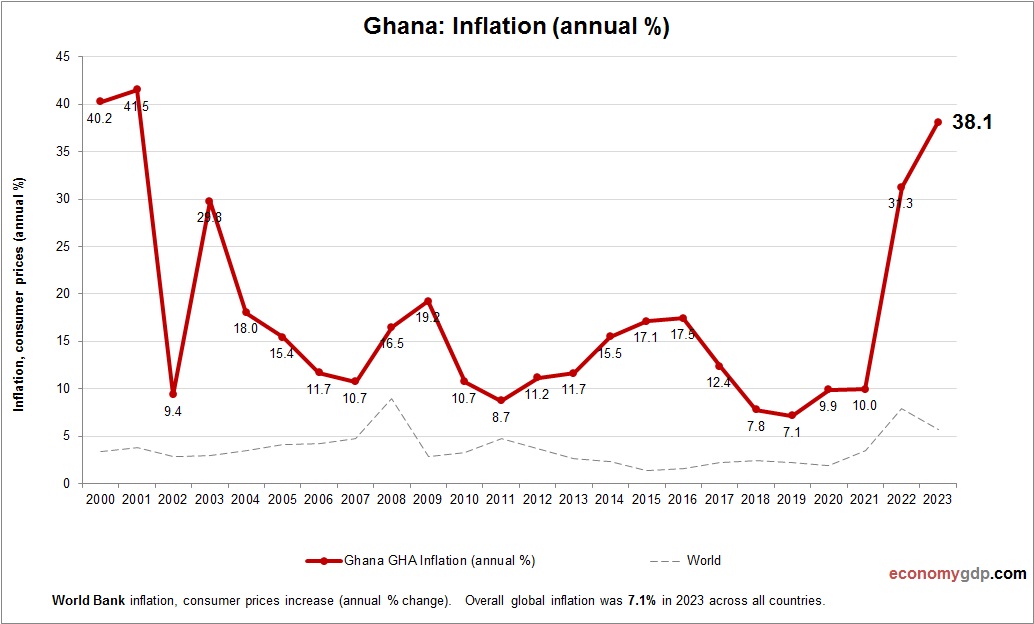
Ghana Inflation
Ghana’s inflation rate is about 20% in 2024, driven by currency depreciation and rising global commodity prices. Food and fuel import costs surge, while strong gold exports fuel demand. Agricultural disruptions from weather add pressure. Monetary tightening and debt restructuring aim to stabilize, but high inflation persists in this resource-rich economy.