
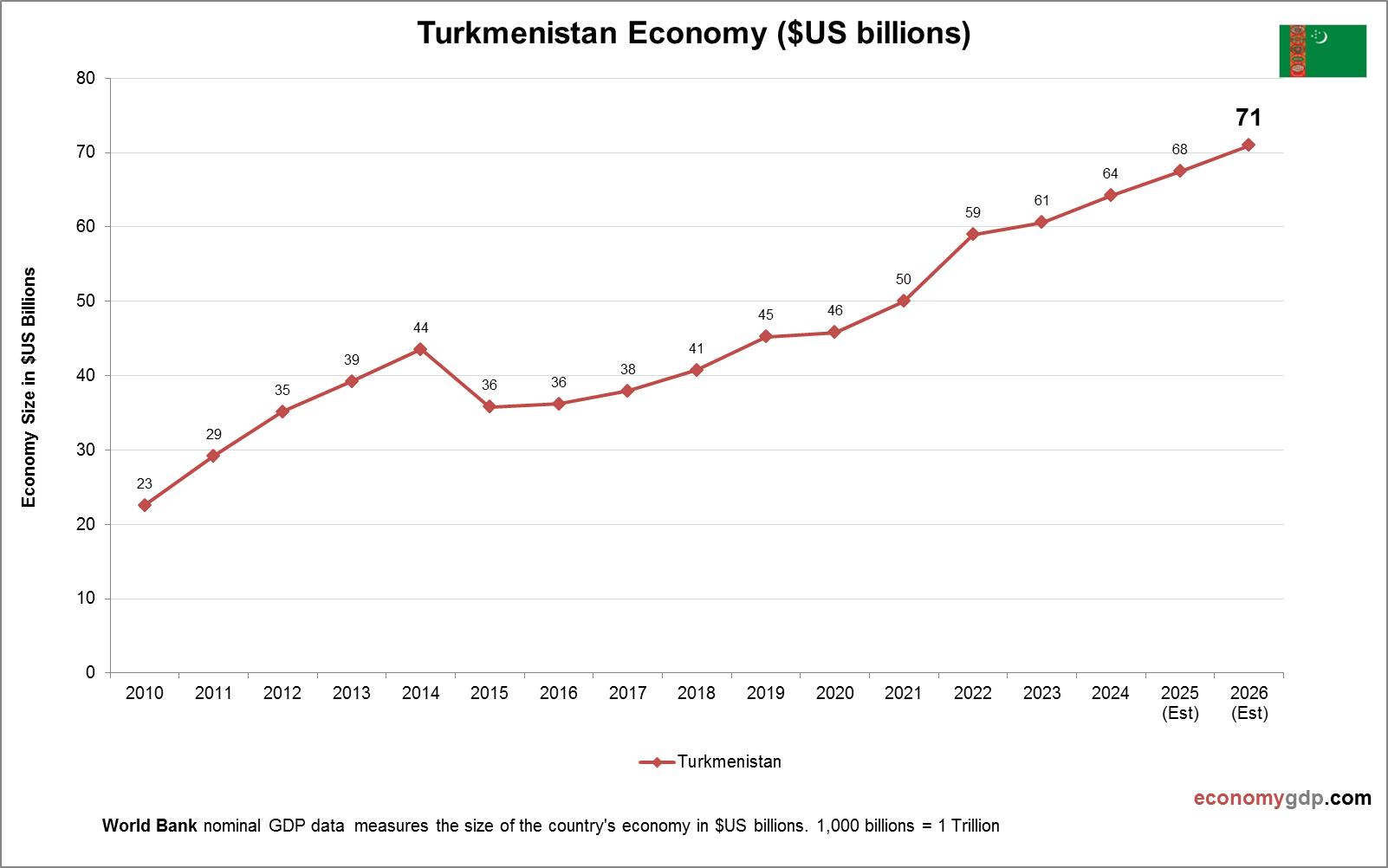
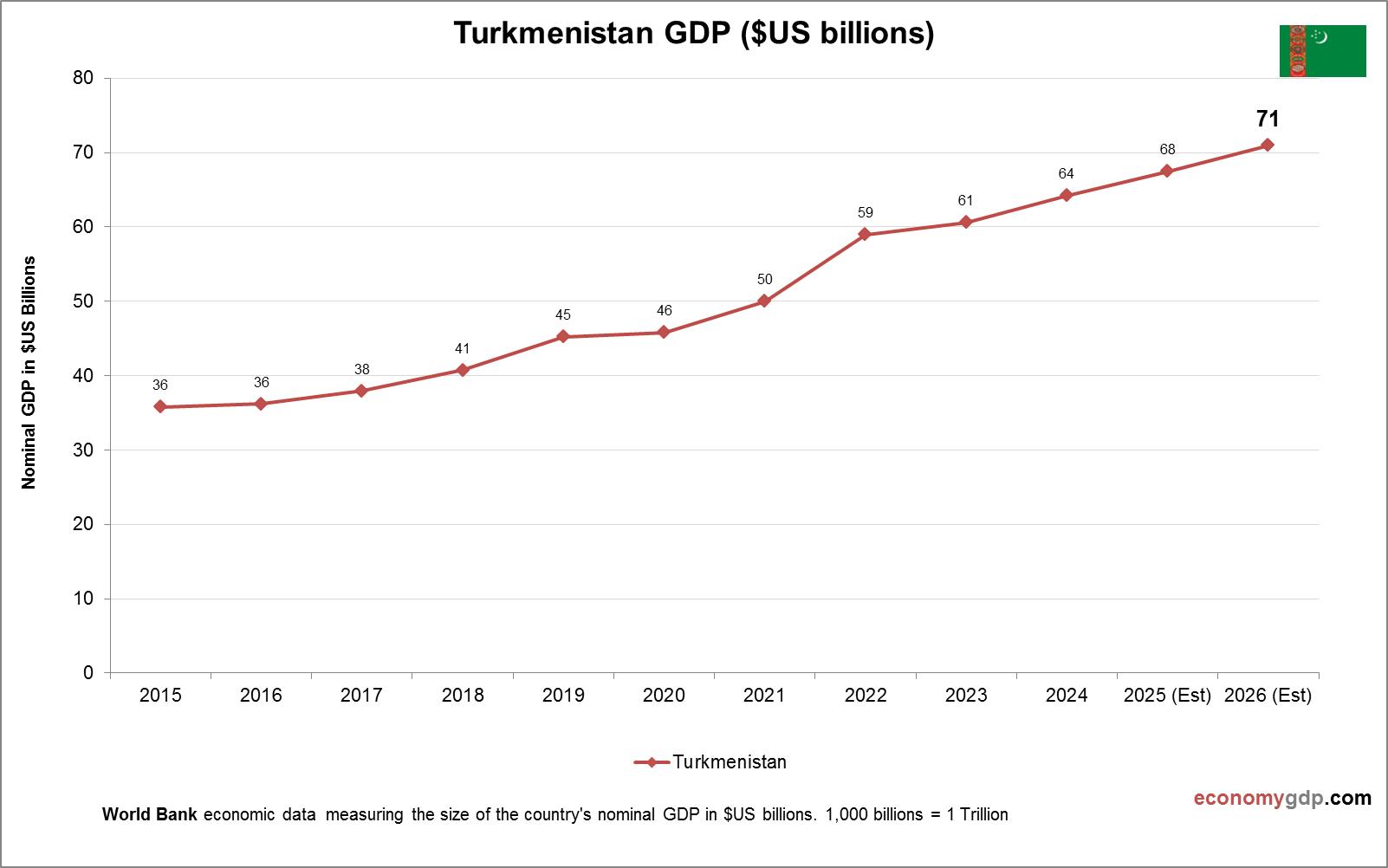
Turkmenistan’s economy, worth $50 billion, is dominated by natural gas, which accounts for 80% of exports, primarily to China. Agriculture, particularly cotton, employs 40% of the workforce. Textiles and construction, tied to state projects, are significant. Emerging sectors include renewable energy and logistics, leveraging its Silk Road position. Centralized control and lack of transparency limit diversification. Despite vast gas reserves, underinvestment in infrastructure and human capital hinders growth, with potential in trade and renewables if reforms occur.
Turkmenistan Economy Size
Turkmenistan’s economy, worth $50 billion, is mid-sized, with gas exports driving its GDP, limited by centralized control. See Turkmenistan GDP.
Turkmenistan Purchasing Power Parity (PPP)
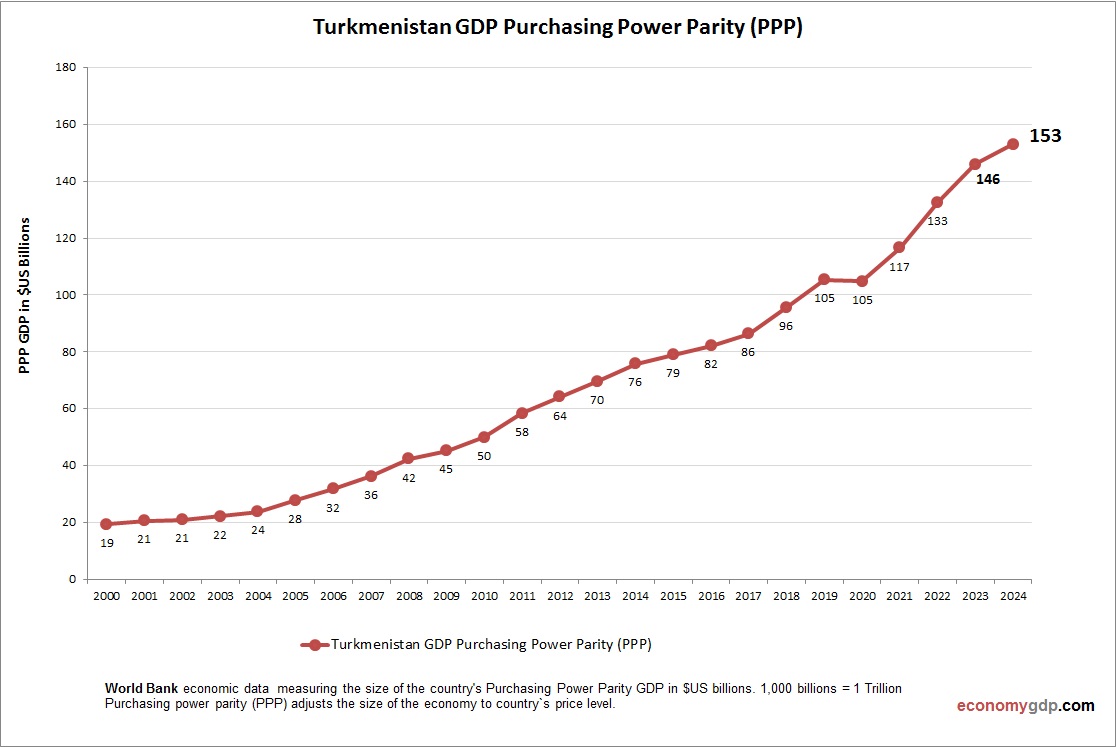
Turkmenistan’s economy has a PPP GDP of $130 billion, over double its $50 billion nominal GDP, driven by low costs for gas and agriculture. PPP per capita is around $20,000, reflecting moderate purchasing power. Domestic pricing supports markets, but centralized control limits broader PPP-driven economic growth.
Turkmenistan Growth Rate
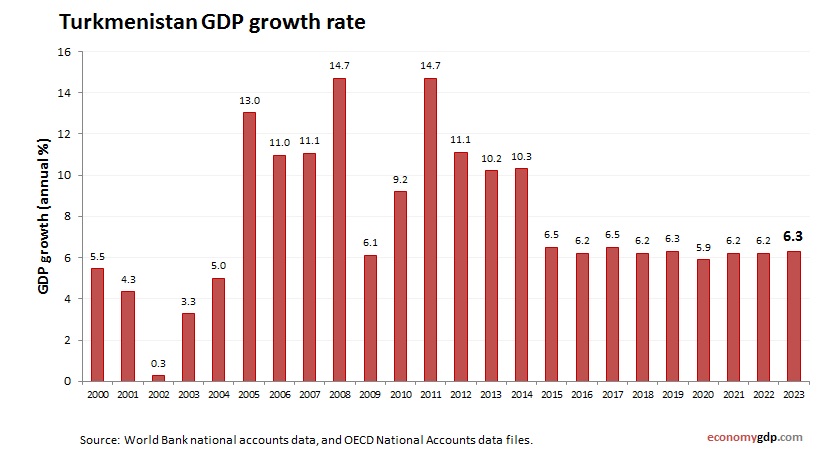
The economic growth rate is 3.0% in 2024, propelled by gas exports. High global gas prices and agriculture support growth, but centralized control and isolation limit gains. Textiles contribute, while infrastructure projects drive resilience, positioning the economy for steady progress if reforms are implemented.
Turkmenistan Inflation
Turkmenistan’s inflation rate is estimated at 8% in 2024, driven by rising global food and energy prices. Strong gas exports fuel demand, while currency controls and import reliance increase costs. Agricultural disruptions add pressure, with limited monetary tools sustaining volatility in this state-controlled economy.
