Tag Archives: Post-demographic dividend economy
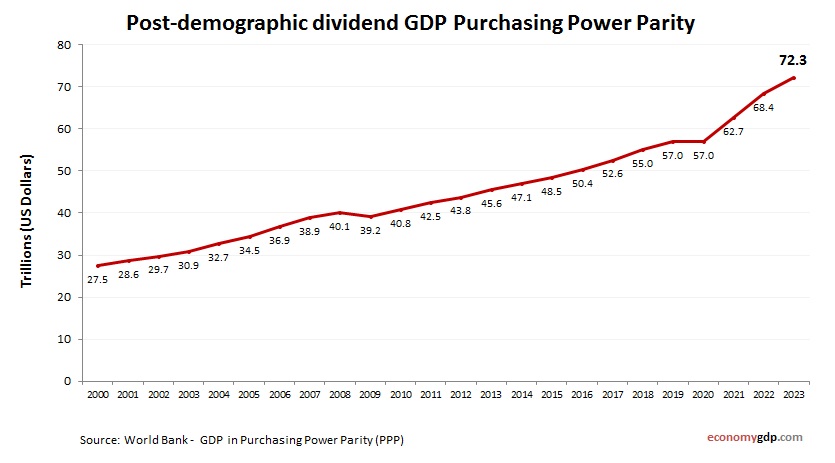
Post-demographic dividend GDP Purchasing Power Parity
Post-demographic dividend economy graph showing purchasing power parity (PPP) growth from 2000 to today. Purchasing power parity adjusts the size of the economy to relevant price levels, i.e. measuring the price of specific goods in different countries and adjusting GDP View diagram Post-demographic dividend GDP Purchasing Power Parity
Post-demographic dividend GDP growth rate
Post-demographic dividend economy annual growth rate from 2000 to today. GDP growth (yearly %). World Bank and OECD national accounts data. Countries in the post-demographic dividend stage experienced a GDP growth rate of about 1.8% in 2023. Aging populations and View diagram Post-demographic dividend GDP growth rate
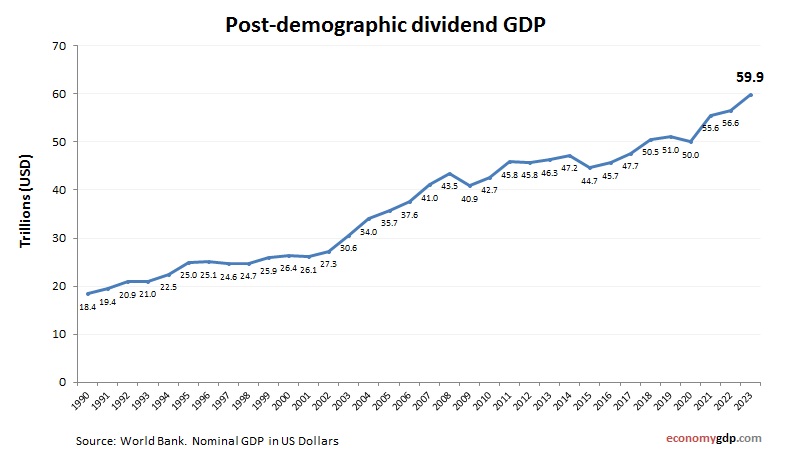
Post-demographic dividend GDP
Post-demographic dividend GDP from 1990 to today. World Bank and OECD data. GDP in US dollars. Economies in this stage have high GDP per capita but face aging populations. Growth depends on boosting productivity, investing in health and tech, and View diagram Post-demographic dividend GDP
Post-demographic dividend GDP PPP
Post-demographic dividend economy graph showing purchasing power parity (PPP) growth from 1990 to today. Purchasing power parity adjusts the size of the economy to relevant price levels, i.e. measuring the price of specific goods in different countries and adjusting GDP View diagram Post-demographic dividend GDP PPP
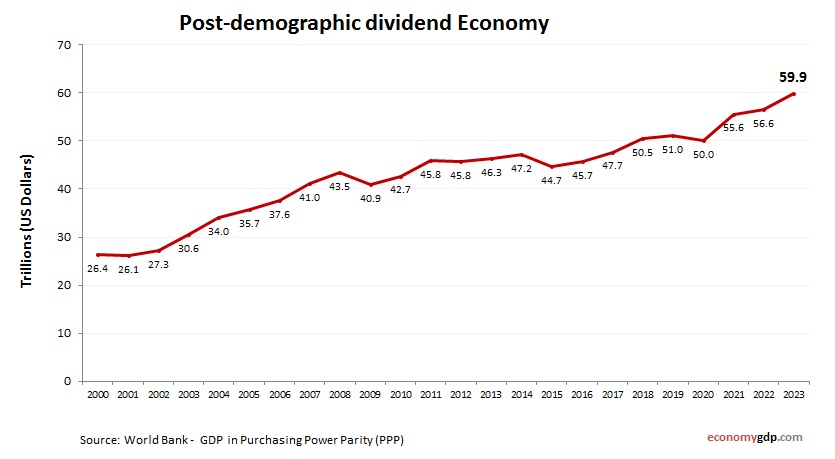
Post-demographic dividend Economy
Post-demographic dividend economy growth from 2000 to today. GDP (current US$). World Bank and OECD national accounts data. These economies have aging populations and shrinking labor forces. GDP growth is driven more by innovation, automation, and productivity improvements than by View diagram Post-demographic dividend Economy