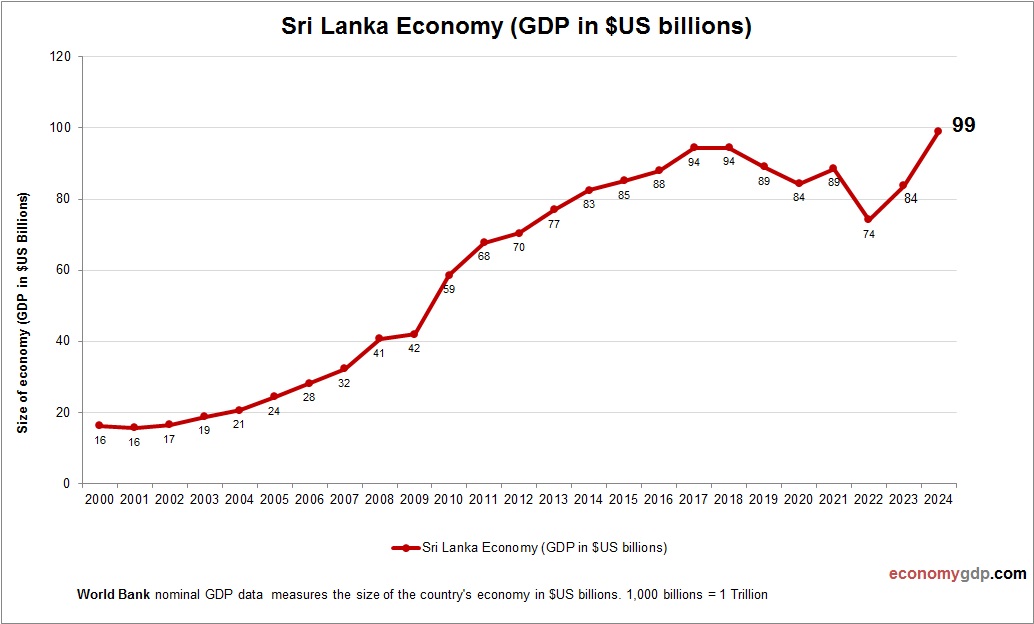
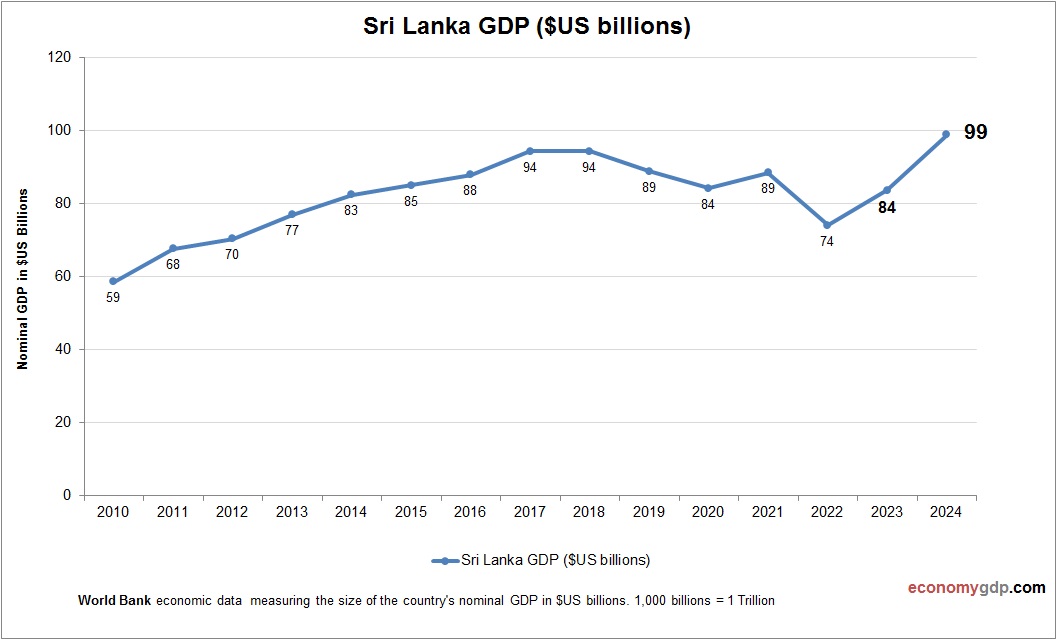
Sri Lanka’s economy, valued at $85 billion, relies on services, particularly tourism, which contributes 10% to GDP, and remittances (8% of GDP). Agriculture, employing 25%, produces tea, rubber, and cinnamon. Textiles drive exports, while IT and fintech are emerging, with Colombo as a hub. Debt crises and political instability since 2022 have disrupted growth, but port development and renewable energy (solar) show potential. Trade with India and China supports recovery, though fiscal reforms and infrastructure upgrades are critical to long-term stability.
Sri Lanka Economy Size
Sri Lanka’s economy, valued at $85 billion, is mid-sized, with services and agriculture driving its GDP, disrupted by debt crises. See Sri Lanka GDP.
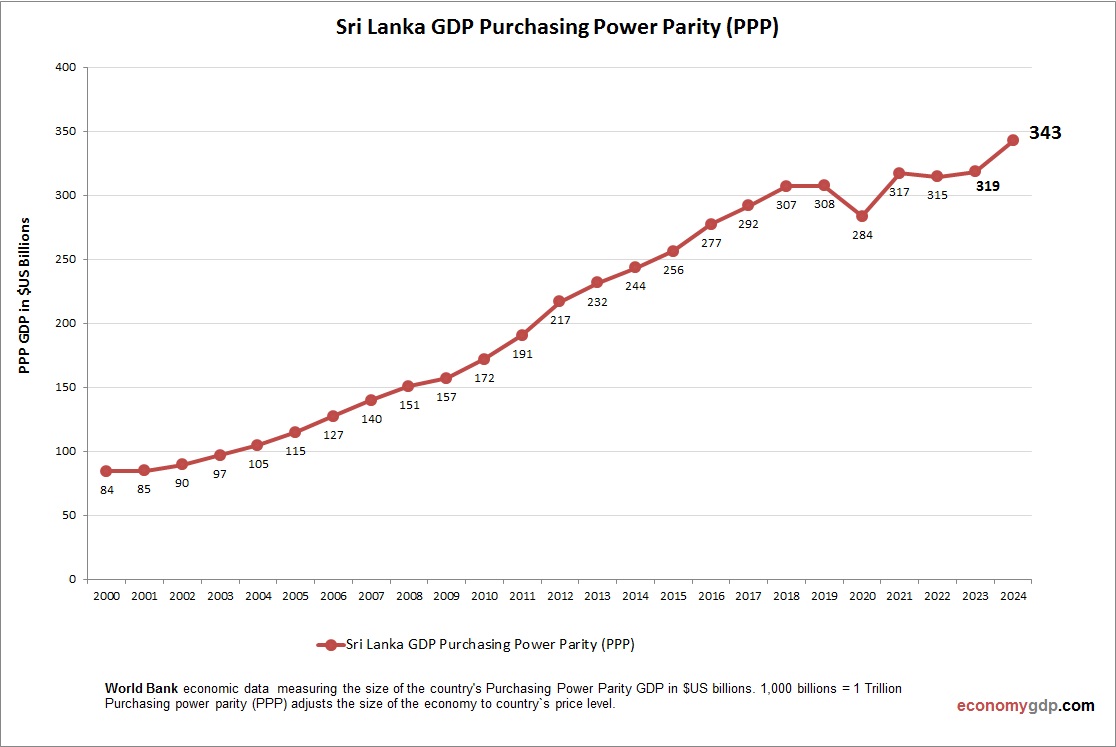
Sri Lanka Purchasing Power Parity (PPP)
Sri Lanka’s economy has a PPP GDP of $340 billion, four times its $85 billion nominal GDP, driven by low costs for tourism and agriculture. PPP per capita is around $15,000, indicating moderate purchasing power. Domestic pricing supports markets, but debt crises limit broader PPP-driven economic recovery.
Sri Lanka Growth Rate
The economic growth rate is 2.0% in 2024, driven by tourism and remittances. Tea exports and informal trade support growth, but debt crises and political instability limit gains. Textiles contribute, while fiscal reforms drive resilience, positioning the economy for modest recovery if structural issues are addressed.

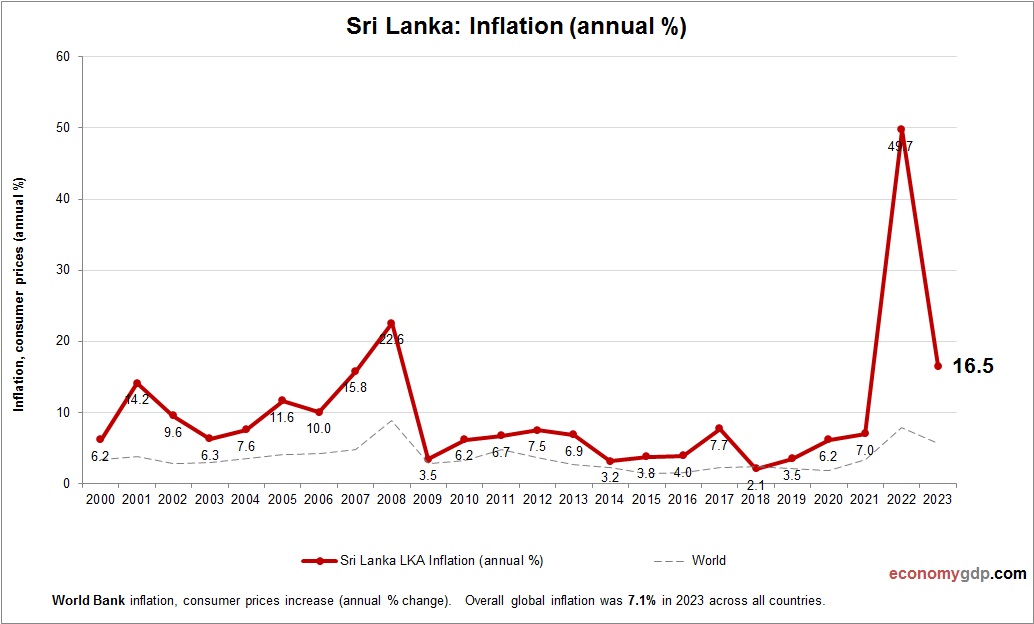
Sri Lanka Inflation
Sri Lanka’s inflation rate is about 5% in 2024, down from 50% in 2022, driven by rising global food and fuel prices. Currency stabilization and debt restructuring reduce pressure, but import reliance and agricultural disruptions sustain costs. Tourism recovery adds demand, while monetary tightening helps moderate inflation in this recovering economy.