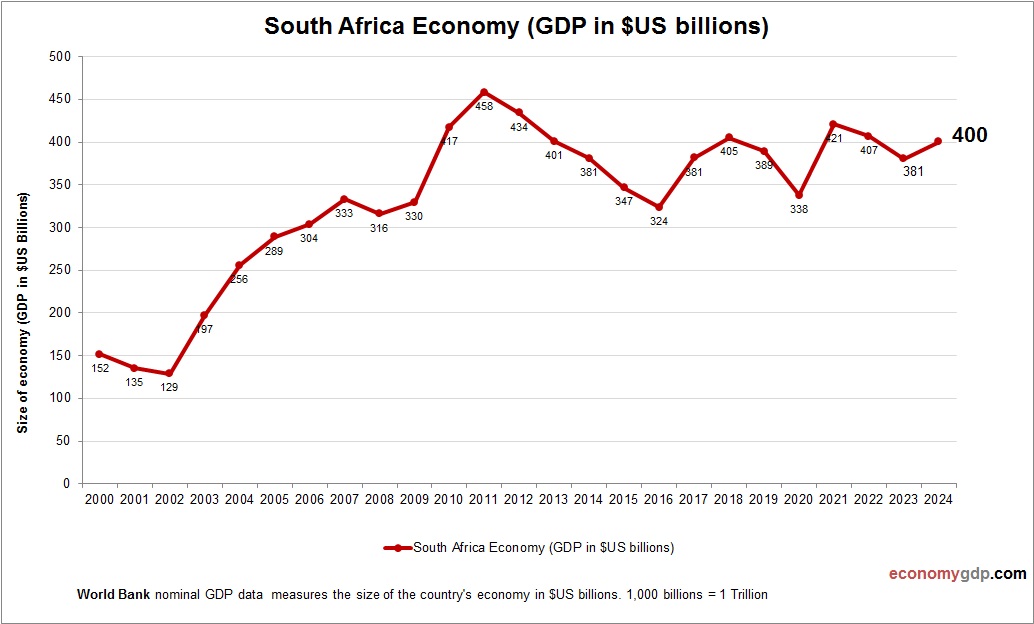
South Africa’s economy, worth $400 billion, is Africa’s most industrialized, driven by mining (gold, platinum) and manufacturing (automotive, chemicals). Services, including finance and tourism, contribute 60% to GDP. Agriculture, producing wine and citrus, employs 5%. Tech, centered in Johannesburg, and renewable energy (solar, wind) are emerging. Inequality, unemployment, and power shortages challenge growth, but regional trade via AfCFTA offers opportunities. Investment in infrastructure and green tech aims to sustain South Africa’s role as an economic leader, despite structural hurdles.
South Africa Economy Size
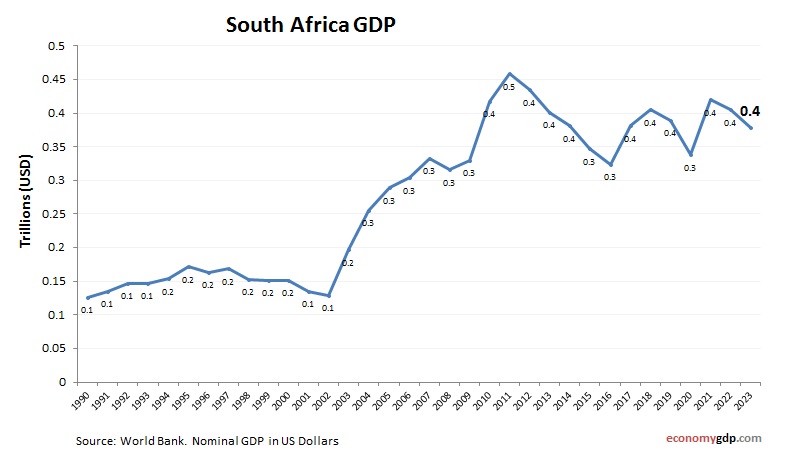
South Africa’s economy, at $400 billion, is Africa’s second-largest, with mining and services driving its GDP, despite inequalities. See South Africa GDP.
South Africa Purchasing Power Parity (PPP)
South Africa’s economy has a PPP GDP of $1 trillion, over double its $400 billion nominal GDP, due to lower costs for mining and services. PPP per capita is around $16,000, reflecting moderate purchasing power. Domestic pricing boosts markets, but inequality and unemployment limit broader PPP-driven economic growth.

South Africa Growth Rate
The economic growth rate is 3.0% in 2024, fueled by mining and services. Platinum exports and tourism support growth, but inequality and power shortages pose risks. Manufacturing contributes, while infrastructure investments drive resilience, positioning the economy for steady progress despite structural challenges in Southern Africa.

South Africa Inflation
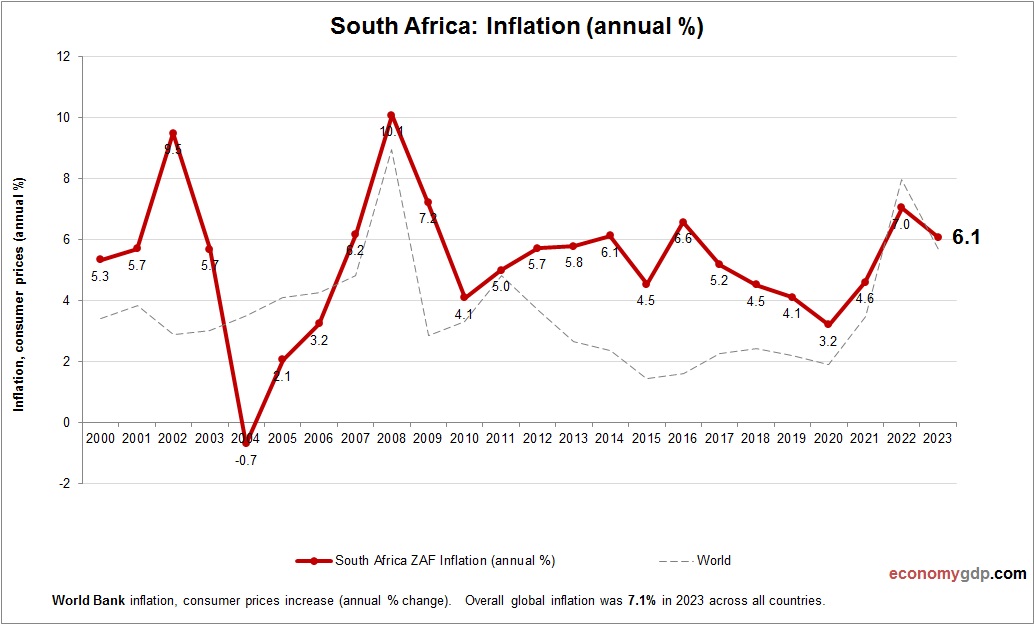
South Africa’s inflation rate is around 4.5% in 2024, driven by rising global food and energy prices. Currency depreciation increases import costs, while strong mining exports fuel demand. Power shortages and agricultural disruptions add pressure. Monetary tightening helps moderate inflation, though structural challenges sustain price volatility.