
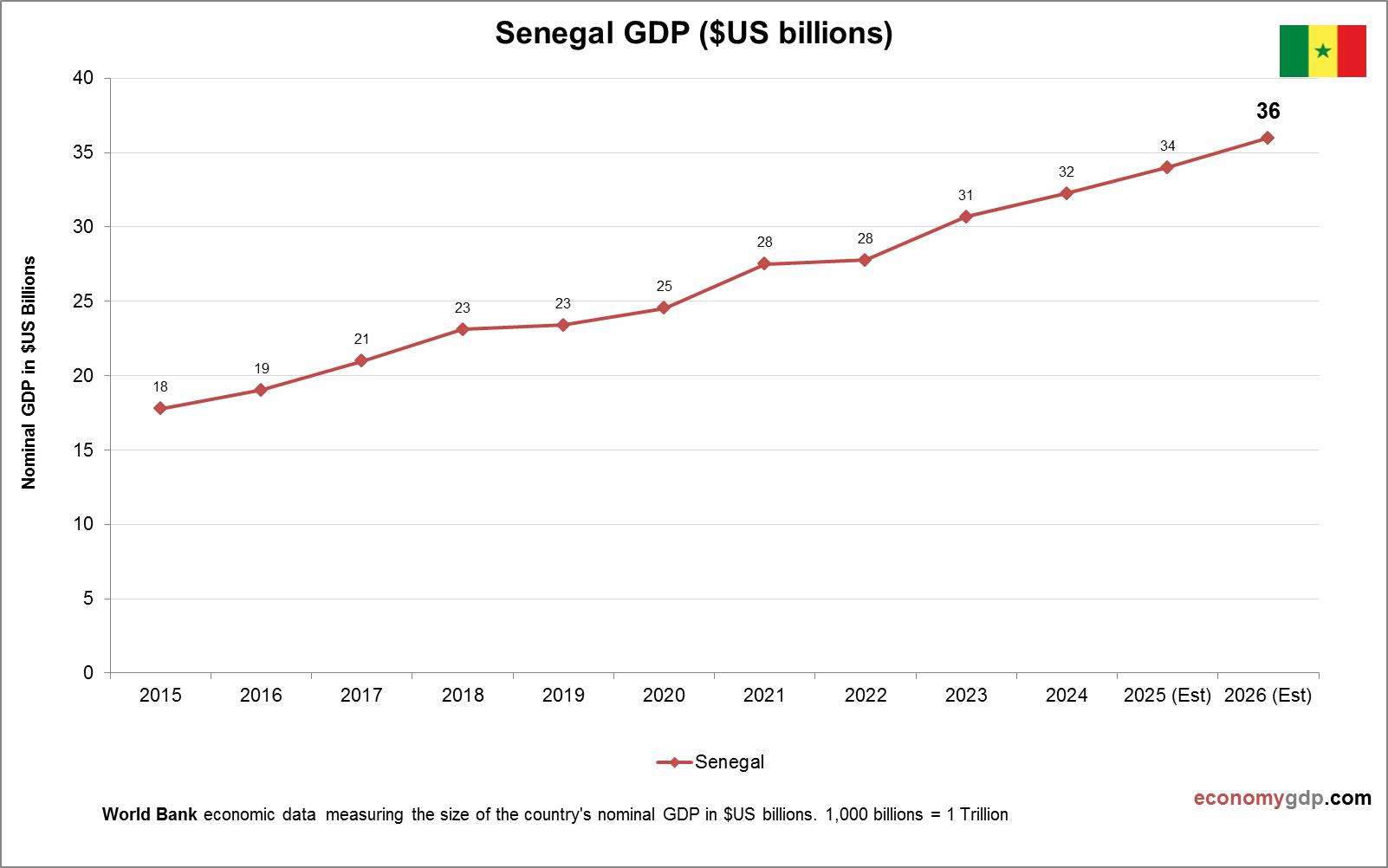
Senegal’s economy, valued at $30 billion, relies on agriculture, which employs 50% of the workforce, producing peanuts, fish, and horticulture. Fisheries drive exports, while mining (gold, phosphate) is significant. Oil and gas, with offshore discoveries, are emerging, alongside renewable energy (solar). Services, including tourism and telecoms, grow in Dakar. Political stability and AfCFTA membership support trade, but poverty and infrastructure gaps persist. Investments in energy and transport aim to position Senegal as a West African hub, with youth-driven innovation adding momentum.
Senegal Economy Size
Senegal’s economy, worth $30 billion, is small but growing, with agriculture and services driving its GDP, bolstered by stability. See Senegal GDP.
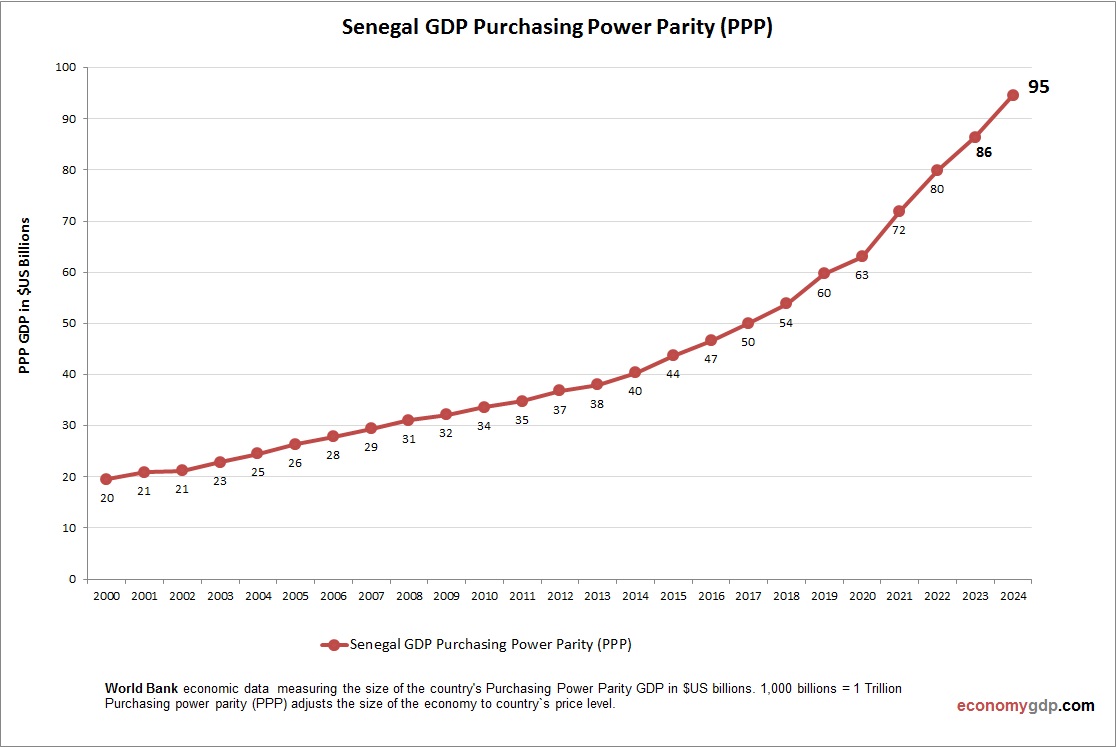
Senegal Purchasing Power Parity (PPP)
Senegal’s economy has a PPP GDP of $90 billion, three times its $30 billion nominal GDP, driven by low costs for agriculture and services. PPP per capita is around $4,500, indicating modest purchasing power. Domestic pricing boosts local markets, but poverty and infrastructure limit PPP-driven economic growth.
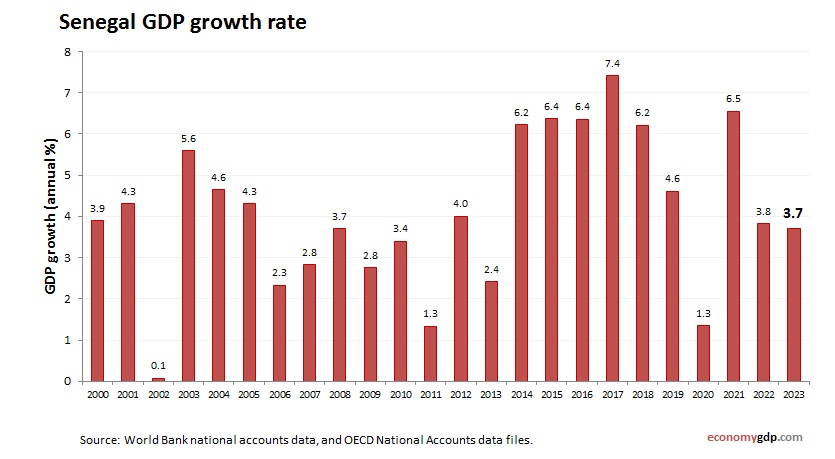
Senegal Growth Rate
The economic growth rate is 4.8% in 2024, fueled by agriculture and fisheries. Peanut exports and oil discoveries support growth, but poverty and infrastructure deficits pose risks. Tourism and regional trade drive resilience, while stability enhances momentum, positioning the economy for robust progress in West Africa.
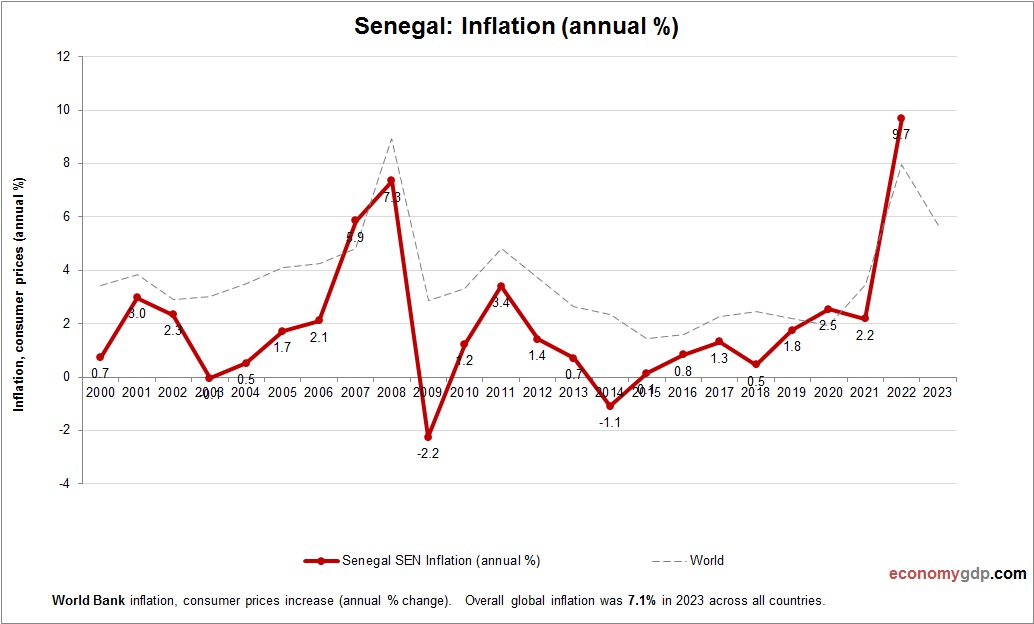
Senegal Inflation
Senegal’s inflation rate is approximately 4% in 2024, driven by rising global food and fuel prices in the CFA franc zone. Oil discoveries and agricultural exports fuel demand, while drought-related crop disruptions add pressure. Currency stability and monetary tightening help moderate inflation, though import reliance sustains price volatility.